
Last updated September 20, 2026
Level 1 sweep and inspection to the NFPA 211 annual standard - flue, crown, cap, and flashing checked and photographed
Chimney sweep logs do not sweep chimneys. They loosen some creosote - which then falls where a brush and vacuum still have to collect it.
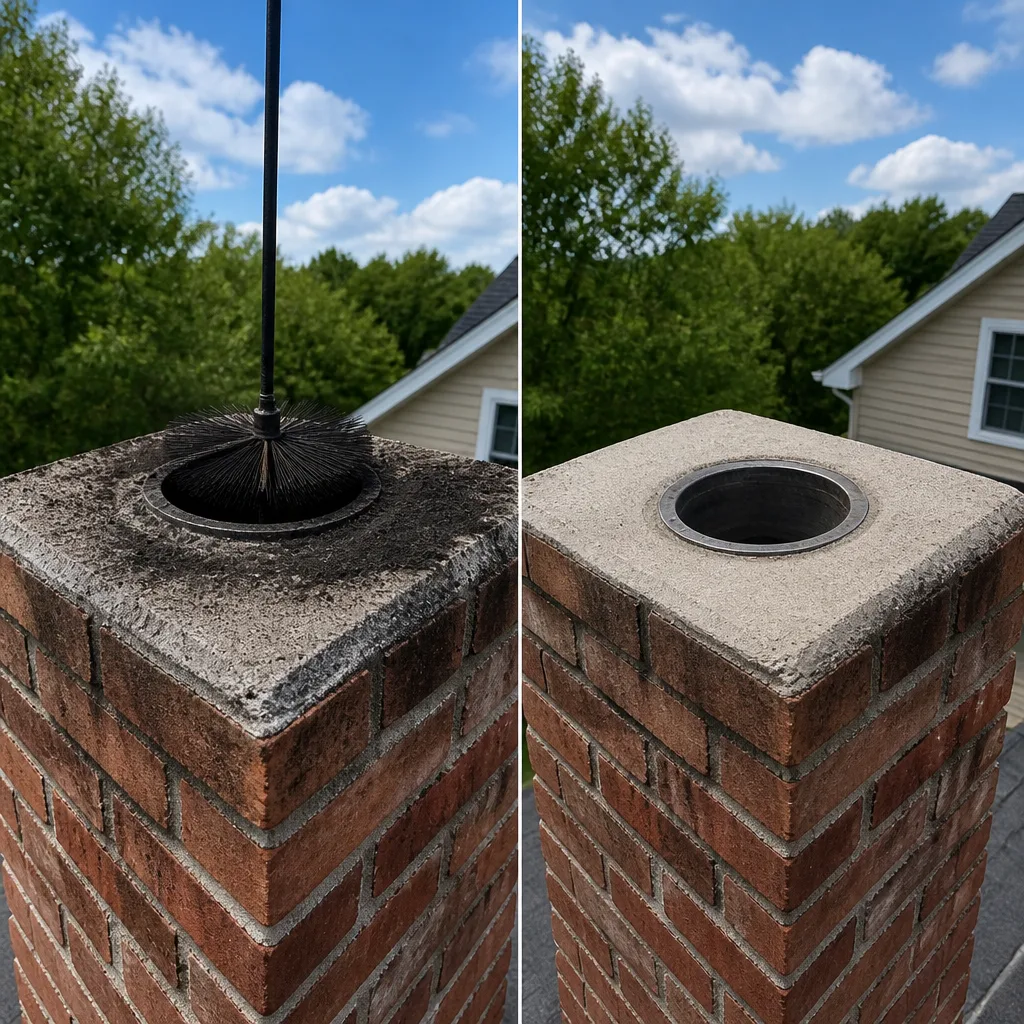
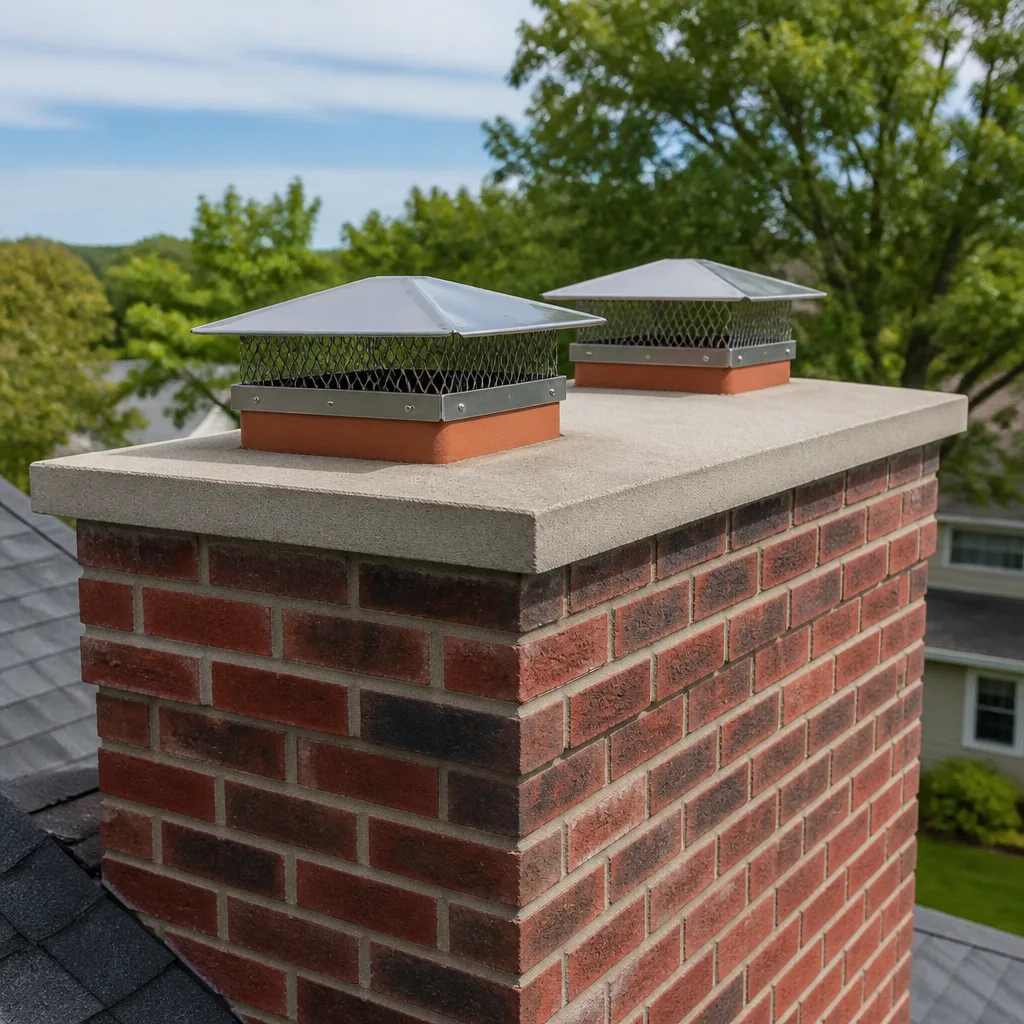
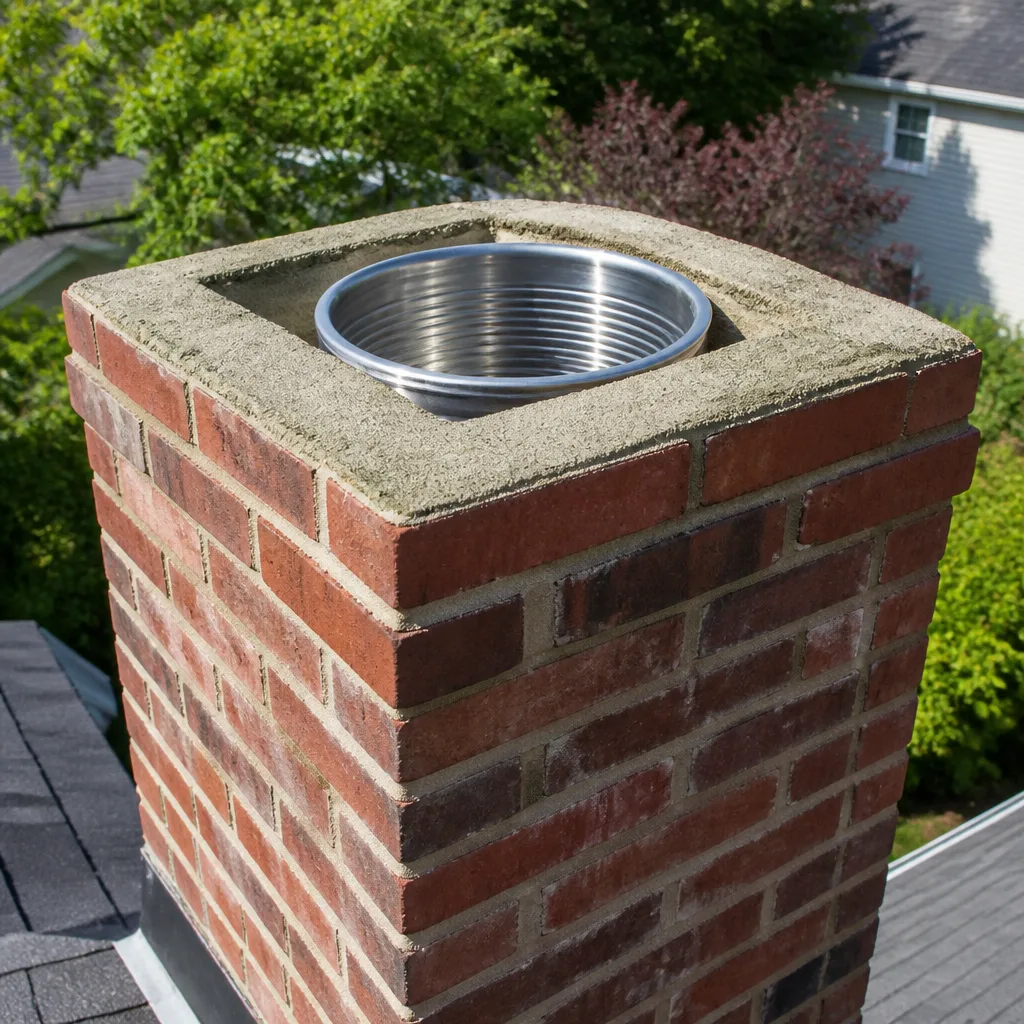
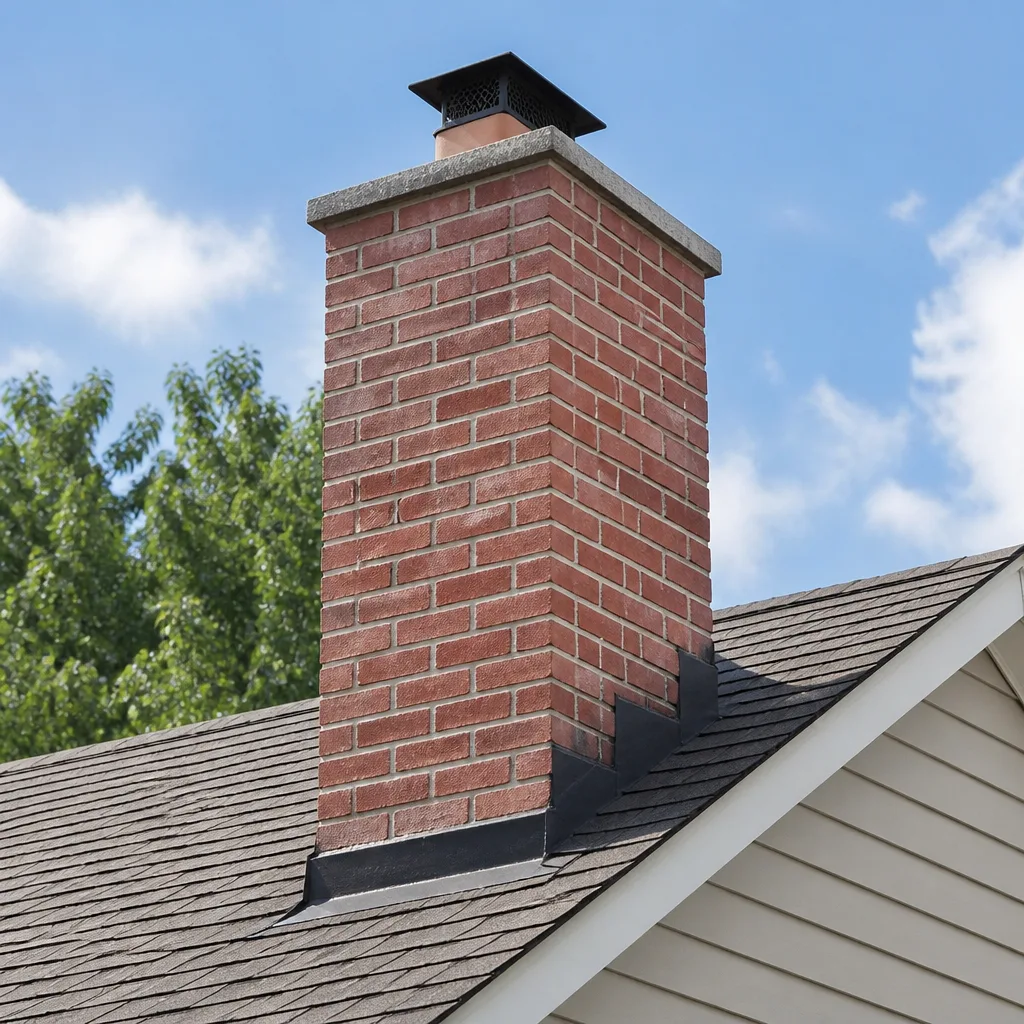
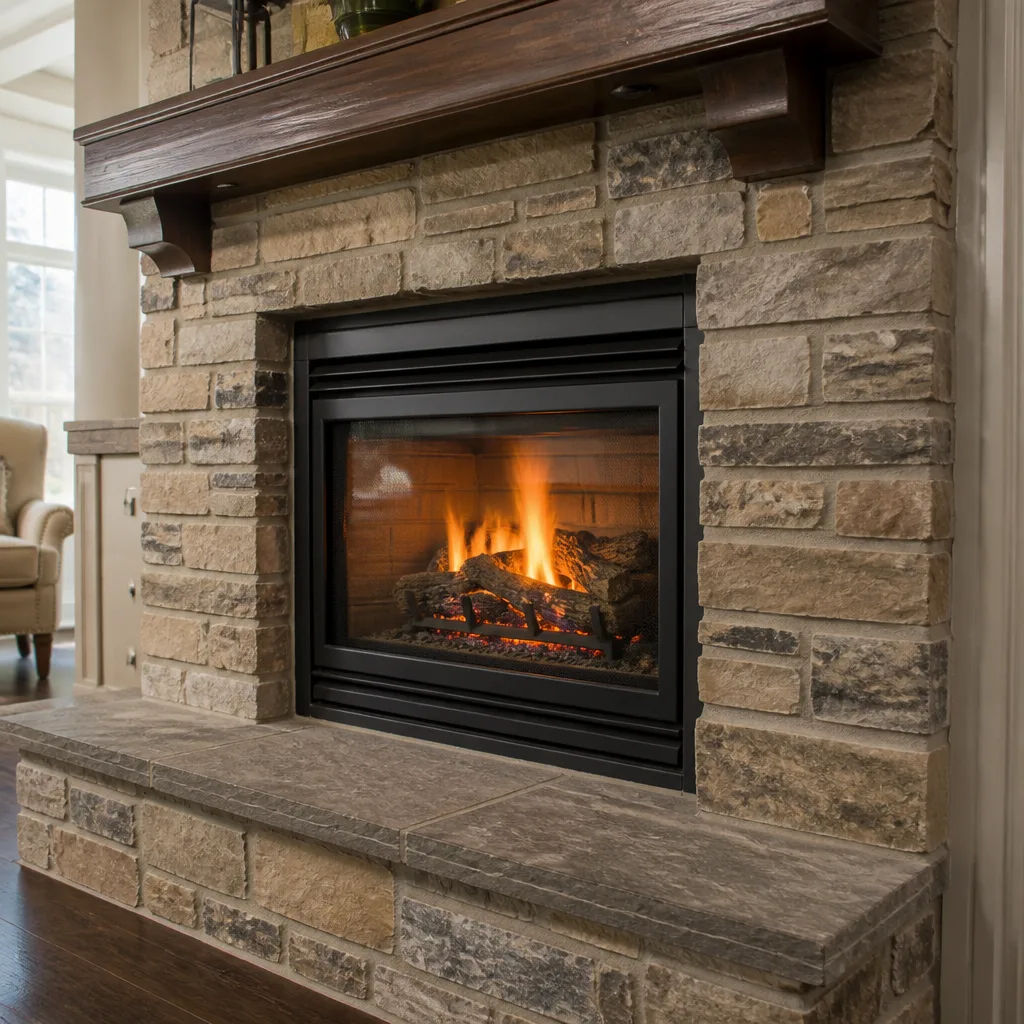
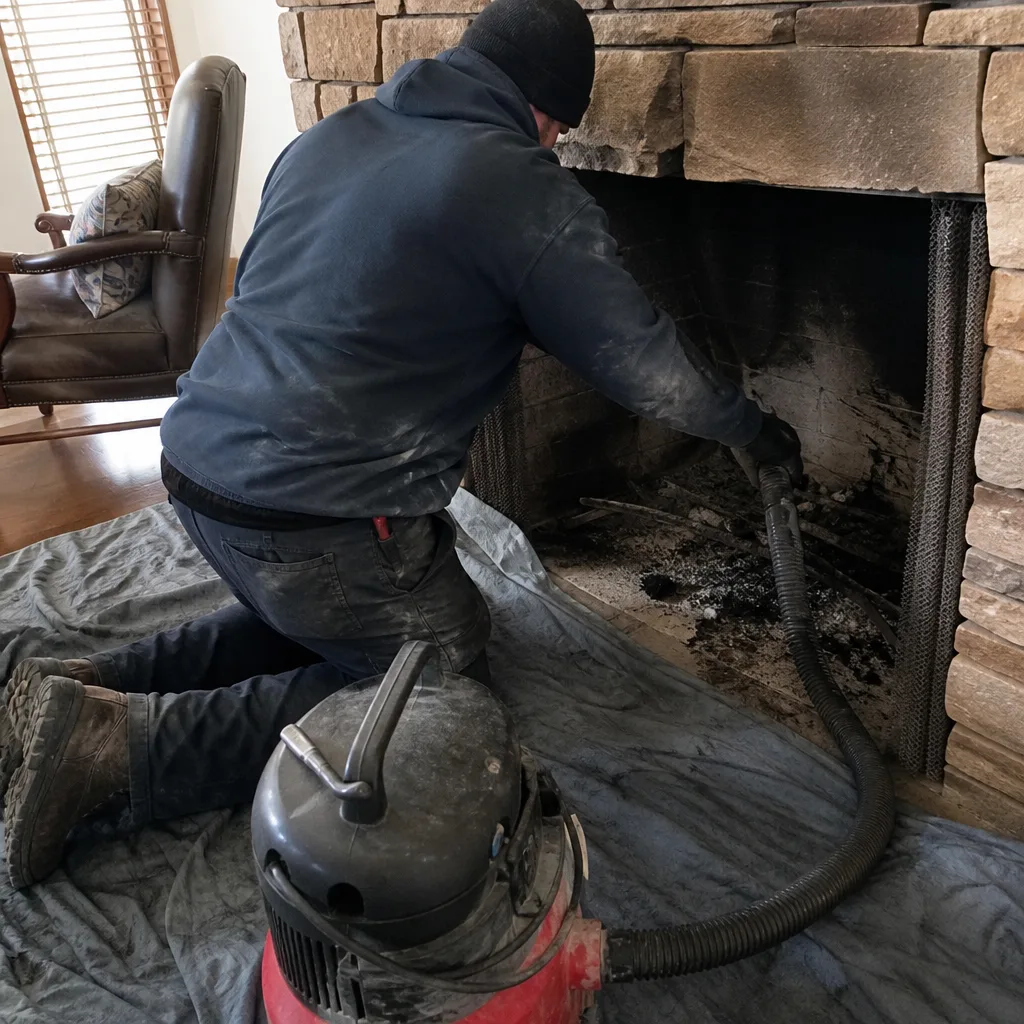 Before
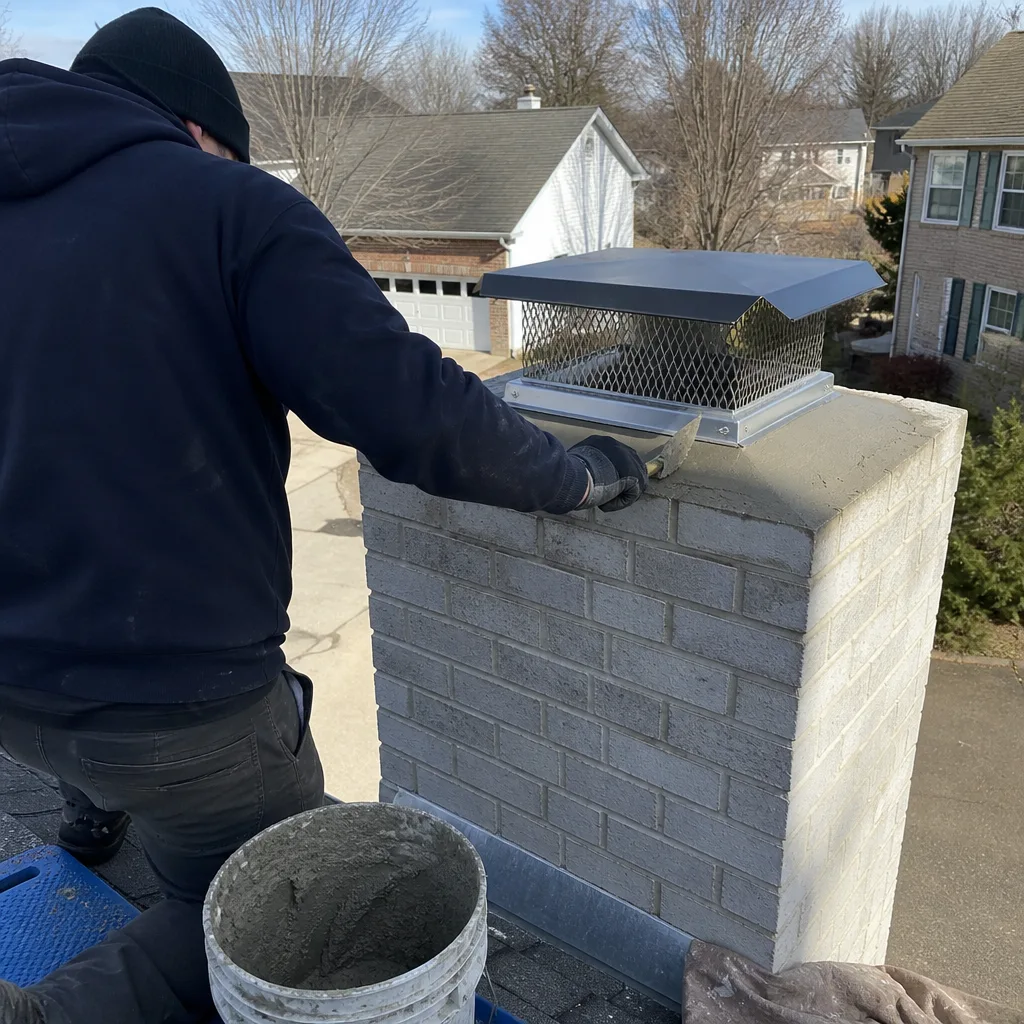 After
After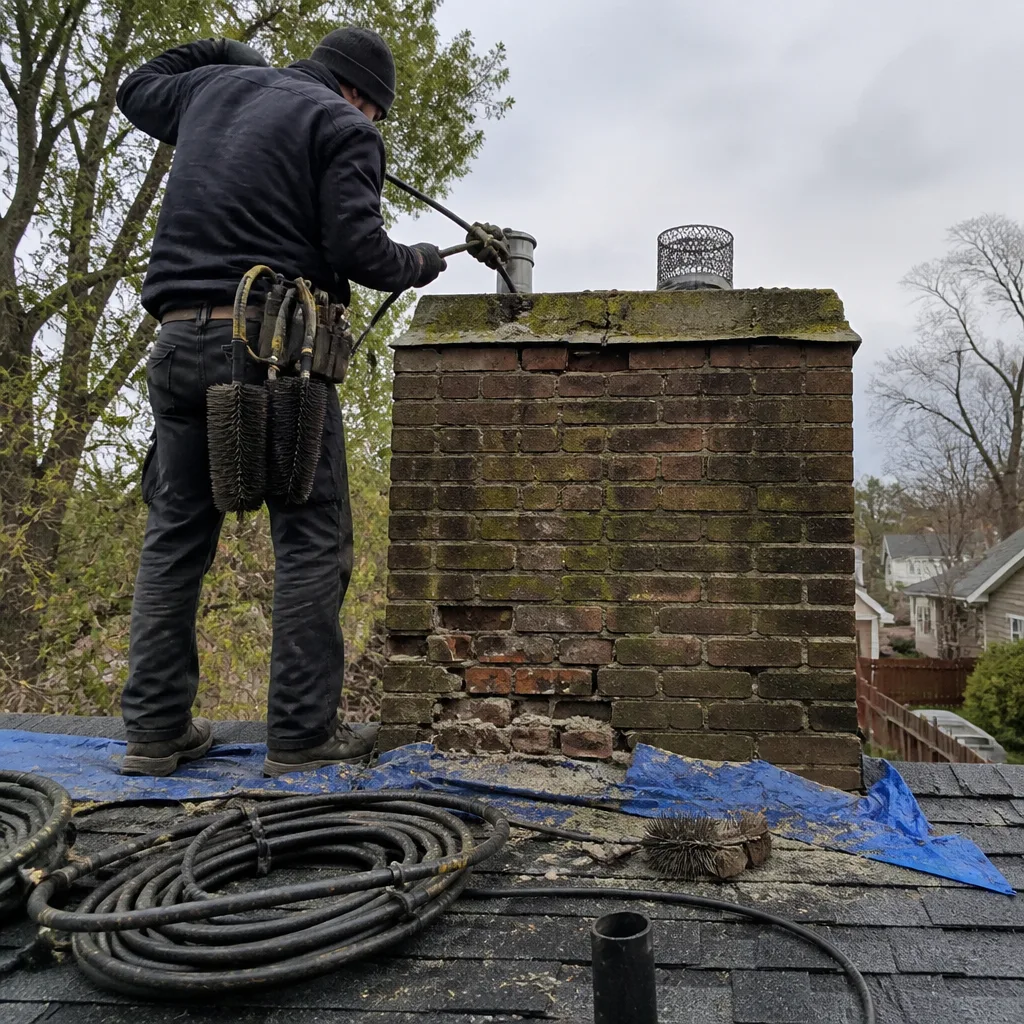 Before
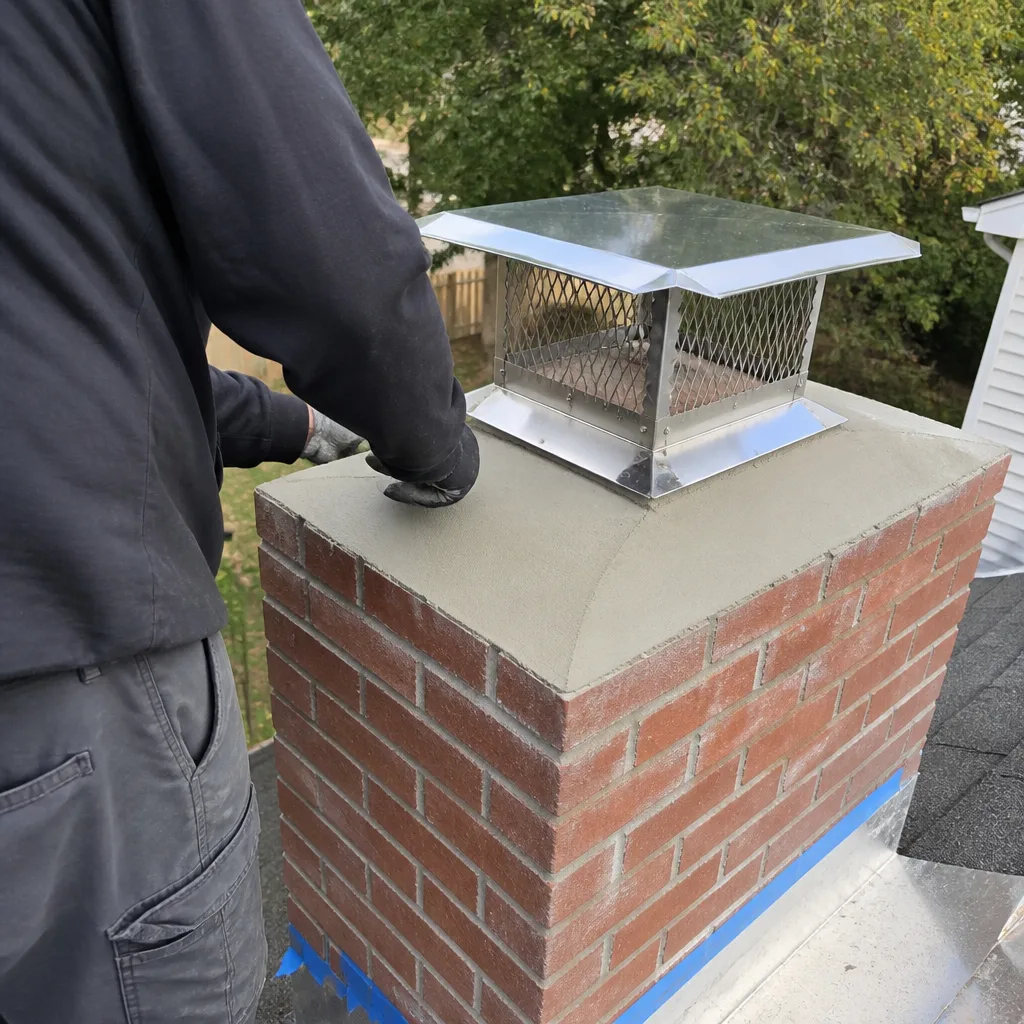 After
After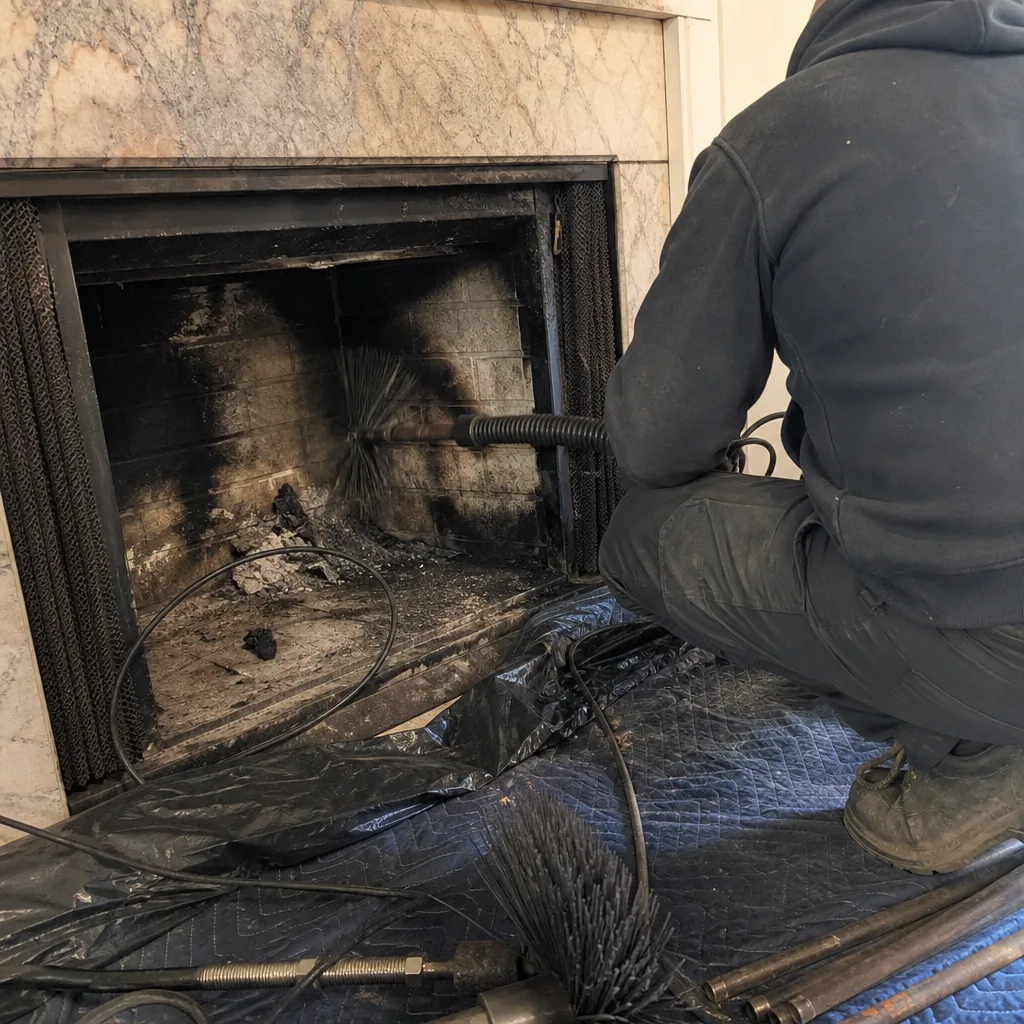 Before
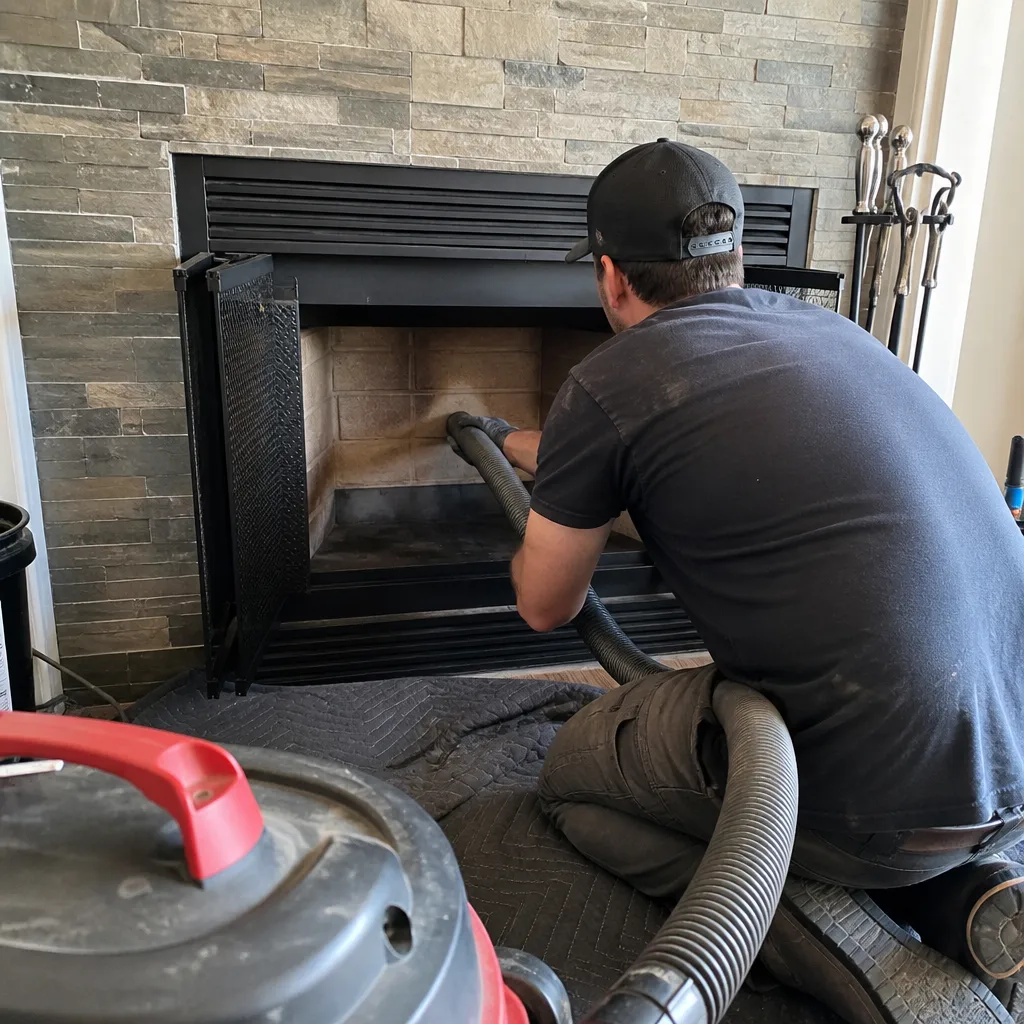 After
AfterChimney Cleaning & Sweep Maintenance Checklist for Ashburn Homeowners
Ashburn sits inside a ZIP code where tree canopy coverage exceeds 38%, which means accelerated animal nesting, accelerated debris accumulation, and a cap inspection that should happen in April, not October when everyone else remembers their chimney exists. Most national maintenance checklists treat a chimney as a standalone box. That approach fails here because Ashburn’s specific conditions, from squirrel pressure in the Broadlands to wind-driven rain against stone veneers in Belmont Country Club, change what needs checking and when. This guide gives you a property-specific checklist built around those local realities, with separate tracks for wood-burning, prefab, and gas-log systems. By the end, you’ll know exactly what to photograph, what to watch for between sweeps, and what a properly documented service should leave behind. For more guides & resources, explore our blog.
Quick Answer
The core chimney maintenance checklist for Ashburn homeowners is: schedule our Chimney Cleaning & Sweep services and NFPA 211 Level 2 camera inspection once per year, ideally in late August or early September before burn season; visually check the chimney cap and crown each April for animal nesting and storm damage; monitor for efflorescence, spalling brick, or draft reversal monthly during winter; and keep a photo record of your firebox, damper, and exterior chase before and after every service. Gas-log fireplaces need an annual safety check focused on carbon monoxide venting, and prefab units need specific attention to the chase top and termination cap.
Table of Contents
- Why a Generic Checklist Fails Ashburn Homeowners
- The Month-by-Month Ashburn Chimney Maintenance Calendar
- Checklist Track 1: Wood-Burning Masonry Chimneys
- Checklist Track 2: Factory-Built Prefab Fireplaces
- Checklist Track 3: Gas-Log and Vent-Free Systems
- Homeowner-Observable Warning Signs That Don’t Require a Sweep
- What to Photograph Before a Sweep Arrives
- Post-Service Checklist: What a Completed Job Should Leave Behind
- Common Mistakes to Avoid
- When to Call a Professional
- Frequently Asked Questions
BeforeAfterWhy a Generic Checklist Fails Ashburn Homeowners
Walk through any Ashburn neighborhood in late March and you’ll see the same thing: squirrels testing chimney caps, starlings sizing up uncapped flues, and pine needles accumulating in chase tops. The tree canopy here is not just aesthetic. It’s a mechanical reality for your chimney system. A national checklist that says “inspect your cap annually” doesn’t tell you that in Ashburn, that inspection should happen in April, after the spring nesting push, and before the summer storms start peeling flashing. We’ve inspected and cleaned more than 38,000 chimneys since 2009, and the patterns in Ashburn are consistent: nesting debris in spring, water intrusion discovered in fall, and creosote buildup from the first cold snap in November.
Then there’s the gas-log conversion factor. Ashburn’s housing stock built between 1995 and 2015 includes a high percentage of wood-burning fireplaces that were converted to gas logs during the 2008-2012 market downturn. That conversion changed the maintenance requirements of the chimney, but most homeowners never updated their mental checklist. A gas-log system in a masonry flue still produces acidic condensation, still invites animals in the spring, and still needs its damper, clamp, and venting checked every year. Treating it like a wood-burner, or ignoring it as a “maintenance-free” gas appliance, are both errors we see regularly.
The Month-by-Month Ashburn Chimney Maintenance Calendar
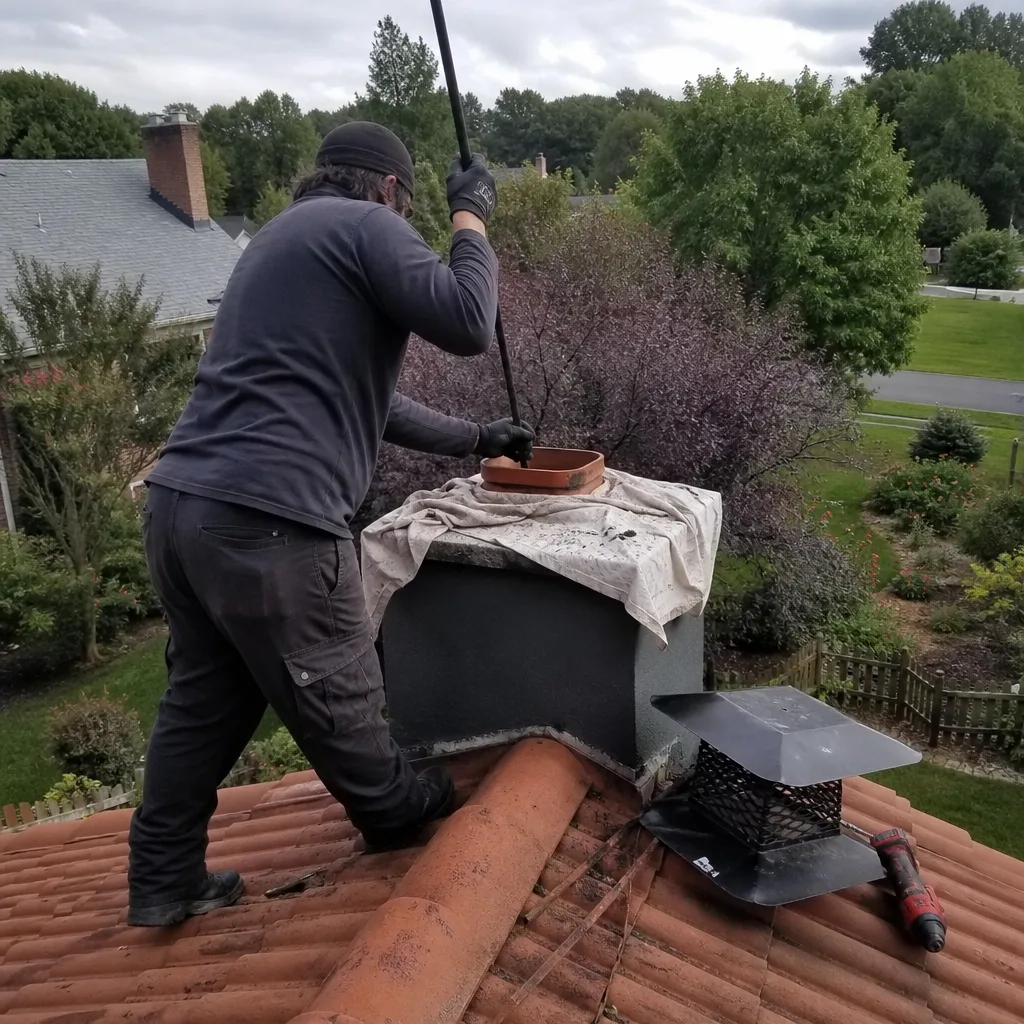
Ashburn’s shoulder seasons are March through May and September through October. These are the windows where the most important chimney maintenance happens, much of it before burn season and after the last fire of spring. Here’s the calendar we recommend to homeowners across Ashburn, based on what we actually find in this ZIP code.
March: Wildlife Nesting Window Opens
By early March, squirrels and chimney swifts (protected under federal law - do not disturb an active nest) are scouting for entry. Your job this month is obstruction prevention. Check that your chimney cap is seated properly, with no gaps at the flue tile. If you hear scratching or chirping, do not light a fire to smoke an animal out. Call a professional who can identify whether the nest is active and advise on legal removal timing.
April: Post-Storm Cap and Crown Inspection
April in Ashburn brings the first heavy spring rains, and this is when a cracked crown gets exposed. Walk around your home and look up at the chimney crown, the concrete slab at the top of the masonry, and the cap. Hairline cracks are normal aging; visible chipping, missing mortar joints, or a cap that has shifted off center are not. If water is getting in through the crown, it moves down into the smoke chamber and firebox, and every dollar of that repair doubles by fall. April is also the right moment to schedule your annual cleaning and Level 2 inspection if you didn’t do it in the fall, because summer is the easiest time to complete masonry or liner work in Ashburn’s dry heat. See our Chimney Cleaning Warning Signs: A Ashburn Homeowner’s Reference Guide for what to watch for.
September: Pre-Burn Readiness Sweep
Late August through September is the highest-volume sweep window in Ashburn, and for good reason. The summer’s spider webs, pollen, and wind-blown debris are cleared out before the first fire. This is also the time to run the camera. An Ashburn chimney cleaning and sweep should include a camera scan of the entire flue, not just a flashlight look from below. We made camera-scan documentation the default on every job in 2009, and it has become the backbone of our inspection standard. The camera catches what a brush cannot: cracked flue tiles, separation between prefab sections, and Class III creosote hiding in the smoke chamber.
January: Mid-Season Creosote Check for Heavy Users
If you burn more than three times per week from November through February, do a mid-season check in early January. This is a visual inspection you can do yourself: after the firebox has cooled, look up with a flashlight. If you see shiny, tar-like glaze on the flue walls, that is Class III creosote and it cannot be brushed out with standard tools. Stop burning and call a sweep. Class III creosote is the fuel for a chimney fire. It burns at over 2,000°F and can crack the flue liner in minutes.
Checklist Track 1: Wood-Burning Masonry Chimneys
This is the traditional brick chimney with a clay tile flue liner, and it is the system most misunderstood by homeowners in Ashburn. The checklist below assumes you burn at least two cords per season. If you burn less, you may be able to stretch the full sweep to every 18 months, but the camera inspection should still happen annually because the camera catches deterioration that has nothing to do with usage volume.
The Full Maintenance Checklist
- Annual Level 2 camera inspection: includes the full flue liner, smoke chamber, damper, firebox, crown, and cap. This is the NFPA 211 standard for any chimney that has changed ownership, changed fuels, or had a chimney fire.
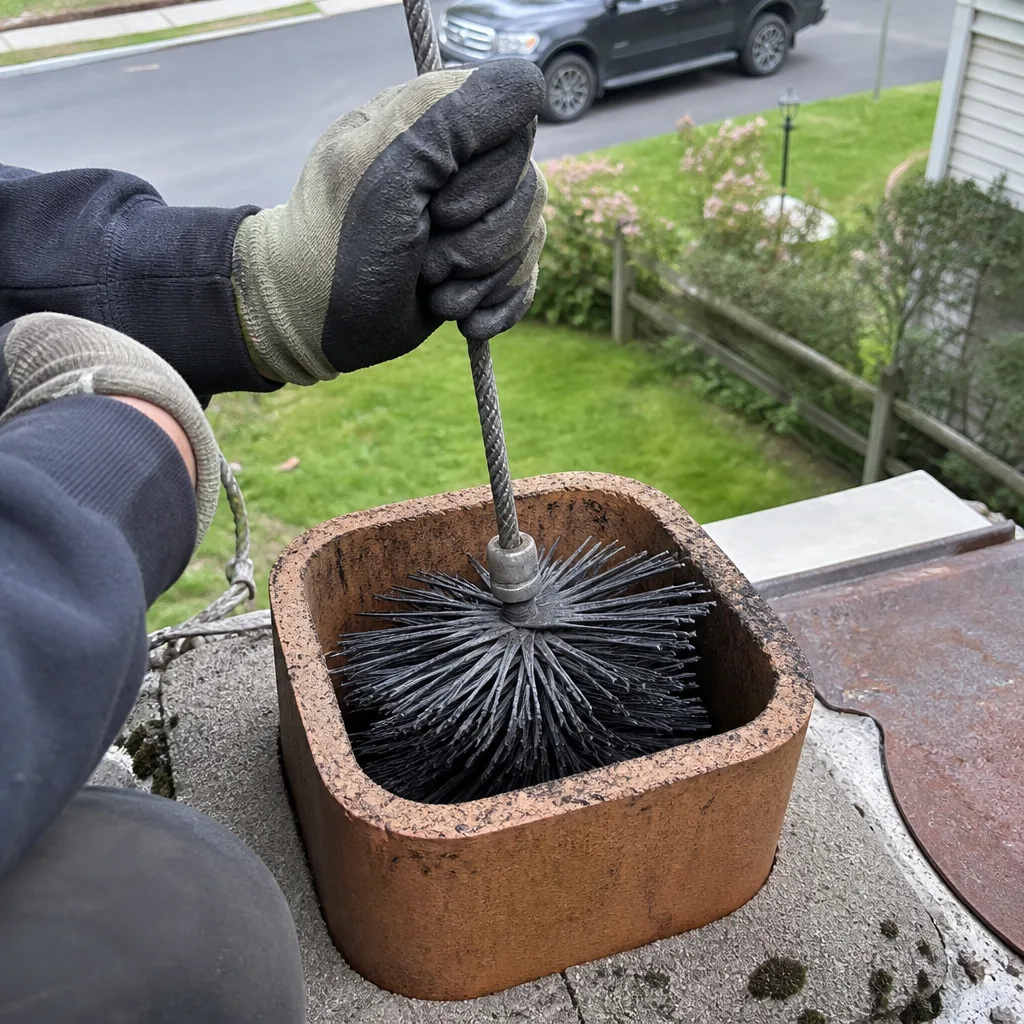
- Chimney sweep when creosote reaches 1/8 inch: NFPA 211 sets the action threshold at 1/8 inch of soot or creosote buildup. A professional sweep with a rotary brush and HEPA-filtered vacuum, not a wire brush on a hand drill, clears this properly.
- Crown and cap visual check each spring and fall: look for cracking, spalling (concrete flaking off in chunks), and rust on metal caps.
- Flashing inspection: the metal where chimney meets roofline is the most common water entry point in Ashburn’s older colonial homes. Check for lifted edges and dried-out sealant after each winter.
- Damper operation test: open and close the damper fully before the first burn of the season. A warped damper leaks warm air out and lets cold drafts in year-round.
- Firebox mortar check: missing mortar between firebrick is a fire hazard, not a cosmetic issue. Heat can reach the framing behind the firebox through gaps.
Ashburn homeowners with wood-burning fireplaces should keep this schedule even if they rarely burn. The chimney is a hole in your roof envelope. It leaks whether you use it or not.
What We See in Ashburn’s Wood-Burning Systems
In the Brambleton and Willowsford neighborhoods, we regularly see crowns that were originally poured without expansion joints. Ashburn’s freeze-thaw cycles in January and February crack these within five years. In older sections of Ashburn Village, we see clay tile liners from the 1990s with cracked top sections where rain enters directly and soaks down through the flue. The pattern is consistent: water is the primary enemy, and creosote is the secondary risk that only emerges when water damage has already compromised the liner.
Checklist Track 2: Factory-Built Prefab Fireplaces
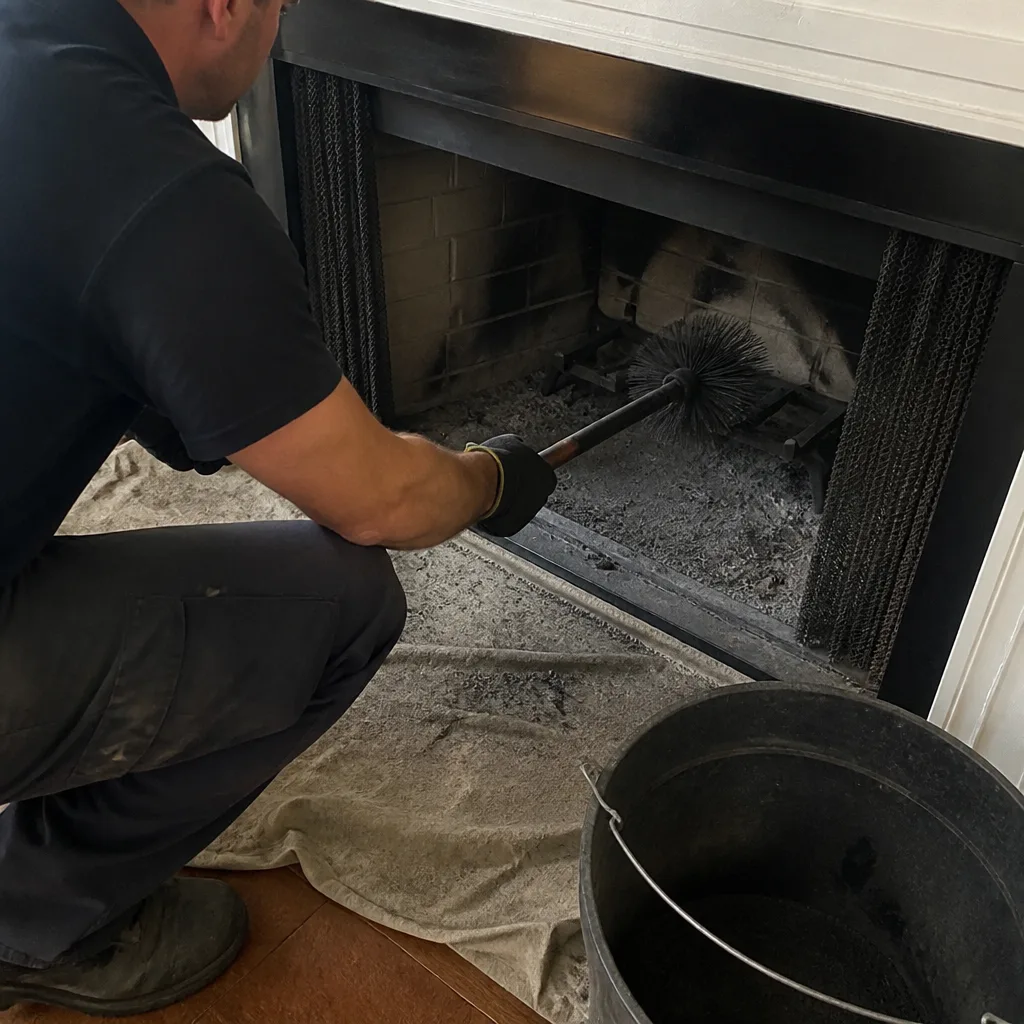
Prefab fireplaces, the metal boxes with a metal chimney pipe running up a framed chase, are everywhere in Ashburn’s 1990s and 2000s developments. They are not “maintenance-free,” despite what many builder punch lists implied at closing. They have a different failure profile than masonry, and the checklist is different.
Prefab-Specific Maintenance Items
- Chase top inspection: the metal or wood cap covering the framed enclosure around the chimney pipe. Rust and water pooling here are the leading cause of prefab failures in Ashburn.
- Termination cap check: the metal cap at the top of the pipe itself. Look for bent spark screens, missing rain shield, and nesting material. A blocked termination cap on a prefab is a carbon monoxide risk.
- Refractory panel inspection: the manufactured panels inside the firebox that simulate brick. Panels with cracks over 1/4 inch wide should be replaced, not patched.
- Pipe section alignment verification: this requires a camera. Prefab pipe sections are press-fit and can separate over time due to Ashburn’s summer heat expansion and winter contraction. A separated section can allow flue gases into the chase cavity.
- Manufacturer clearance verification: the chase interior should have no insulation in contact with the chimney pipe. We find this builder shortcut in Ashburn more than homeowners realize.
One nuance most homeowners miss: a prefab fireplace has a lifespan. Most manufacturers rate them for 20 to 30 years of use. A 1995 prefab in Ashburn has been aging for three decades, and its firebox panels, pipe joints, and termination cap are all at or past their service life. If you bought your Ashburn home between 2015 and 2025 with a prefab already installed, the system may be older than you think. The camera inspection is the only way to assess pipe condition honestly.
Checklist Track 3: Gas-Log and Vent-Free Systems
Gas logs are not zero-maintenance. This is the single most common misconception we encounter in Ashburn, where a large share of fireplaces were converted to gas during the post-2008 renovations. A gas-log system in a formerly wood-burning fireplace has a new fuel, but the chimney is the same masonry structure it was before. It still faces every water and animal issue.
Gas-Log Maintenance Checklist
- Annual carbon monoxide check: a gas log set produces carbon monoxide. The flue must be properly sized, the damper must be clamped partially open, and the venting path must be clear. This is not optional. Ashburn’s tightly sealed 2000s-era homes trap CO more effectively than older drafty homes.
- Damper clamp verification: a properly installed gas log set includes a mechanical damper clamp that prevents full closure. If someone can close the damper completely, the clamp is missing and the system is unsafe.
- Log placement and burner condition check: ceramic logs that have shifted can interrupt combustion and create sooting. Burners with clogged ports burn inefficiently and produce excess CO.
- Annual camera scan of the flue: yes, even for gas. Acidic condensation from gas combustion attacks masonry flue liners slowly but consistently. We see accelerated spalling in Ashburn gas-conversion chimneys that were never relined for the new fuel.
- Chase and cap inspection: same April and September cadence as wood-burning systems. Gas logs do not deter squirrels.
Fireplace services in Ashburn frequently involve assessing whether an original gas conversion was done to code. We find many installations where the damper was never clamped, the log set was sized incorrectly for the firebox, or the original clay tile liner shows acid damage within five years of conversion. These are fixable, but they must be found first.
Homeowner-Observable Warning Signs That Don’t Require a Sweep
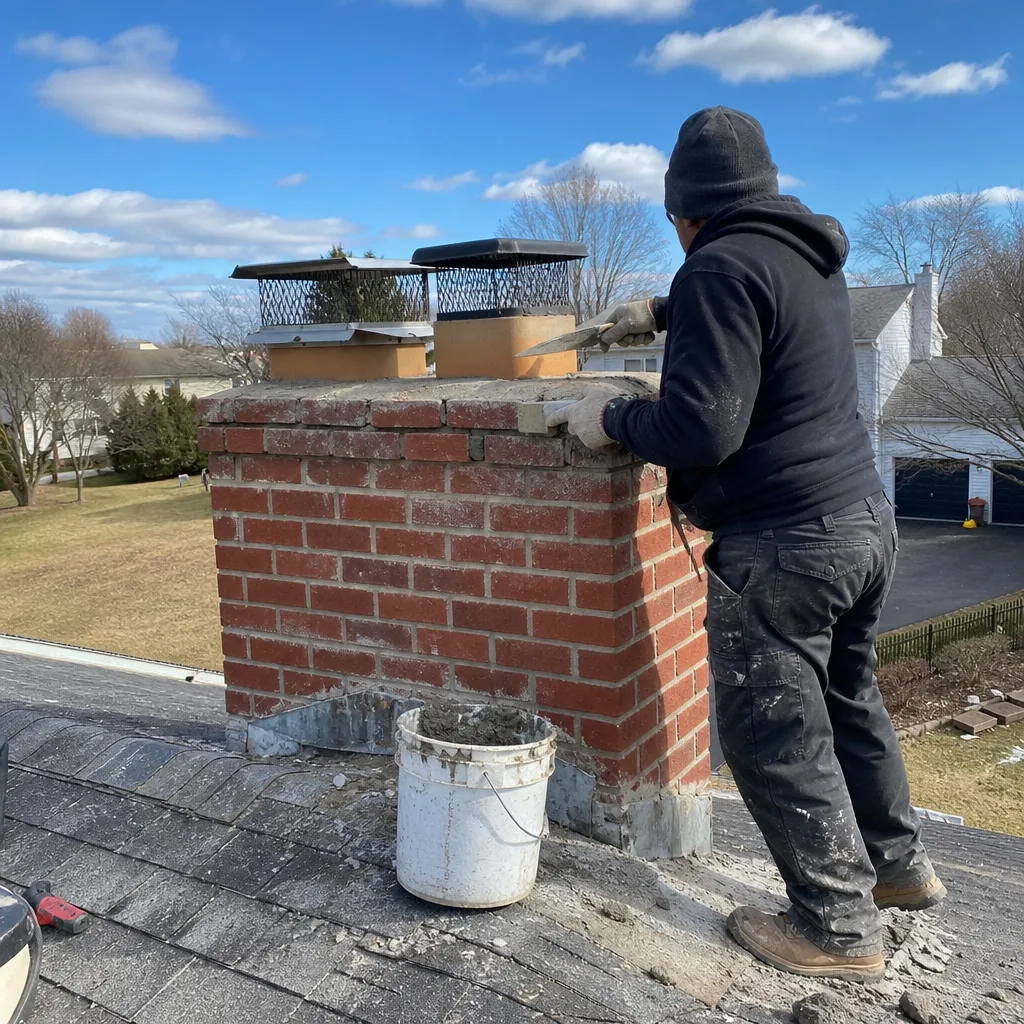
Some of the most important chimney maintenance in Ashburn requires nothing more than walking around your home and paying attention. These are the signs we tell every homeowner to watch for, and none of them require thermometers, moisture meters, or climbing onto the roof. Just your eyes, in daylight, at the right times of year.
Efflorescence on the Chase or Masonry
Efflorescence is the white, chalky staining that appears on brick, stone, or stucco. It means water is moving through the masonry and depositing dissolved salts on the surface. In Ashburn’s humid summers, efflorescence is common on the lower sections of exterior chimneys that wick ground moisture. When you see it appear higher, near the roofline or on the chimney chase above the roof, that indicates water entering from the top, not the bottom. Photograph it, note the date, and if it spreads after a winter, schedule an inspection.
White Staining on the Firebox
White staining inside the firebox is a different issue. It typically means water has entered the flue and is leaching minerals through the firebrick or refractory panels. If you see this after rain, the water entry point is likely the crown, cap, or flashing. This is a structural signal, not a cleaning problem, and it should be addressed before the next heating season.
Draft Reversal on Cold Starts
A draft reversal is the smell of smoke in the house when you first light a fire on a cold morning, even with the damper fully open. It happens because the column of cold air in the flue is heavier than the warm air rising from the fire, and it briefly pushes down instead of up. In Ashburn’s ranch and split-level homes with shorter chimneys, draft reversal is more common. One episode is annoying; repeated episodes every cold morning suggest a flue sizing issue, a partially blocked flue, or negative pressure inside a tightly sealed home. This is worth a professional look if it happens more than twice in a season.
Rust on the Damper or Firebox Floor
Rust anywhere inside the system means water is entering somewhere. The damper is the most visible spot because it’s metal and it’s right there. If you open the flue in July and see rust blooms on the damper plate, you have a water entry problem even if the summer has been dry.
What to Photograph Before a Sweep Arrives
Documentation is the most underrated tool in home maintenance, and chimneys are no exception. Before a chimney cleaning and sweep service arrives at your Ashburn home, take five minutes to photograph the system’s current condition. You are creating a pre-service baseline. It matters for insurance claims after a chimney fire, for disclosures when you sell, and for verifying that the service you paid for was the service that happened.
The Baseline Photo Set
- Firebox front-on: stand directly in front of the fireplace and photograph the entire firebox, including the floor, back wall, and side walls. Natural daylight is best.
- Damper from below: open the damper and photograph the metal plate and the lower flue section above it. Use the camera flash.
- Smoke chamber if visible: from below, angle the camera up past the damper. Most phones can capture the sloped smoke chamber walls.
- Exterior chimney from the ground: photograph the full chimney from the roofline up, from two angles if the home’s layout allows it. These show crown condition and cap alignment.
- Fireplace hearth and surround: include the hearth extension and any cracking or staining you have noticed. This gives you a record that predates any disruption from cleaning.
On the service day, the sweep should be doing the same thing. Clause 4 of the Haven Standard requires a documented photo record on every job. We adopted this in 2009 as our default practice, and it means every customer walks away with before, during, and after images of exactly what was found and exactly what was done. If a sweep company cannot show you photos of your own flue, ask why not.
Post-Service Checklist: What a Completed Job Should Leave Behind
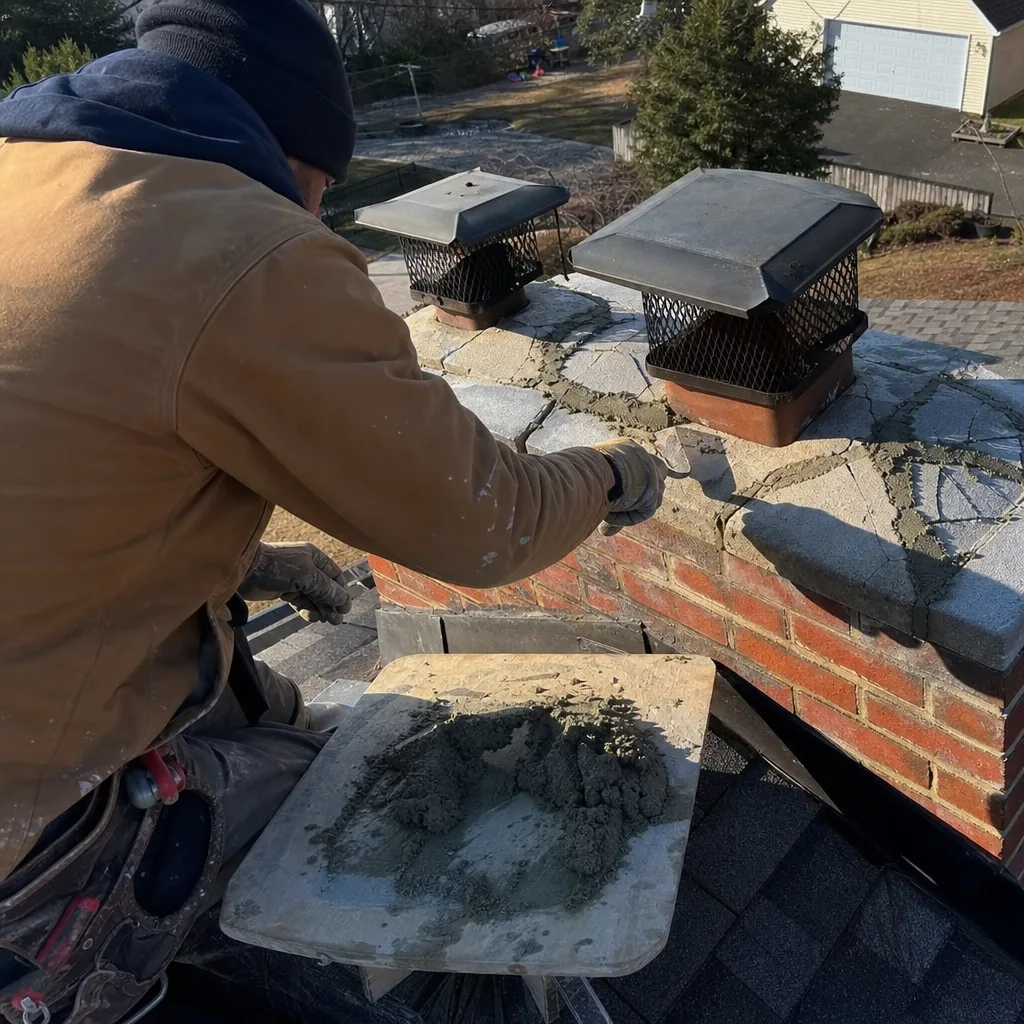
Here is where the difference between a competent sweep and a marginal one shows up in Ashburn, and where the brand promises of most companies quietly dissolve. A completed chimney cleaning and sweep job should leave you with documentation, not just a clean flue. These are the items we believe every homeowner should expect, and what each one protects.
The Three Items Most Sweeps Don’t Provide Unless Asked
1. A written scope of the work, before it starts. You should know the price and the exact work being performed before anyone begins. A written price and written scope, delivered before work starts, is Clause 1 of the Haven Standard. In practice, it protects you from the classic “found a problem after we started” upcharge. With Level Two Chimney Ashburn, the price you approve is the price you pay, backed by our 365-Day Done Right Promise.
2. Camera footage or still photos of the flue interior. If the sweep uses a brush and a flashlight, you are getting a cleaning, not an inspection. You deserve to see the flue liner, the smoke chamber, and the cap area with your own eyes. We provide a documented photo record on every visit as standard, not as an add-on.
3. A written warranty on the work performed. If the sweep company cannot put its warranty in writing, assume the warranty does not exist. A verbal promise is not a warranty. This applies to cleanings, cap replacements, crown repairs, and especially liner work.
For Ashburn homeowners, this documentation has secondary value. When you sell, a buyer’s inspector will flag any chimney they cannot verify. Your photo record and service history becomes evidence of proper maintenance. That matters in the Ashburn resale market, where buyers read inspections closely.
Common Mistakes to Avoid
- Treating “annual sweep” as the whole job. A cleaning without a camera inspection is half a service. The camera is what finds cracked liners, hidden blockages, and separated prefab pipe sections before they become fires or carbon monoxide leaks.
- Using a “chimney cleaning log” as your primary maintenance. Chemical logs are not a substitute for mechanical cleaning. They can loosen some creosote, but they cannot remove Class III glaze, verify liner condition, or clear animal nesting. If a national retailer sold you a cleaning log as maintenance, understand its limits.
- Ignoring the cap because “it’s still there.” A cap that is rusted through, shifted off the flue, or missing its spark screen is functionally not a cap. Ashburn’s squirrel population will find the gap before you do.
- Burning pine and thinking one hot fire solves it. The “hot fire to burn out creosote” idea is dangerous. A hot fire is exactly what ignites creosote. If you see glaze, stop burning and call a sweep.
- Closing the damper completely on a gas log set. A fully closed damper on a gas appliance is a carbon monoxide risk. The damper must be clamped partially open at all times.
- Relying on a flashlight look instead of a camera scan. The human eye cannot see past the smoke chamber from below. A flashlight inspection gives you a clean firebox and an unverified flue. Insist on a camera.
- Skipping the pre-service photos. Without your own baseline images, you lose the ability to verify what the service actually did. Five minutes with your phone is all it takes.
When to Call a Professional
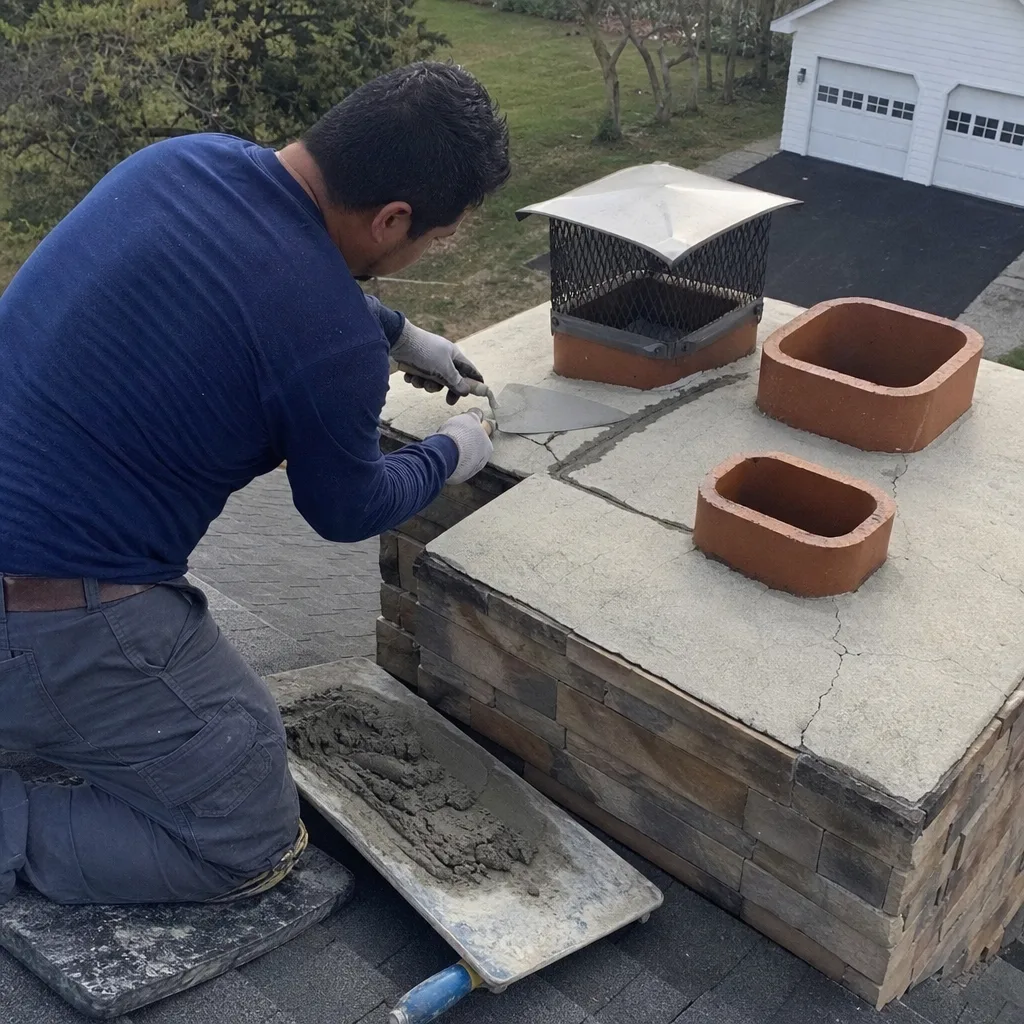
Call a chimney professional in Ashburn when you see any of these: Class III creosote glaze on the flue walls; water staining or rust inside the firebox; efflorescence that spreads after winter; a draft reversal that happens repeatedly; the sound of animals in the chimney; visible cracking or shifting of the crown; a chimney cap that is missing or damaged; or any episode of smoke entering the home during a burn. Do not attempt to remove an active bird or squirrel nest yourself. Chimney swifts are federally protected. A professional knows the legal removal window. For any of these conditions, Level Two Chimney Ashburn offers free estimates in Ashburn, with a camera-scan inspection included, a written price before any work starts, and a documented photo record when the job is done. Call (240) 220-9412.
Frequently Asked Questions
Once per year is the safe baseline for any Ashburn chimney that is used at least a few times per season. The National Fire Protection Association threshold is a sweep when creosote reaches 1/8 inch of buildup, but an annual cleaning and camera inspection catches deterioration whether or not you have burned enough to create buildup. For heavy burners, more than three fires per week from November through February, a mid-season creosote check in January is warranted. Call (240) 220-9412 to schedule an Ashburn cleaning with a camera-scan inspection included.
A standard chimney cleaning and sweep in Ashburn typically costs between $200 and $350 depending on system type, height, and condition. A full Level 2 camera inspection, which is what your homeowner’s insurance would want before a claim, typically runs $200 to $400. Combined, expect $400 to $700 for a thorough cleaning with documentation. Level Two Chimney Ashburn provides a written price before any work starts, so you will never face a surprise upcharge after the tech arrives. Call (240) 220-9412 for an exact quote.
Yes, gas log fireplaces need annual chimney maintenance including a carbon monoxide check, damper clamp verification, burner and log placement check, and a camera scan of the flue. Gas combustion produces acidic condensation that slowly degrades masonry flue liners, and gas logs do not deter animals from nesting in the flue during Ashburn’s spring season. A gas appliance venting through a blocked or deteriorating chimney is a carbon monoxide hazard.
A Level 2 inspection is the NFPA 211 standard that uses a camera to examine the entire flue liner, smoke chamber, damper, firebox, crown, and cap from the interior, plus a visual check of the exterior. It is required when a chimney has changed ownership, changed fuel type, or experienced a chimney fire. Level Two Chimney Ashburn has made the camera-scan Level 2 the default on every job since 2009, with a documented photo record delivered to every customer.
You can purchase chimney cleaning brushes and rods at any hardware store, but a DIY cleaning cannot verify liner condition, cannot remove Class III creosote glaze, and cannot document the flue for insurance or resale purposes. A store-bought brush also cannot navigate Ashburn’s typical flue offsets without risk of getting stuck. The more important issue is that without a camera, you are cleaning blind. A professional sweep with a camera is the only way to know the flue is actually sound after the brush comes out.
Skipping maintenance for a few years in Ashburn means water damage goes unobserved, creosote accumulates past the 1/8 inch safety threshold, and any animal nesting or cap failure becomes progressively more expensive to address. Water intrusion is a compounding problem: a hairline crown crack this year becomes spalling and a rebuilt crown in three years. The longer the system goes unexamined, the higher the probability of a chimney fire or carbon monoxide event, and the higher the repair cost when you finally address it.
The Bottom Line
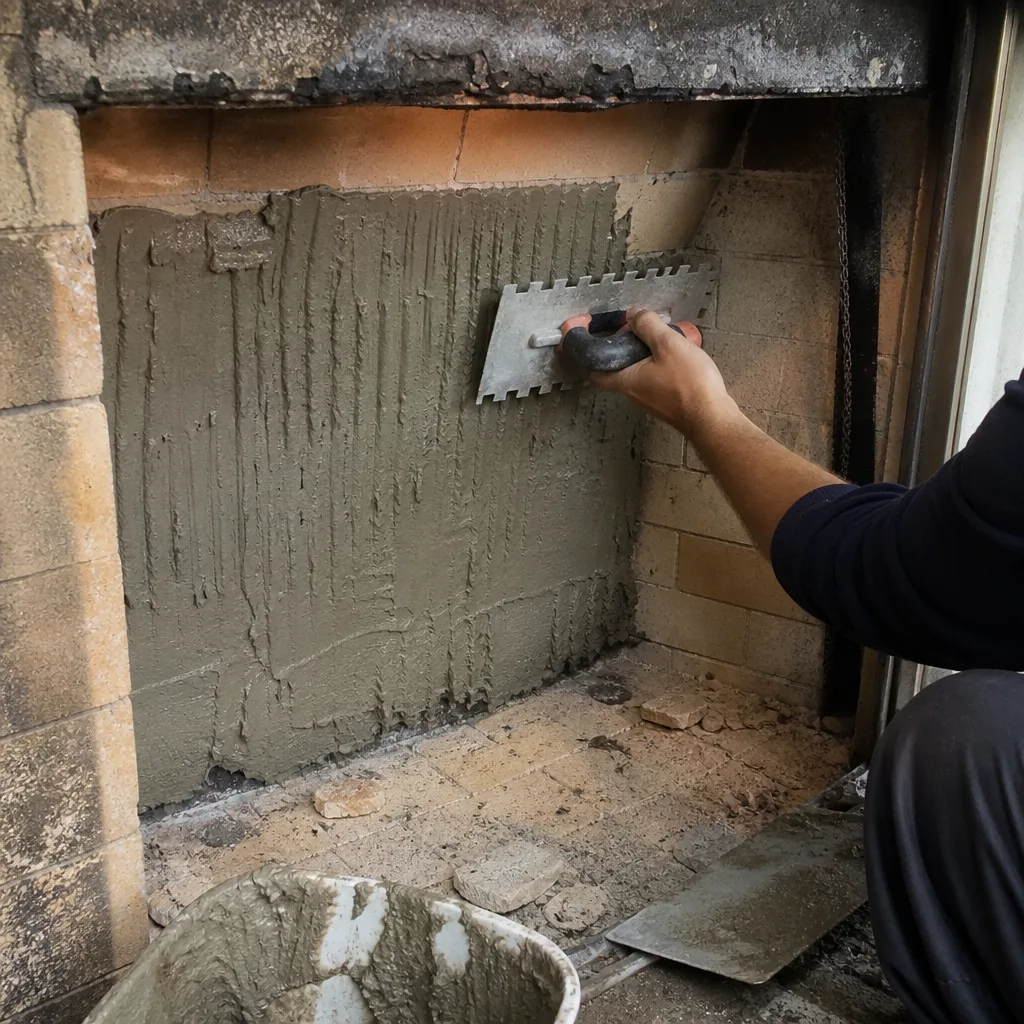
Ashburn homeowners need a chimney maintenance checklist built for Ashburn’s actual conditions: a 38% tree canopy that pushes cap inspections into April, a spring wildlife nesting window that requires vigilance in March, a burn season that starts in November and demands a mid-season creosote check for heavy users, and a large installed base of gas-log conversions that require their own inspection track. Read The Complete Guide to Chimney Cleaning in Ashburn for deeper detail. Photograph your system before every service, insist on a camera scan not a flashlight look, and expect a written price before work starts and a written warranty when it ends. That is the standard your chimney needs, and the standard the Haven Standard has required since 2009.
Written by Corrine Halstead, Owner at Level Two Chimney Ashburn, serving Ashburn since 2009.