
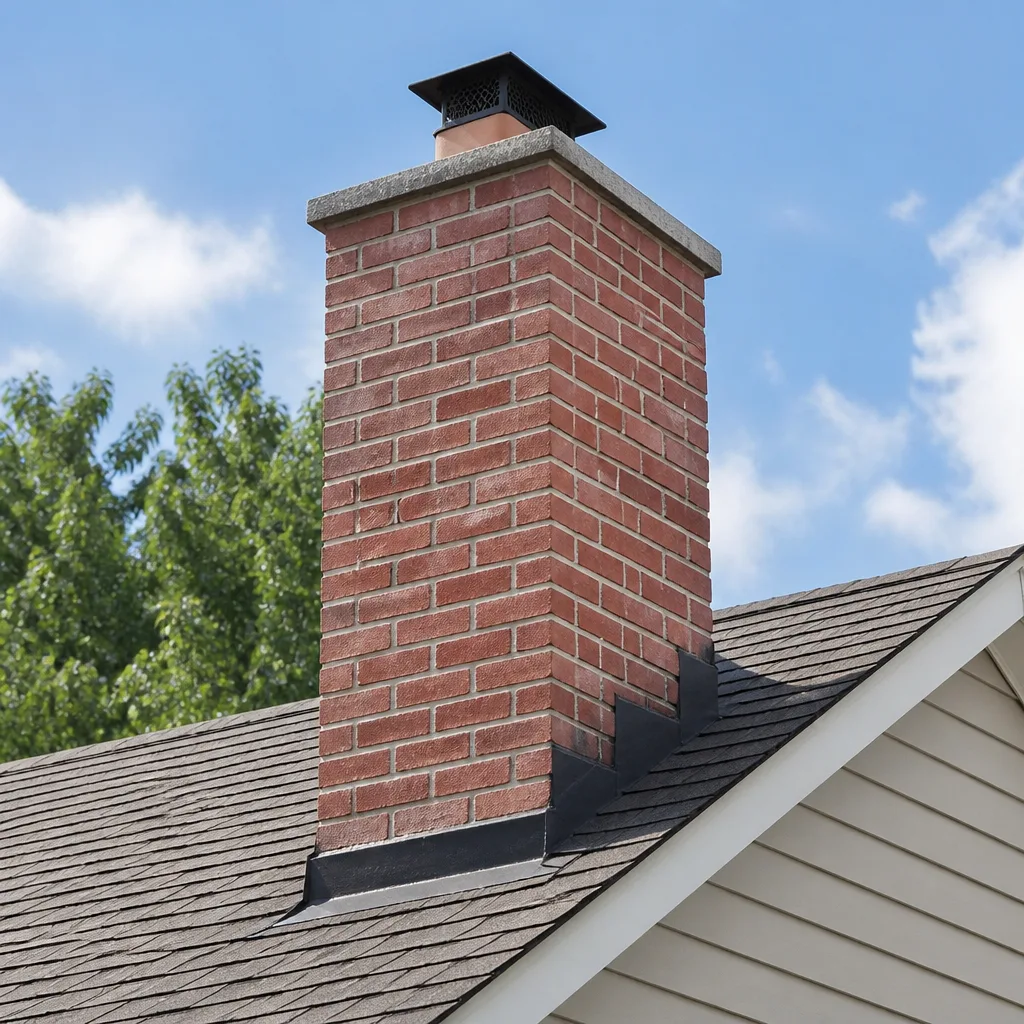
Level 1 sweep and inspection to the NFPA 211 annual standard - flue, crown, cap, and flashing checked and photographed
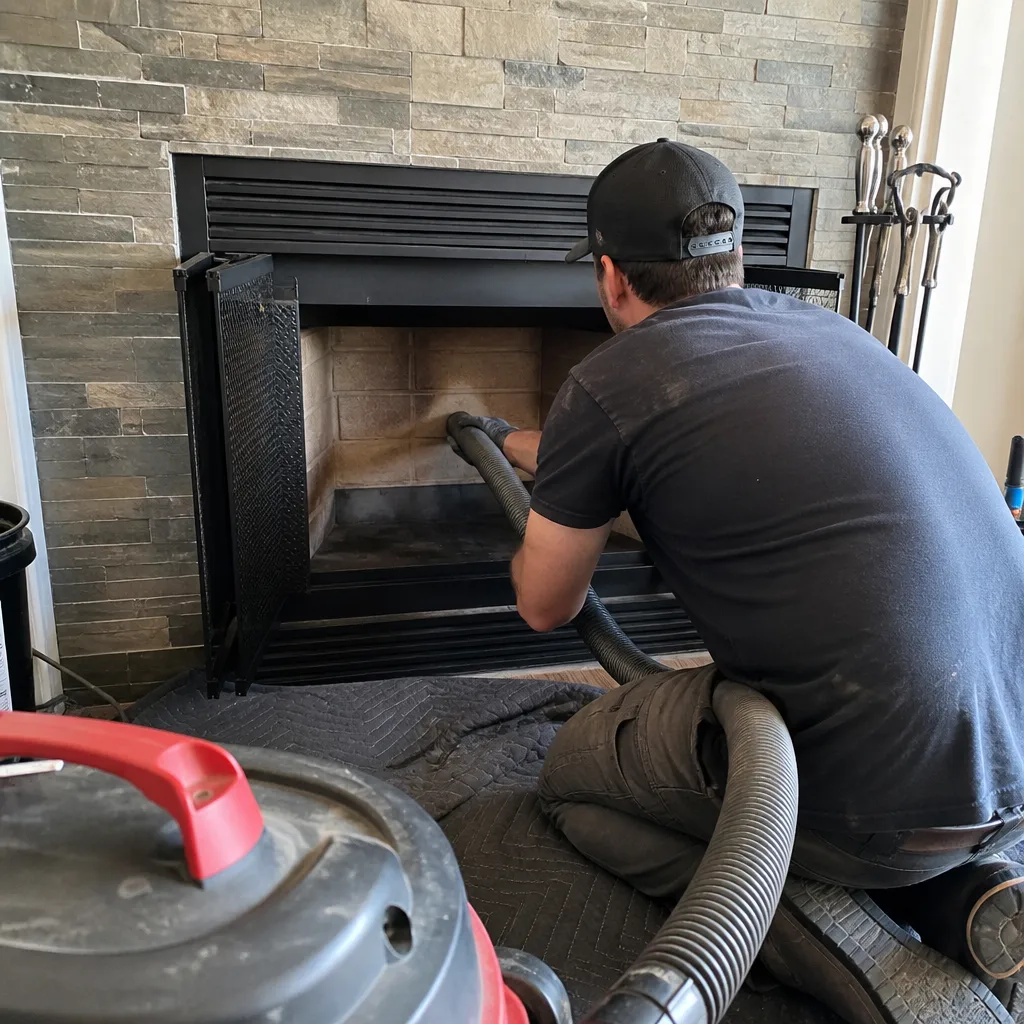
Chimney sweep logs do not sweep chimneys. They loosen some creosote - which then falls where a brush and vacuum still have to collect it.
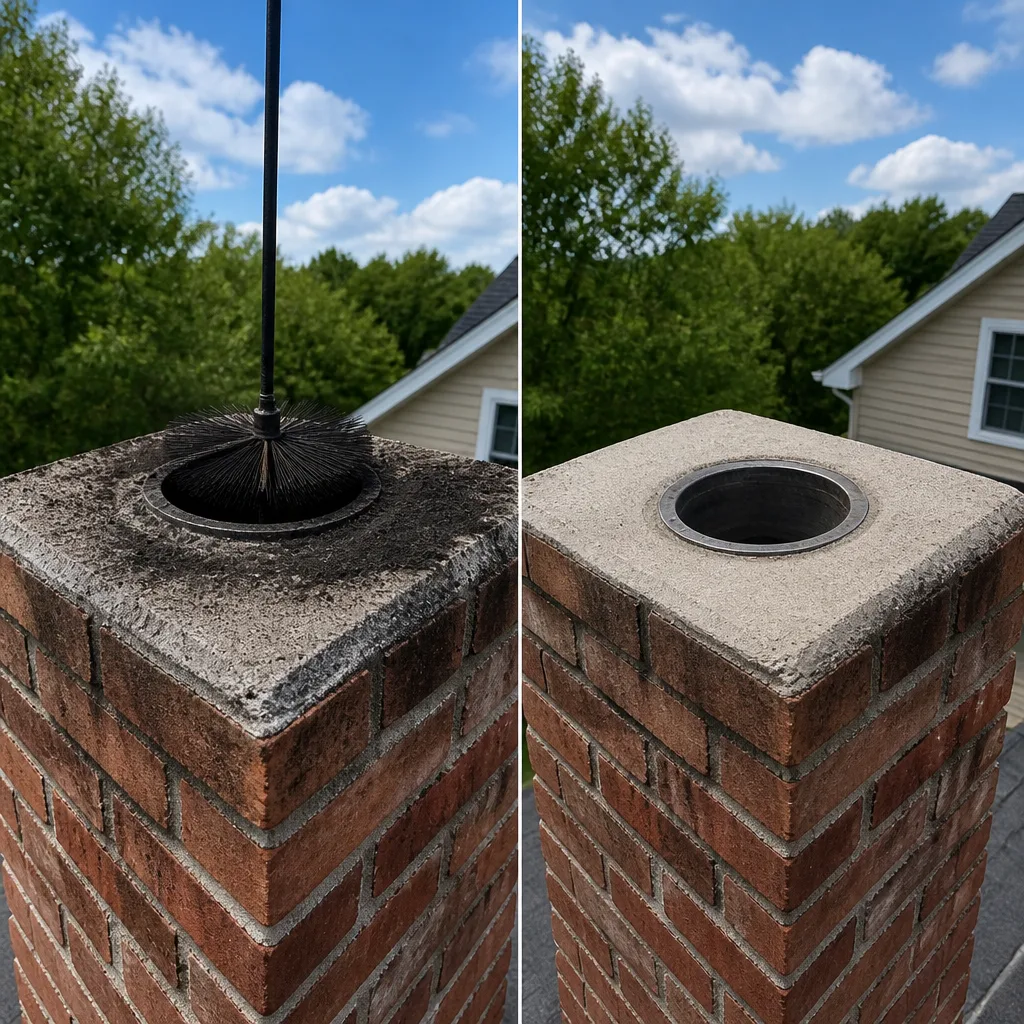
 Before
 After
After Before
 After
After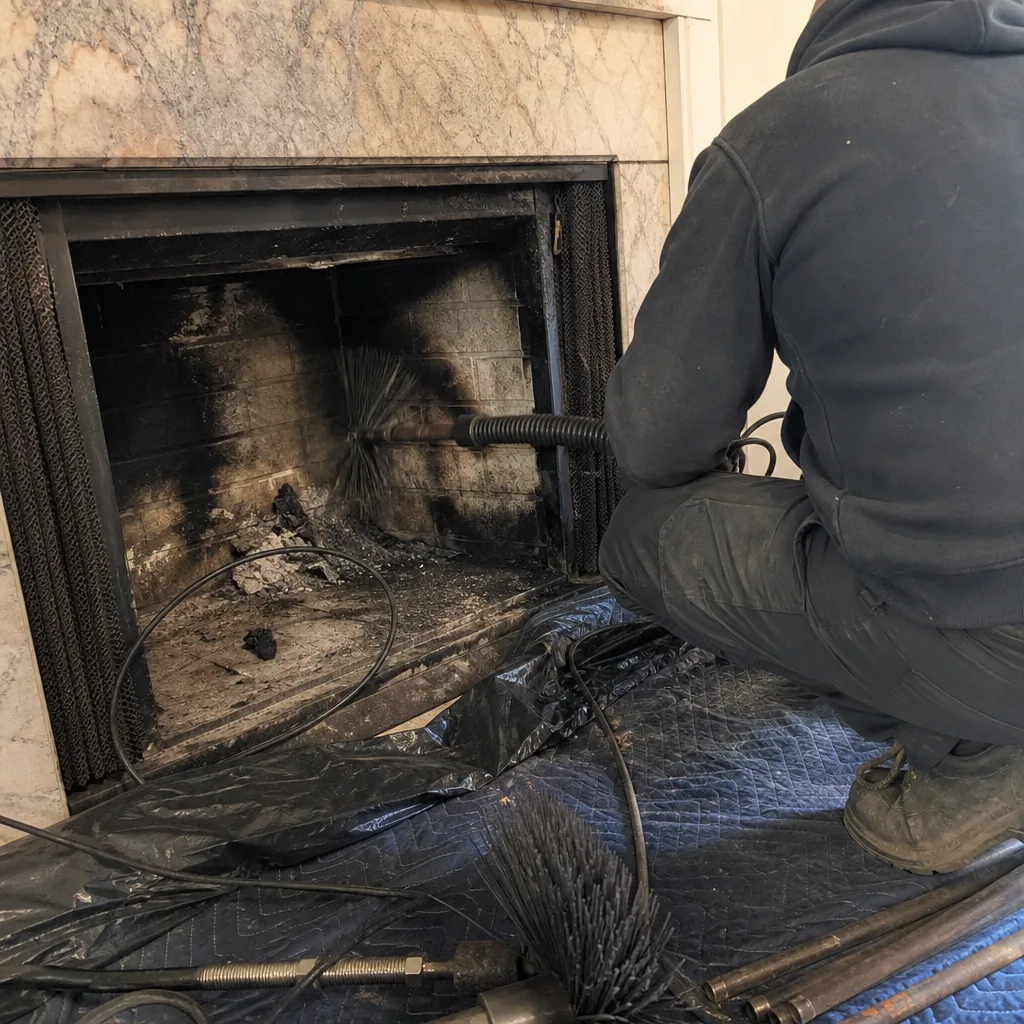 Before
 After
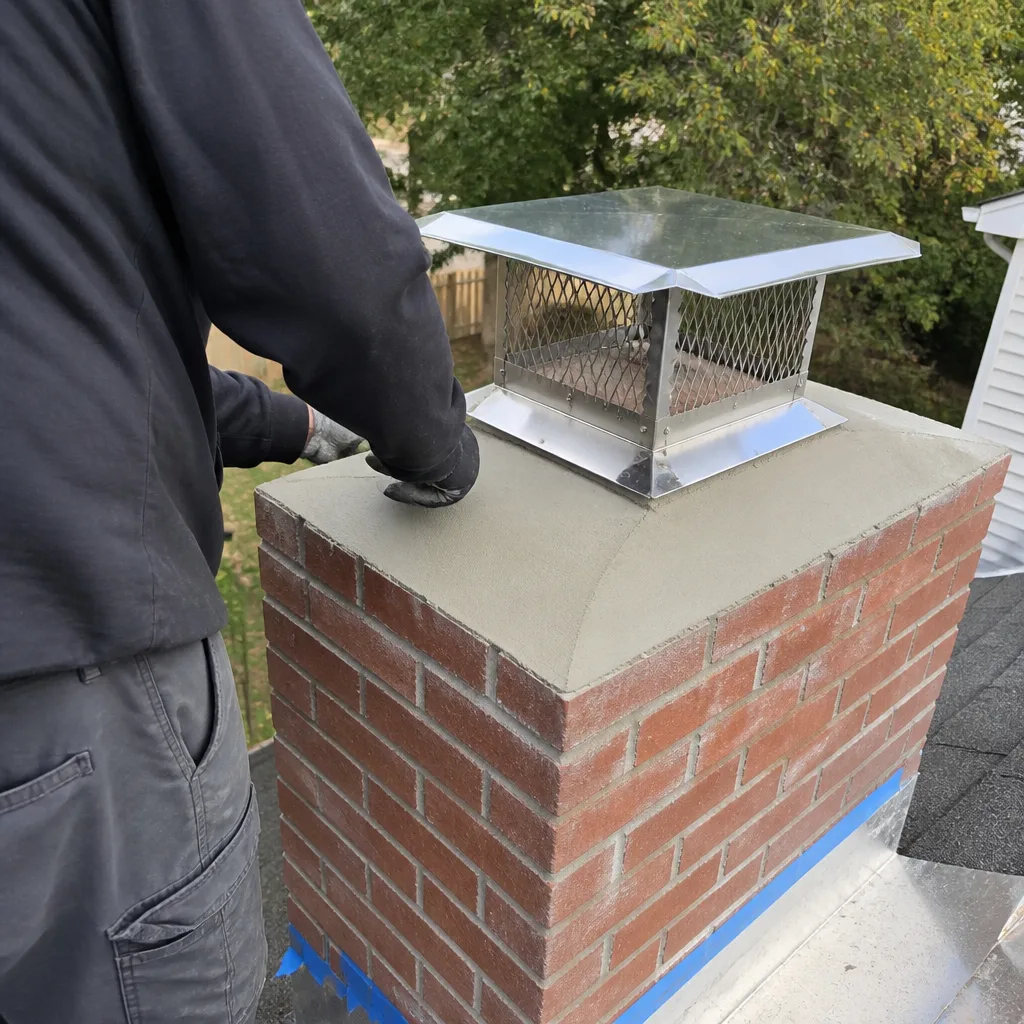
AfterHeatShield Chimney Cap Installation: The Ashburn Owner’s Guide
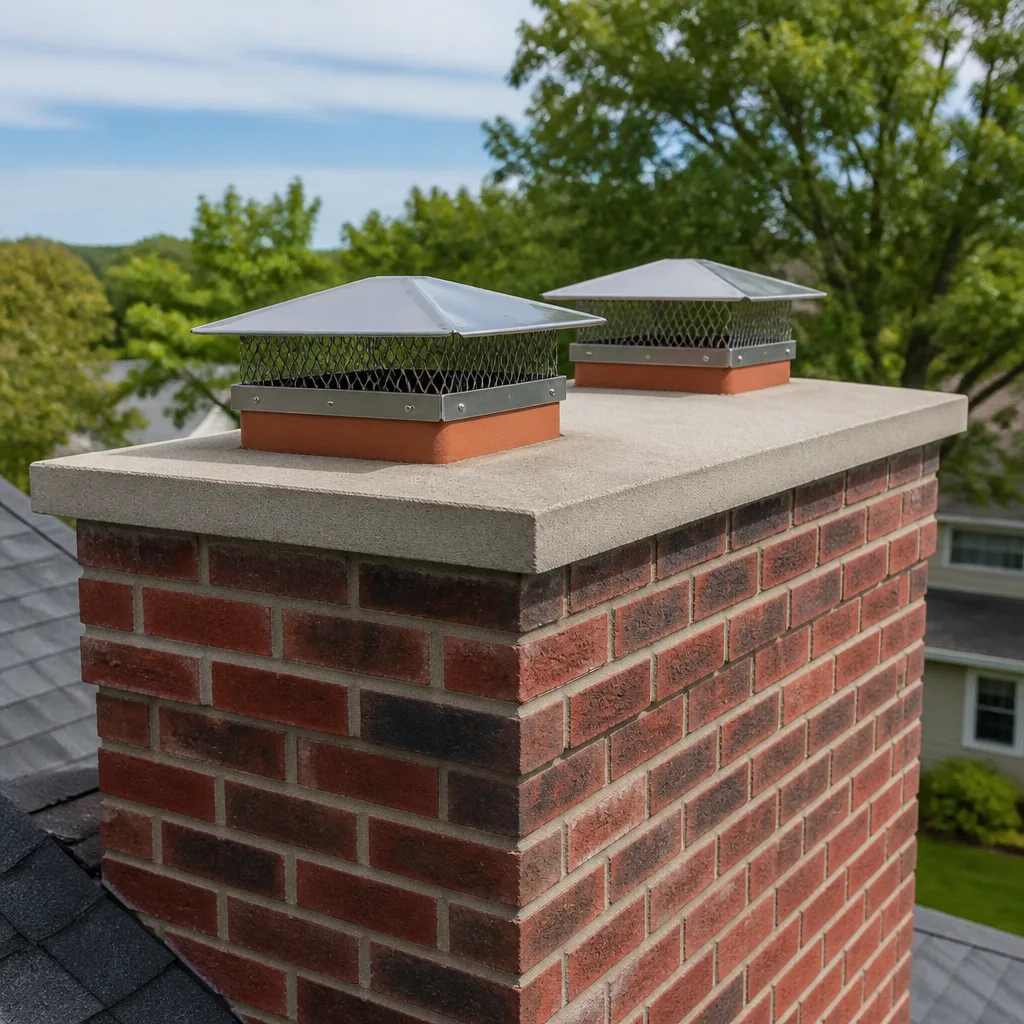
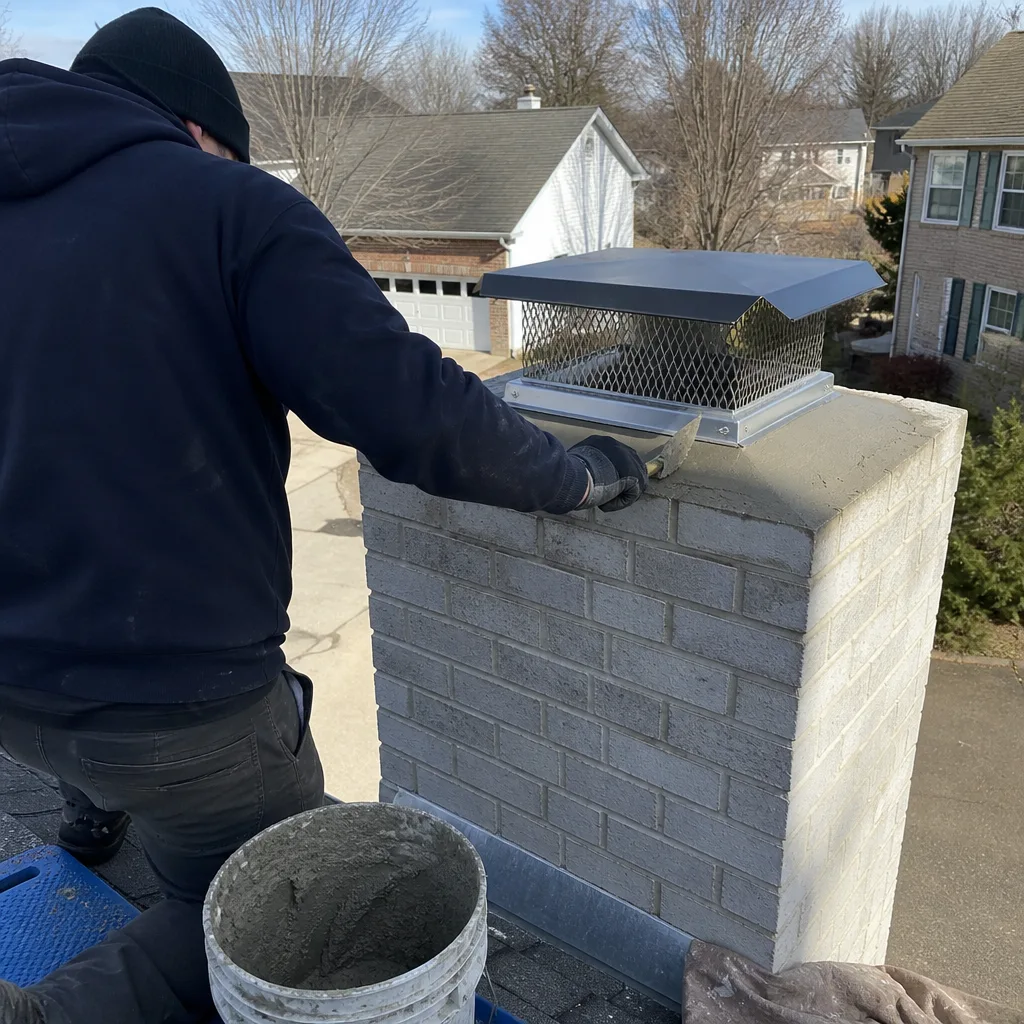
We stock and install HeatShield-compatible chimney caps in Ashburn for $290-$480 installed, labor included. Most swaps are done in one visit, and if we’re already out there for an inspection, we can usually install it the same day. The way owners usually find us: they notice rust streaks down the flue tile, a cap that’s listing sideways after a winter storm, or they open the inspection report from their home purchase and see “cap damaged, recommend replacement” circled in pen.
HeatShield is best known for their Cease-Fire flue liner repair systems, but their caps share the same sheet-metal DNA: stainless steel hoods, riveted seams, and a mesh screen sized to keep embers in and animals out. When that cap fails, it’s rarely the stainless that gives up first. It’s the mounting hardware, the screen, or the previous installation. We’ll get into all of that below.
Which HeatShield Models This Applies To
We work with the three HeatShield cap lines most common in Ashburn homes: the standard single-flue cap, the multi-flue cap for two and three flue stacks, and the top-mount draft-increasing cap for wind-prone ridgelines. The single-flue is the one we install most. It’s also the one that gets mismatched most often.
Here’s the compatibility gotcha, and it’s the kind of thing that separates a guess from a measurement: HeatShield caps are sized to the outside dimensions of your flue tile, not the inside. A “13×13” cap fits a flue that measures roughly 13 inches across on the outside faces. If you order by inside measurement or eyeball it, you’ll end up with a cap that sits too loose, rattles in the wind, and rips its own mounting bolts loose. We carry digital calipers on the truck and measure before we quote. That’s not a best practice, it’s what a written price requires.
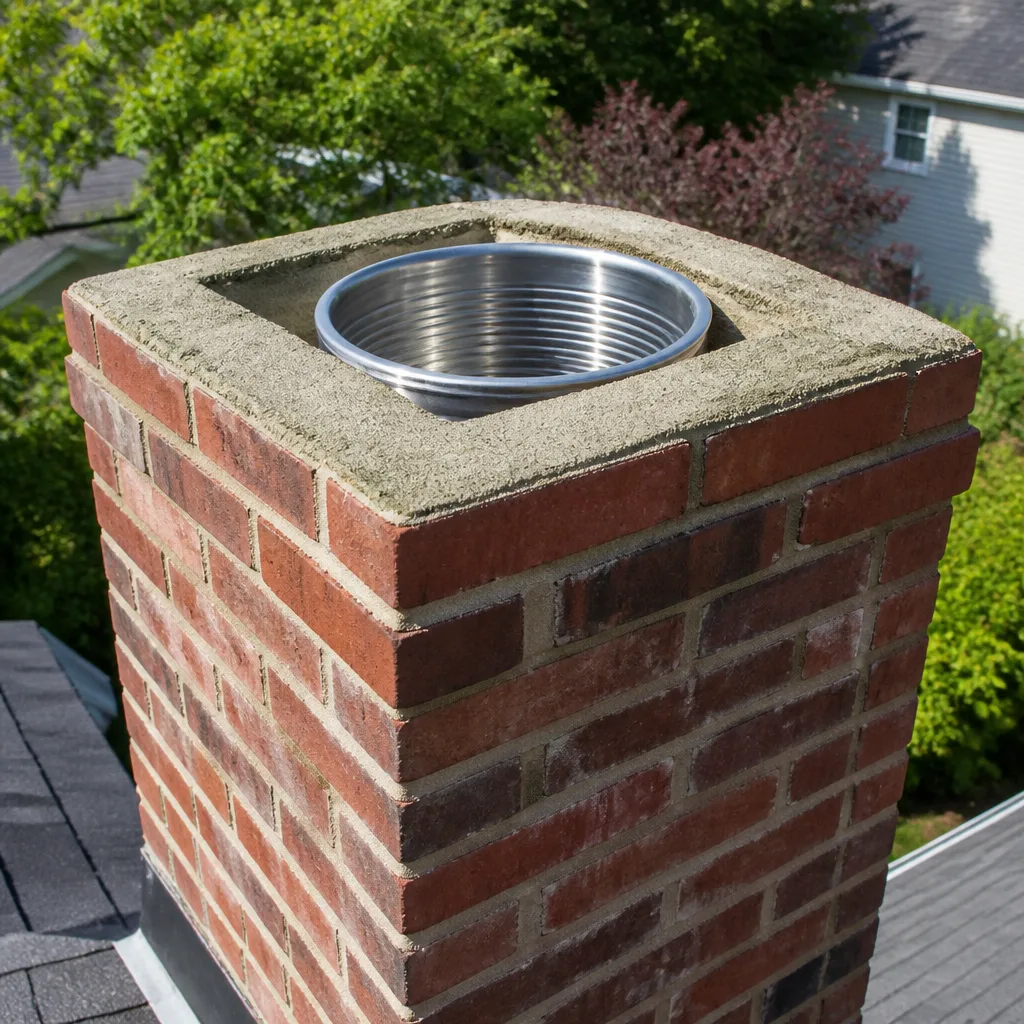
HeatShield caps use a tension-bolt mounting system with L-shaped brackets that bite into the flue tile. It’s a clean system, but it’s only as good as the tile underneath. On older Ashburn homes where the flue tile is spalling, meaning the surface is flaking off from years of freeze-thaw cycles, those bracket teeth have nothing solid to grab. That’s when we talk about a crown repair before the cap goes on. We don’t install a new cap on a failing crown. The cap would just take the crown down with it.
Signs Your HeatShield Chimney Cap Installation Is Failing
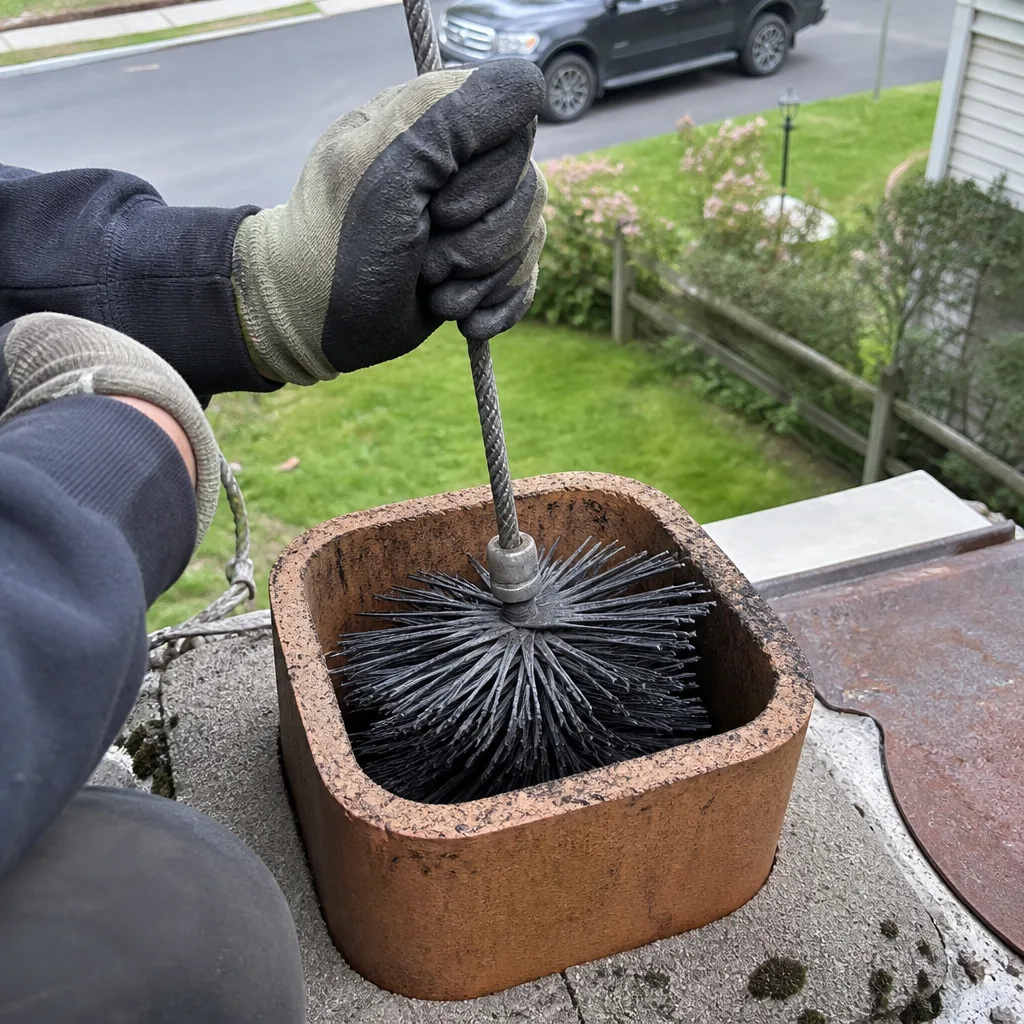
Here’s what we find on failed cap installations in Ashburn, and the reason each one matters.
- Rust streaks running down the flue tile or chase. This usually means the cap’s mesh screen has corroded through, leaving the underlying hardware exposed. In Ashburn’s humid summers and February freeze-thaw cycles, a cheap screen gives out in five years. A stainless screen should run twelve to fifteen.
- The cap sits at a tilt or has shifted off-center. This is almost always a mounting bracket failure, not a cap failure. The tension bolts either loosened over time or were never torqued properly in the first place. A tilted cap lets rain drive straight into the flue on one side.
- Squirrel or bird noise in the flue. That means the mesh screen has a gap, a tear, or was never sized right. We’ve pulled nests out of flues that had a “new” cap installed two years earlier, because the screen seam had opened up.
- Water pooling in the firebox after heavy rain. The cap hood might be fine, but the mounting base isn’t seated flush against the flue tile. Rain finds that gap and runs straight down. This is the one that gets mistaken for a liner problem, and sometimes it’s both.
- Creosote buildup on the underside of the cap hood. During our annual sweeps in Ashburn, we look at the cap from below. A heavy, shiny layer of creosote means the cap is trapping smoke instead of venting it. That’s usually a mesh screen plugged with soot, which means the cap becomes a draft problem, not a draft solution.
BeforeAfterReplacement Cost & What’s Included
In Ashburn, a HeatShield-compatible chimney cap installation runs $290-$480 by our pricing, with the cap itself typically making up $150-$280 of that. The range comes down to flue size, roof access, and whether we’re doing a single-flue or multi-flue install. A triple-flue cap on a steep roofline is going to land at the higher end. A standard single-flue with easy ladder access is closer to $290.
Every quote is written before we go up. That means the cap price, the labor, the disposal of the old cap, and the photo documentation afterward are all spelled out on paper, not described over the phone as a ballpark. Clause 1 of the Haven Standard requires a written price and written scope before work starts, and that includes parts like this. You’ll also get a written warranty on the install, and the 365-Day Done Right Promise applies: if something isn’t right within a year, we fix it.
If you bring us a written estimate from another company, we’ll give you a second opinion on it. That’s free, and it’s part of how we work.
DIY or Call Us?
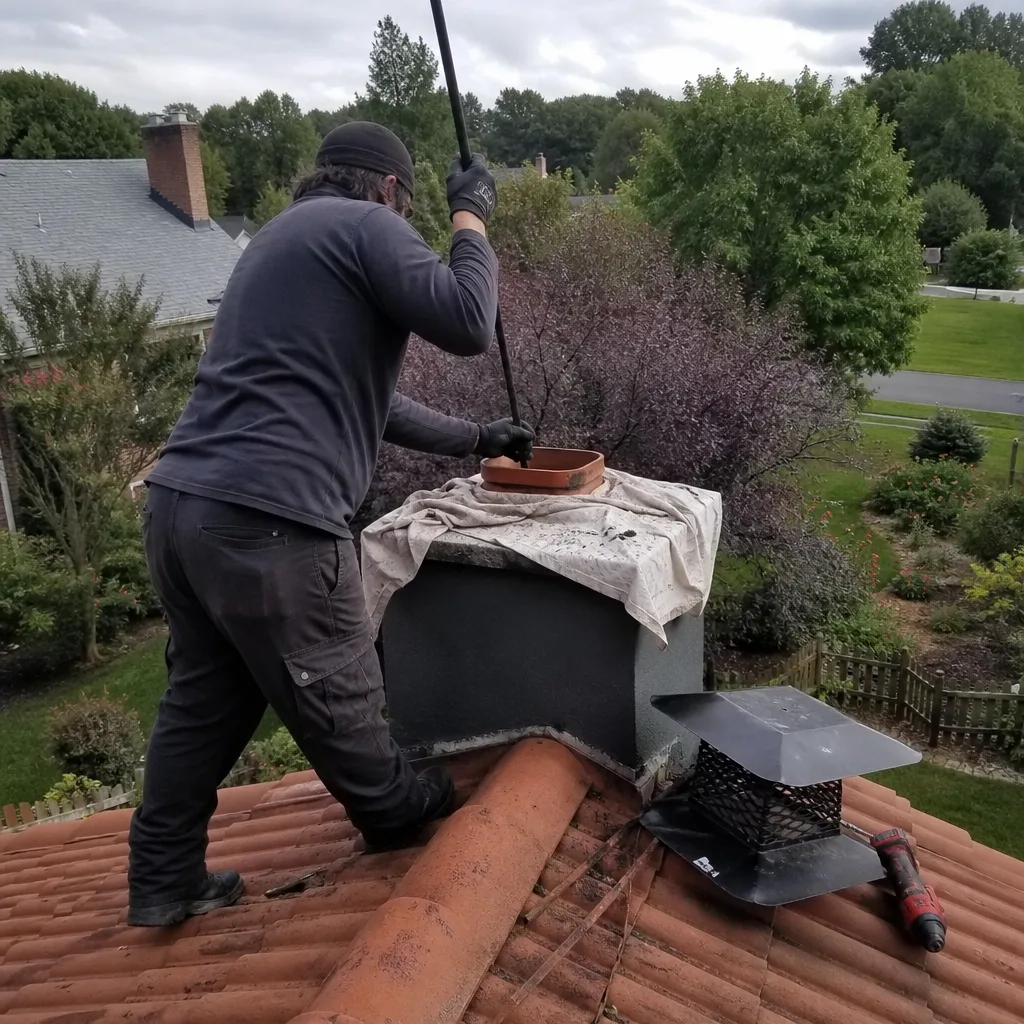
You can safely check a few things from the ground. A pair of binoculars will tell you if the cap is visibly tilted, if the screen is torn, or if the mounting base has separated from the flue. Those are good observations to have before you call.
What we don’t recommend is the ladder-and-wrench route. A chimney cap install means getting up on the roof, hauling a cap that weighs a few pounds, and leaning over the flue opening. Falls from single-story chimneys are one of the leading DIY injuries in this trade. And beyond the fall risk, the actual install requires measuring precisely, setting tension bolts correctly, and knowing whether the flue tile can even hold a bracket. A cap that flies off in a December wind is worse than a missing cap. We’d rather you call us at (240) 220-9412, and we’ll handle the climb, the measurement, and the install.
FAQs
A stainless cap installed correctly on a sound flue should last twelve to fifteen years in Ashburn’s climate. The screen usually fails before the hood, and the hardware can loosen after the first few hard freeze-thaw cycles if it wasn’t torqued properly. A cap on a failing crown or one that was sized wrong will fail in three to five years, because it’s fighting the chimney instead of protecting it. We check cap condition during every annual sweep and we’ll tell you honestly whether it needs replacing now or can run another season. Call (240) 220-9412 for an exact quote, and we’ll measure it before we quote it.
If the failure is the mesh screen and the cap body is still solid, yes, we can replace the screen in most cases. If the hood itself is corroded through, or if the mounting brackets have wallowed out the flue tile so they can’t seat, replacement is the honest fix. Patching a stainless hood with sealant is a temporary fix at best, and in Ashburn’s wet spring thaw, temporary fixes come back as callback leaks. We’ll show you the cap up close and walk through what’s repairable before you spend anything.
A standard single-flue install takes 45 minutes to an hour once we’re on the roof. A multi-flue cap takes longer because we’re measuring and aligning across a wider surface. The roofline matters more than the cap: if it’s a steep pitch and we need to stage the ladder differently, add another 20 minutes. What we do before that time is the real difference: we measure the flue, check the crown, and hand you a written price before anything gets unboxed.
We stock the most common HeatShield-compatible single-flue and multi-flue cap sizes on the truck, along with replacement screens and mounting brackets. When we don’t have your exact size, we can usually have it the next day through our supplier network, which includes HeatShield, DuraFlex, and Gelco. Either way, you’ll get a written price up front, not after the tech has already committed to the job.
HeatShield caps are solid stainless construction with a tension-bolt system that’s simpler to install than some of the slide-fit designs. We also stock DuraFlex and Gelco caps, and they’re all built to a similar standard. The real difference comes down to sizing compatibility with your flue tile, which is why we measure. If you have your heart set on HeatShield, we’ll make it work. If you don’t care about brand and just want the right cap, we’ll match the flue to the best option and price it in writing.
Need a HeatShield cap installed in Ashburn? Call (240) 220-9412. We’ll answer live, get you scheduled, and hand you a written price before anyone leaves the ground. The camera doesn’t guess, and neither do we.
Written by Corrine Halstead, Owner, Level Two Chimney Ashburn at Level Two Chimney Ashburn, serving Ashburn and nearby areas.