
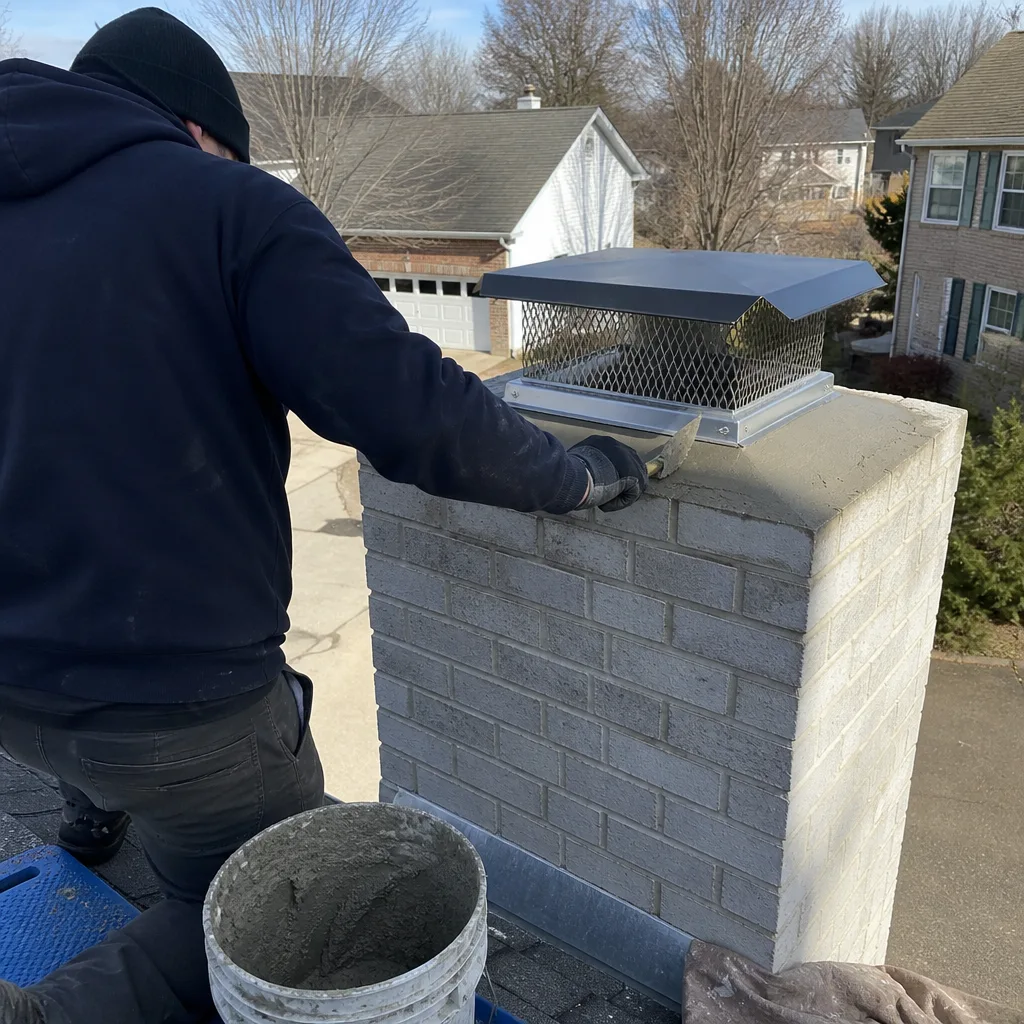
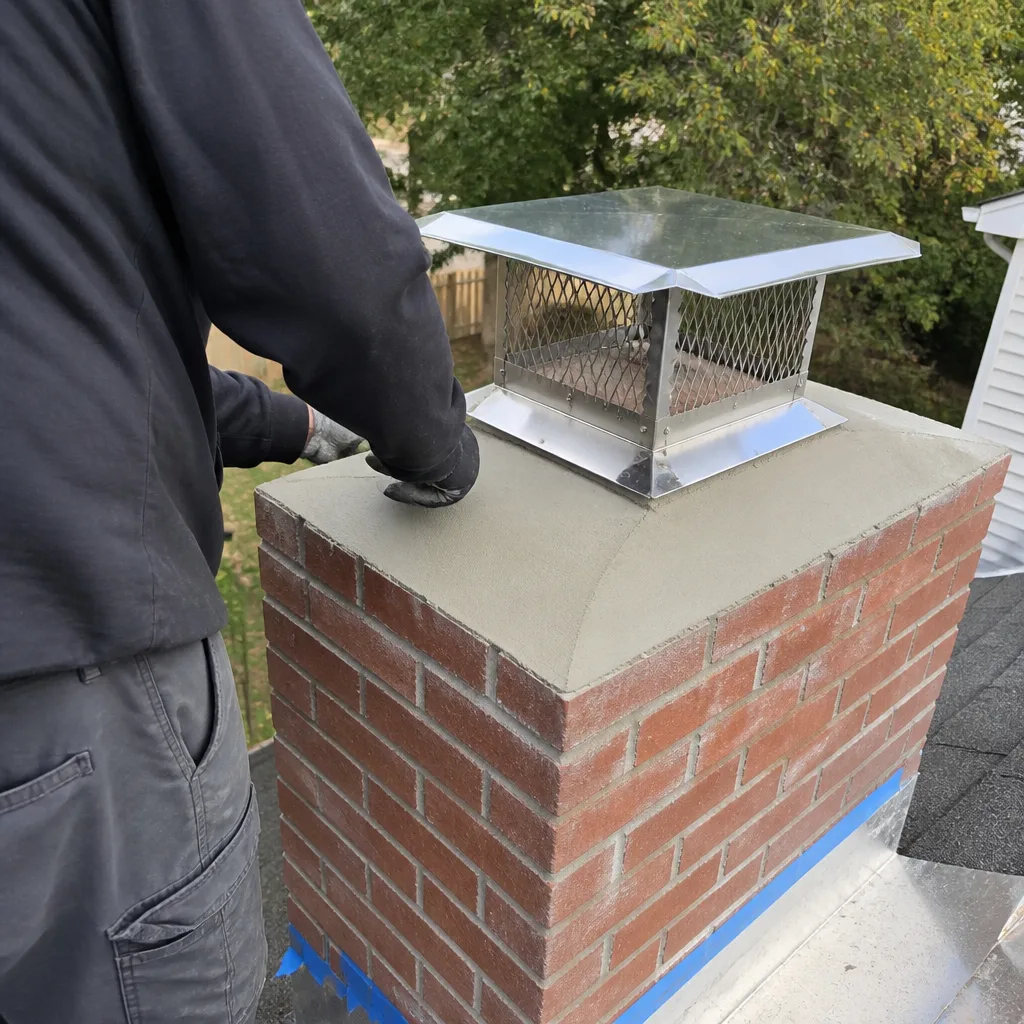
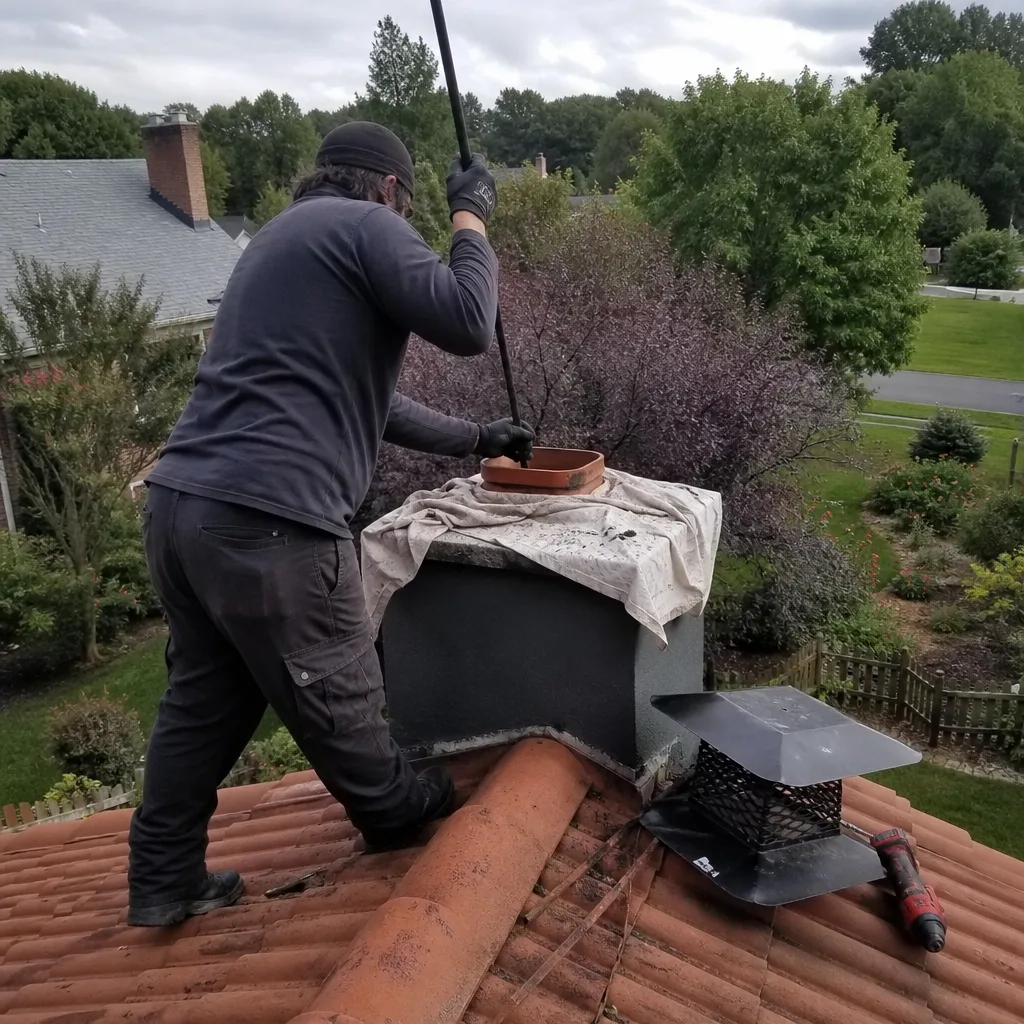
Level 1 sweep and inspection to the NFPA 211 annual standard - flue, crown, cap, and flashing checked and photographed
Chimney sweep logs do not sweep chimneys. They loosen some creosote - which then falls where a brush and vacuum still have to collect it.
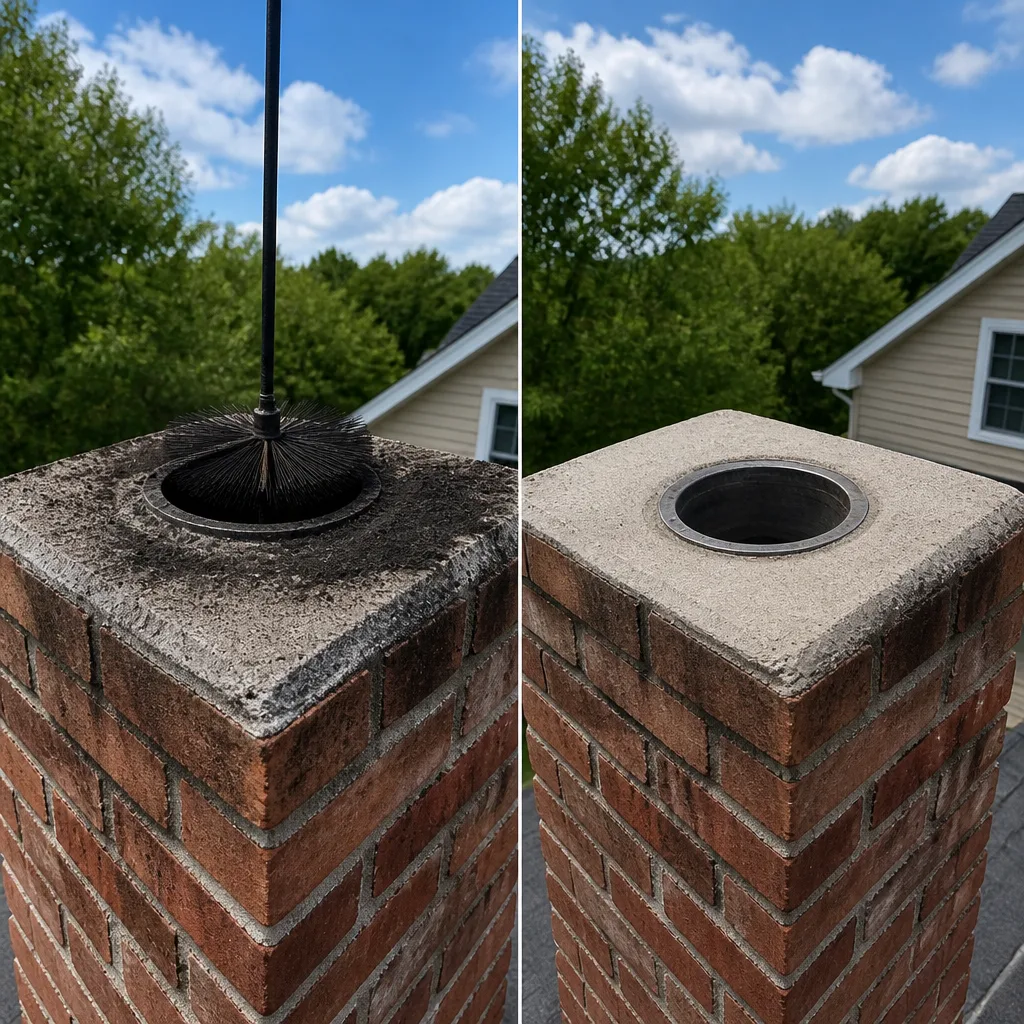
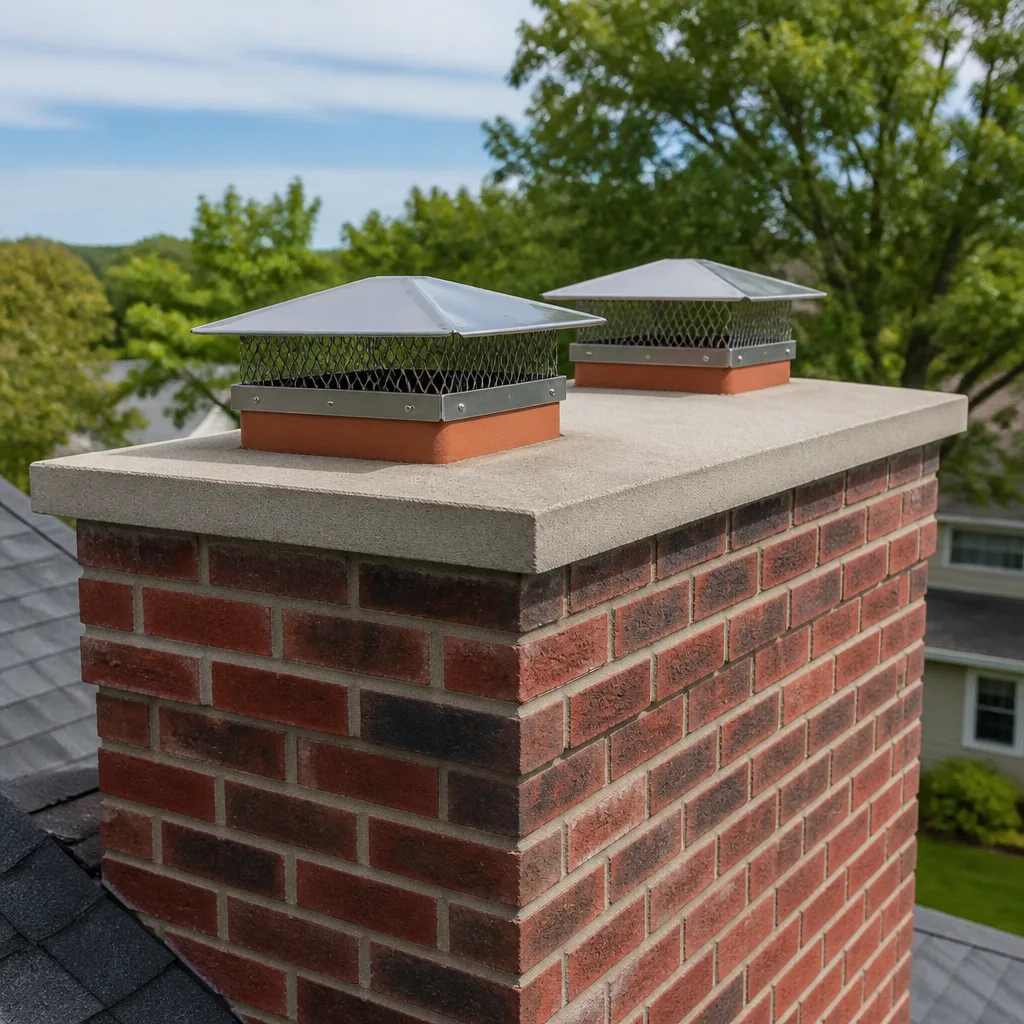
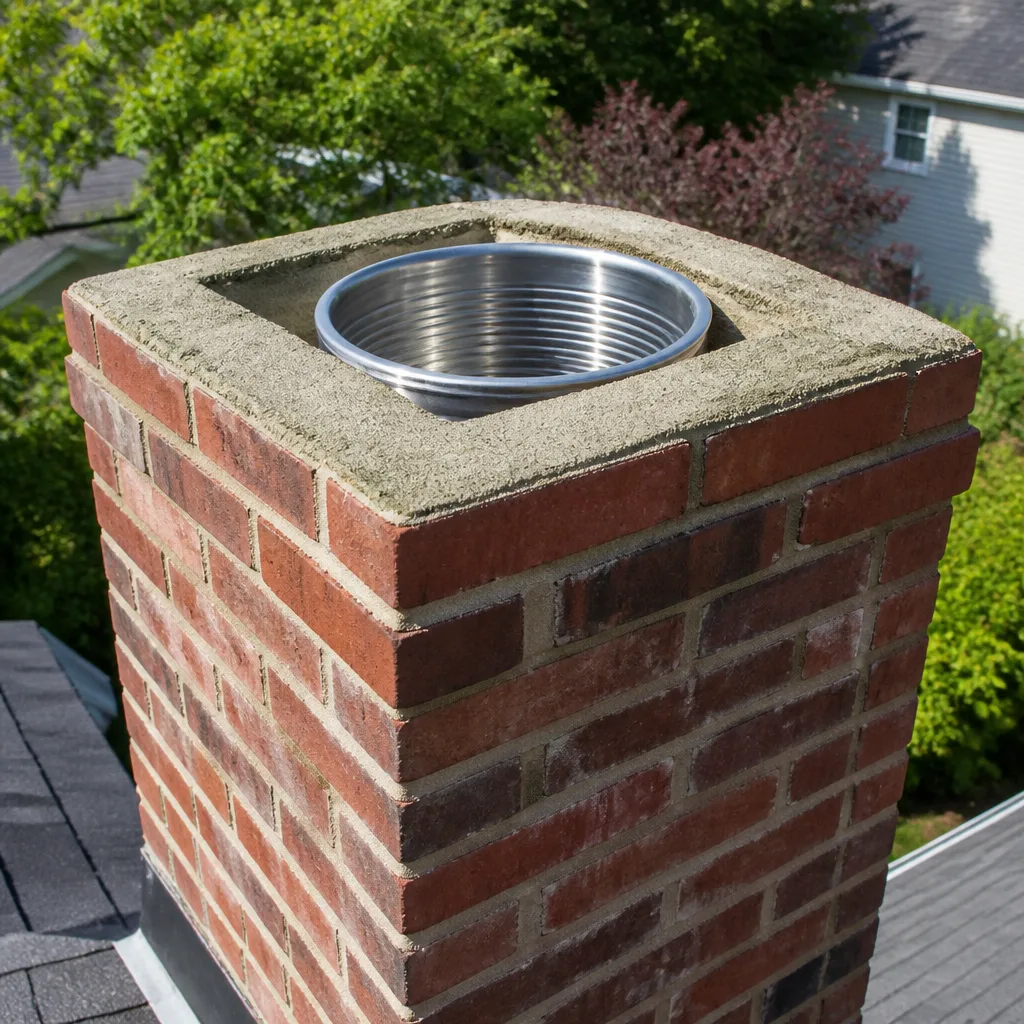
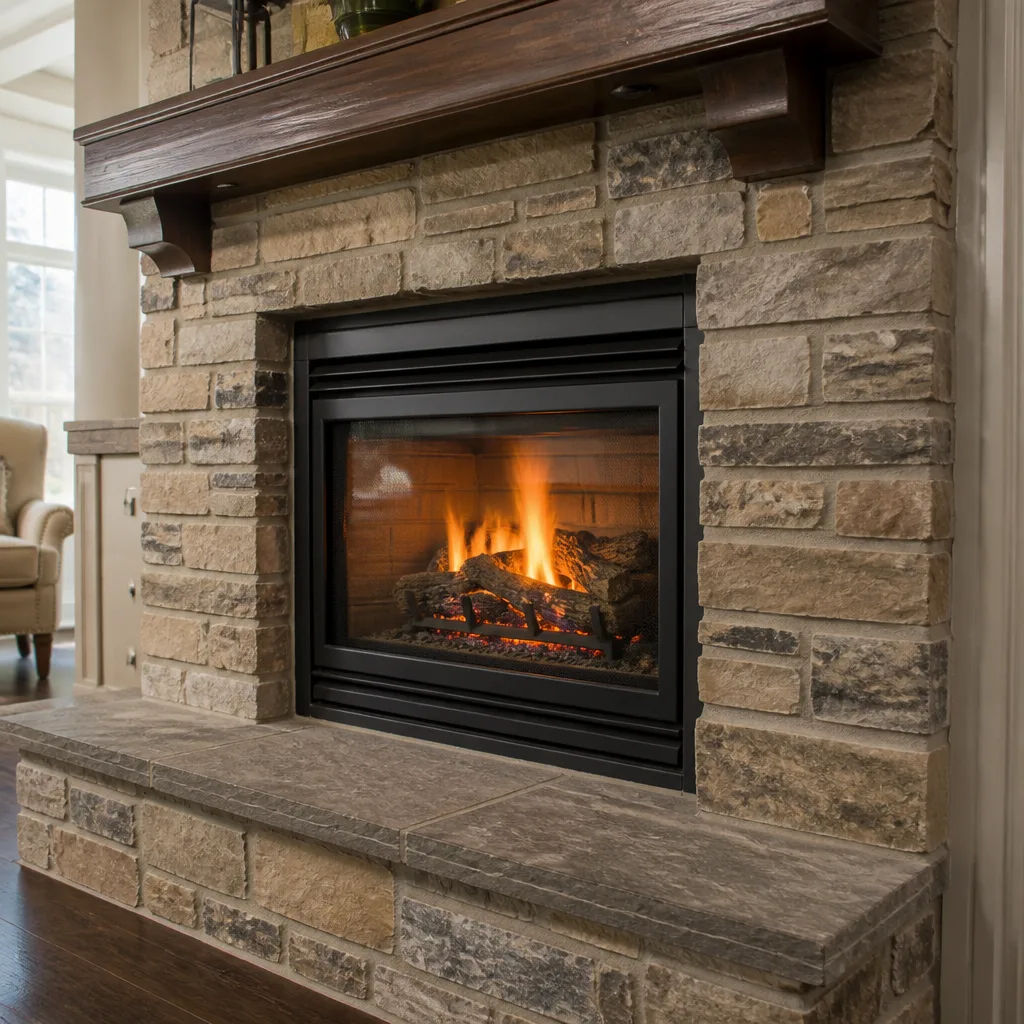
 Before
 After
After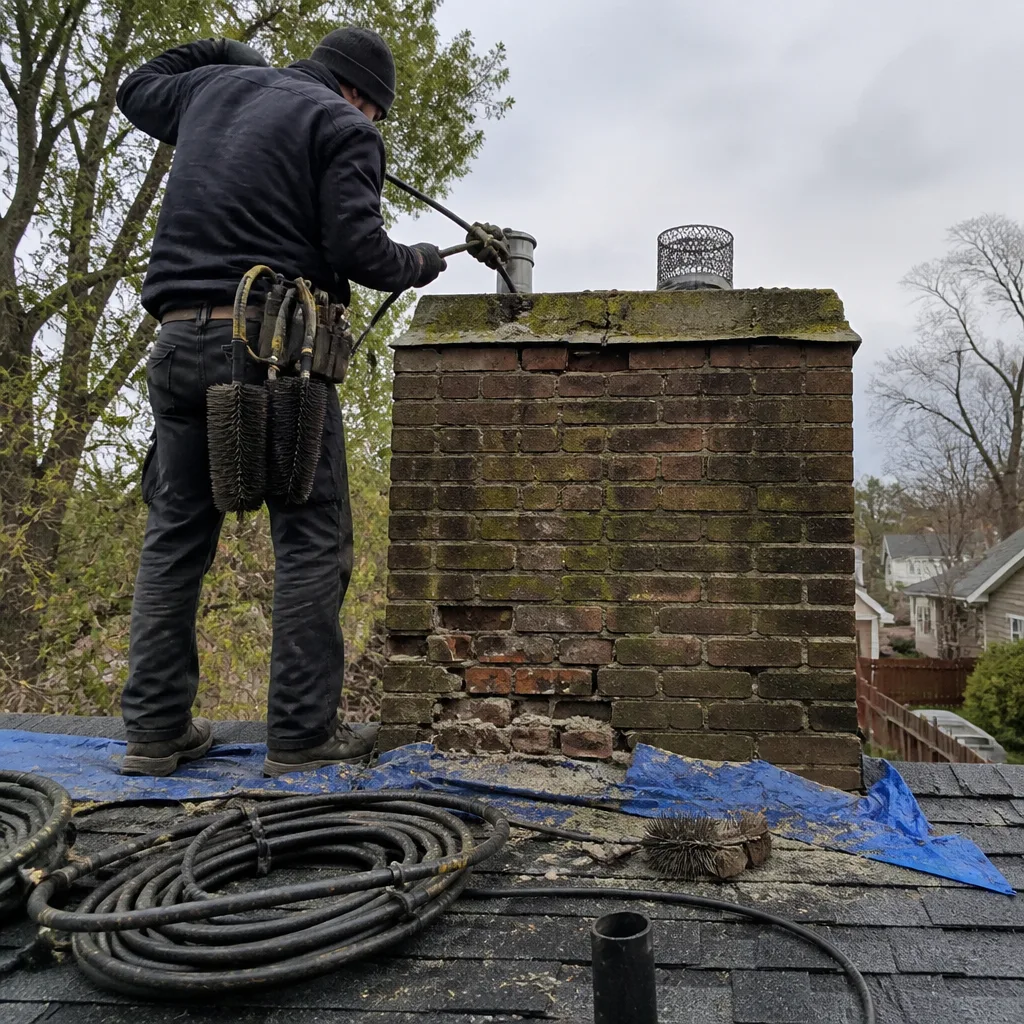 Before
 After
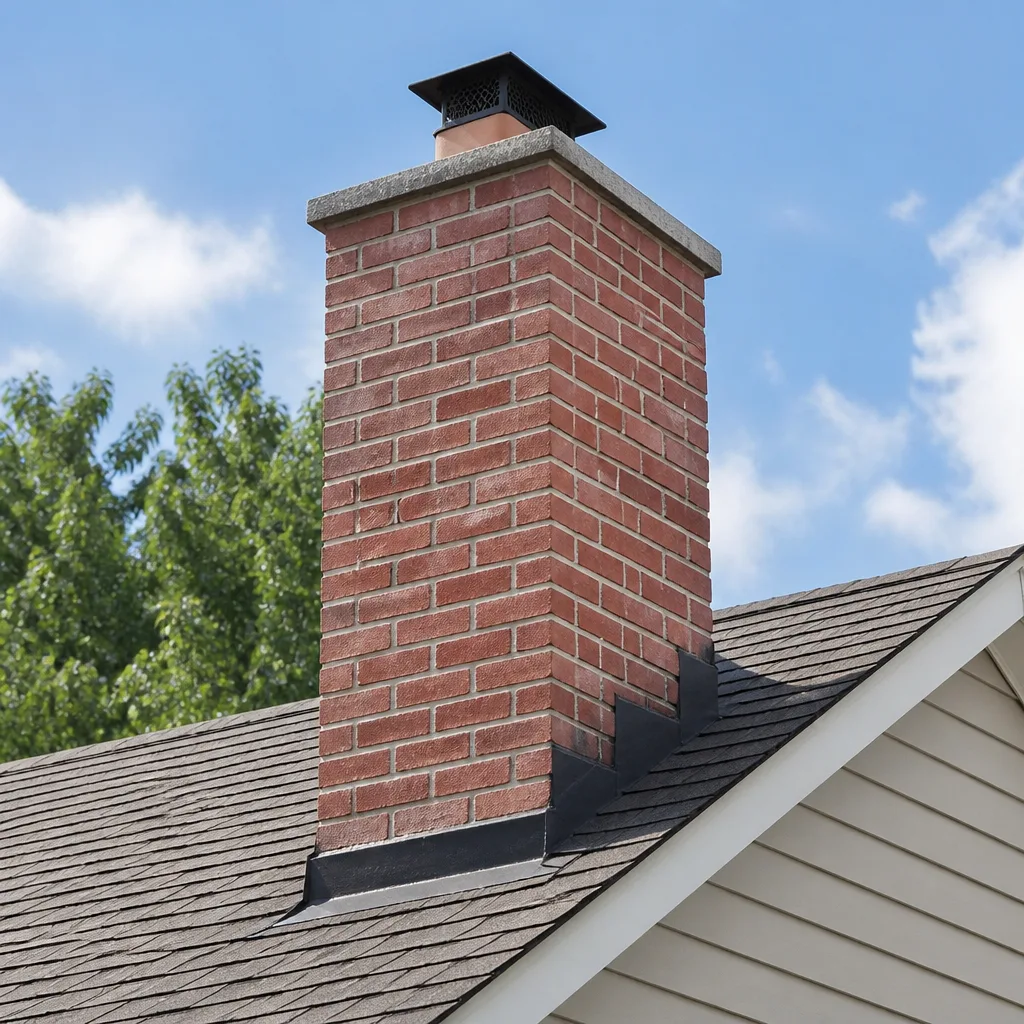
After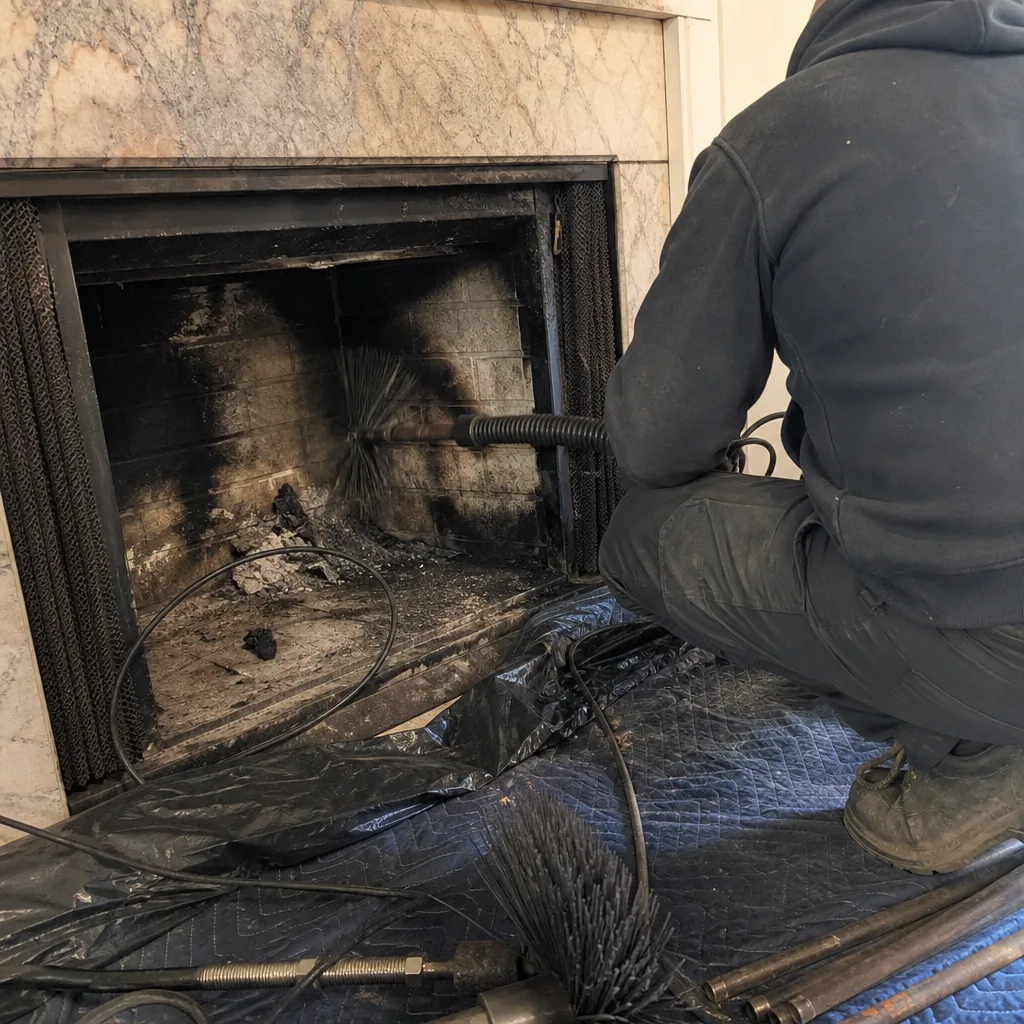 Before
 After
AfterSoot Removal in Ashburn, VA
Soot removal in Ashburn typically runs $149 to $349, depending on how much has accumulated and whether a camera inspection reveals deposits in harder-to-reach sections of the flue; see How Much Does Chimney Cleaning & Sweep Cost? (2026 Price Guide) - Ashburn, VA for full pricing details. Most appointments finish in under two hours, and every job includes a written price before anyone touches the firebox – no after-the-fact surprises.
If you’ve noticed a dark, powdery residue building up inside your firebox, along the smoke shelf, or creeping down the face of your fireplace, that’s soot – and in Northern Virginia’s climate, where homeowners tend to burn wood heavily from October through early March, it accumulates faster than most people expect. At Level Two Chimney Ashburn, soot removal is part of our broader Chimney Cleaning & Sweep in Ashburn service, and it’s one of the most common calls we get from neighborhoods like Belmont Ridge, Broadlands, and Ryan Park. We’ve completed more than 38,000 chimney inspections and cleanings since 2009, every one quoted in writing before work began. Call (240) 220-9412 any time – a live person picks up, not a voicemail.
Soot is different from creosote. Creosote is a flammable, sticky byproduct of incomplete combustion that comes in three grades; soot is the fine, dry carbon particulate that settles on every surface smoke touches. It’s less immediately dangerous than Class II or Class III creosote, but it’s not harmless either. Accumulated soot restricts airflow, darkens masonry, carries polycyclic aromatic hydrocarbons into your living space, and – if left long enough – can harden into a crust that makes the flue harder and more expensive to clean. Catching it early with Chimney Cleaning & Sweep services is the practical move.
When You Need Soot Removal
- Visible black powder in the firebox or on the hearth. If you’re wiping down a gray-to-black film every week during burn season, the soot load inside the flue is almost certainly heavier. In Ashburn’s older Willowsford and One Loudoun-area homes, we frequently find the smoke shelf – the horizontal ledge just above the damper – packed with soot that’s been undisturbed for multiple seasons.
- A persistent smoky smell when the fireplace isn’t in use. Soot is porous and holds odor. Ashburn’s summer humidity, which regularly climbs into the 70-80% relative humidity range from June through August, drives moisture into soot deposits and intensifies that stale-smoke smell. It’s not a ventilation issue you can air out – the source needs to be removed.
- Smoke backing into the room during or after a fire. A soot-narrowed flue reduces the draft that pulls combustion gases up and out. If your fires are drawing poorly or you’re getting smoke rollout into the living space, restricted airflow from accumulated deposits is one of the first things we check.
- Dark staining on the fireplace face or mantel. Soot staining on brick or stone above the firebox opening is a sign that combustion gases are spilling forward rather than rising cleanly. That usually means restriction inside the flue, an undersized throat, or a damaged smoke chamber – all visible on camera.
- You haven’t had a cleaning in more than 12 months of regular use. The National Fire Protection Association’s NFPA 211 standard calls for annual inspection and cleaning for any chimney in regular service. In Ashburn, where a family burning two to four fires per week from fall through spring can move through a full cord of wood in a season, annual cleaning is a practical minimum, not an overly cautious recommendation.
- After a chimney fire, even a small one. A minor flue fire – often unnoticed, recognized only by a popping sound or briefly intense heat – can fracture liner tiles and leave a heavy soot residue throughout the system. A camera scan after any suspected flue fire is the only way to know what you’re actually dealing with.
Our Soot Removal Process
- Written price and scope before we start. Under Haven Standard Clause 1 – H.A.V.E.N. “Have it in writing” – you receive a written price, written scope of work, and written warranty before the technician opens a single piece of equipment. There is no “we’ll tell you what it costs after we look” at Level Two. The quote is the commitment.
- Camera scan of the full flue system. We run a camera down the flue liner before cleaning begins. This is an NFPA 211 Level 2 practice, and it’s been our default since 2009 – not something we added later because insurers asked for it. The camera identifies where soot has accumulated, confirms the liner condition (cracked tile, spalling brick, or a compromised stainless liner are all visible at this stage), and tells us whether we’re dealing with soot only or soot layered over developing creosote deposits. You get a photo record of what we found, documented under Haven Standard Clause 4.
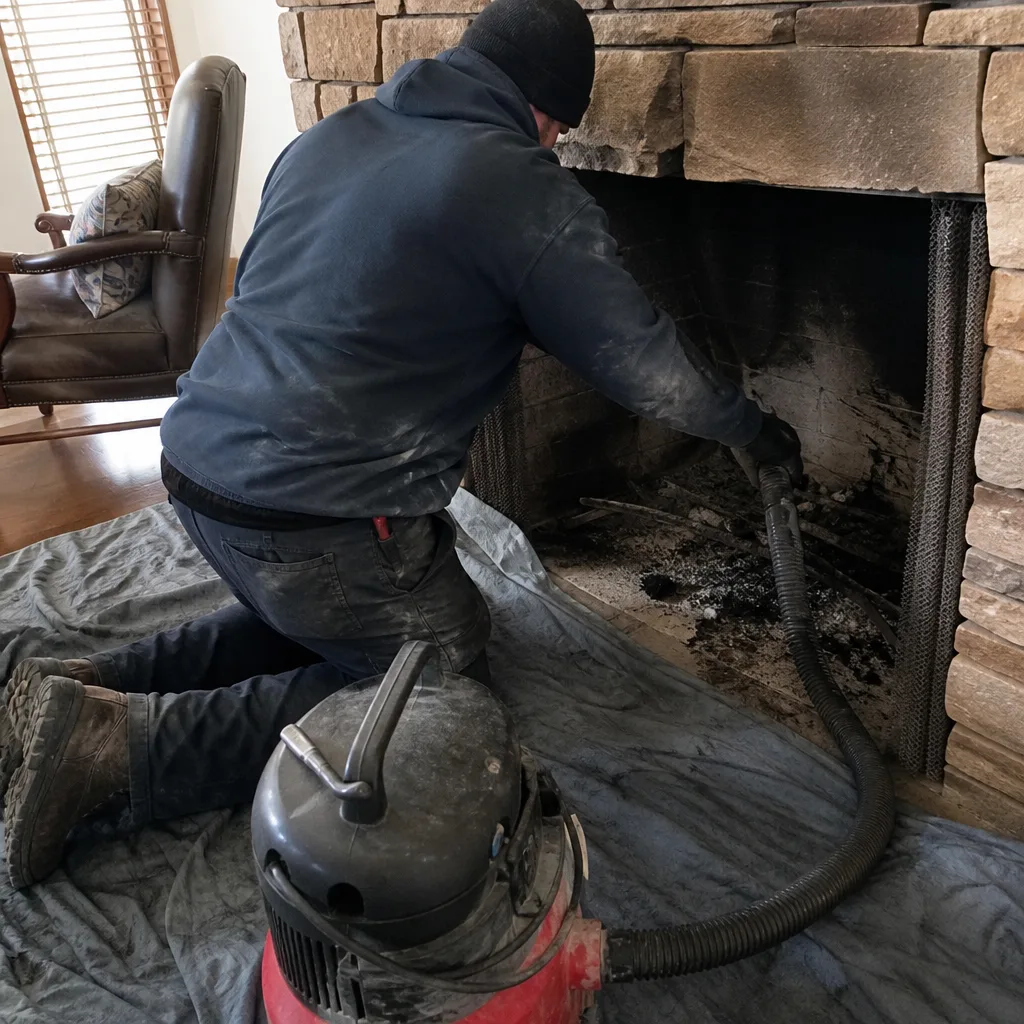
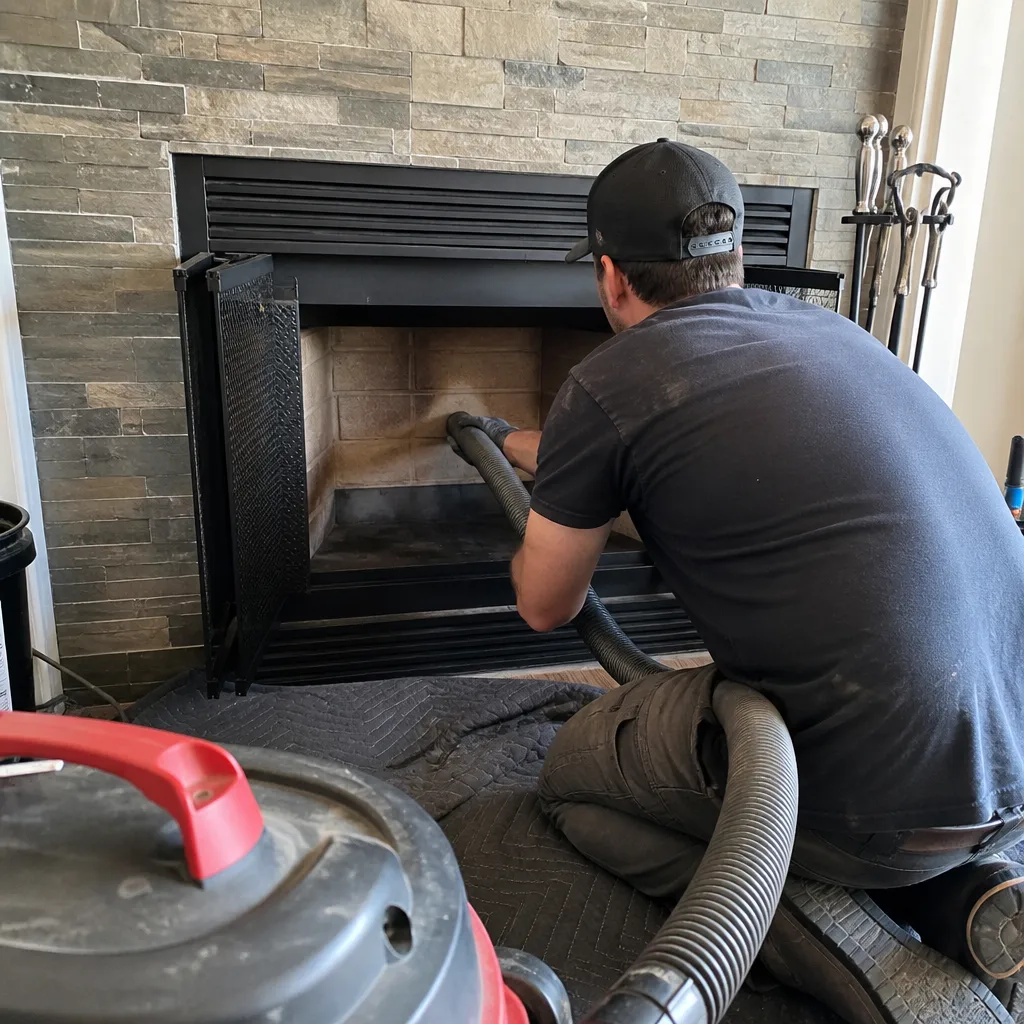
- Containment setup. The technician lays drop cloths across the hearth and surrounding floor, seals the firebox opening with a tight-fitting work panel, and connects a high-efficiency particulate air (HEPA) vacuum system to the flue before brushing begins. In Ashburn’s newer construction – a lot of the homes in Brambleton and the Loudoun Valley Estates have open floor plans directly adjacent to the main fireplace – keeping fine soot out of the living space isn’t optional, it’s the job.
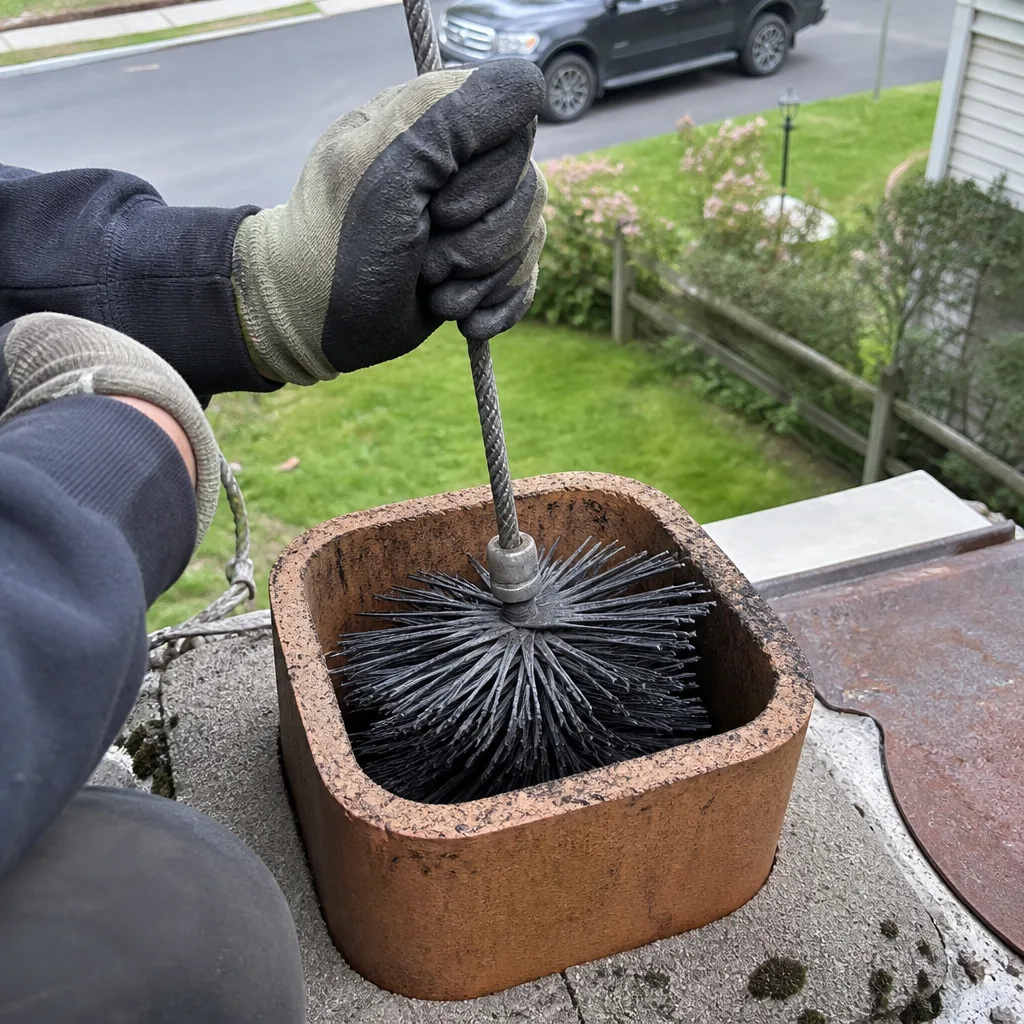
- Mechanical brushing from the top and the firebox. Rotary brushes sized to your flue’s interior diameter – round, square, or rectangular – work the full length of the liner. We work both from the roofline down and from the firebox up to make sure the smoke shelf, throat, and lower flue section are cleared. Copperfield and Olympia Chimney supply the brush sets and flexible rods we use; the equipment is sized to the liner, not grabbed off a truck at random.
- Smoke chamber and firebox cleaning. The smoke chamber – the funnel-shaped section between the throat and the flue liner – collects significant soot because of its geometry. We clean it by hand with brushes and chemical-free soot sponges, and the firebox walls and floor are vacuumed clean. A lot of companies stop at the liner and call it done. We don’t.
- Post-cleaning camera scan and documented photo record. After cleaning, the camera goes back down. You see the before and the after – not just our word that the flue is clear. The photo record is yours to keep, and it becomes part of the documented history of your chimney system. If you ever sell the home, that record has real value to a buyer or a home inspector.
BeforeAfterSoot Removal Pricing in Ashburn
Soot removal in Ashburn runs $149 to $349 for most single-flue systems. Here’s what moves the number:
| Scenario | Typical Range |
|---|---|
| Single flue, light seasonal soot, recent prior cleaning | $149 – $199 |
| Single flue, moderate soot accumulation (1-2 seasons unbrushed) | $199 – $269 |
| Single flue, heavy soot with smoke chamber buildup | $269 – $349 |
| Dual-flue system (e.g., fireplace + furnace chase) | Add $79 – $129 per additional flue |
| Camera inspection (included on every visit as standard) | Included – no add-on charge |
A few things that specifically affect pricing in Ashburn:
- Flue height matters. Many of the larger colonials in Ashburn Farm and Goose Creek Village have two-story fireplaces with flue runs of 25 feet or more. Longer flues require more rod segments and more time.
- Liner type affects access. Stainless steel liner inserts – common in Ashburn homes where the original clay tile liner was relined after an inspection finding – clean differently than clay tile and sometimes require different brush profiles.
- Soot mixed with creosote takes longer to clear and may require a separate chemical treatment appointment before the flue can be fully brushed. We’ll tell you that before we start, not partway through the job.
Every estimate is free. If you have a written quote from another company, bring it to us – we offer a Free Second Opinion on any written estimate, at no charge, with no obligation. Call (240) 220-9412 to schedule.
The written price you receive before we start is the price on your invoice when we finish. Haven Standard Clause 1 makes that a documented commitment, not a verbal promise. And every job is backed by our 365-Day Done Right Promise: if the work isn’t right, we make it right – full stop.
FAQs – Soot Removal
Is soot removal the same thing as a chimney sweep?
Soot removal is one component of a full chimney sweep, but the two aren’t identical. A chimney sweep – the way we perform it as part of our full service offering – covers the flue liner, smoke chamber, throat, firebox, and a camera-based inspection of the entire system. Soot removal specifically targets the dry, powdery carbon deposits left by combustion. If you’re calling because you’ve noticed soot buildup and want it cleared, you’re describing a sweep. We’ll tell you exactly what we found and what we cleaned, in writing, when we’re done.
How often does soot need to be removed in Ashburn?
NFPA 211 calls for at least Annual Sweep inspection and cleaning for any chimney in regular service. In Ashburn, where cold winters and relatively affordable cord wood prices encourage heavier use, homeowners burning two or more fires per week through a full season often benefit from cleaning every year without exception. If you’re burning less frequently – say, six to ten fires a season for ambiance – every other year may be sufficient, but the camera scan is still worth doing annually because liner condition and crown integrity can change independent of how much you use the fireplace.
Can I remove soot myself, or does it require a professional?
The firebox interior – the visible brick or cast iron surfaces you can reach easily – can be wiped down with a dry chemical sponge made for soot (not a wet cloth, which smears carbon into the masonry). That’s the safe DIY limit. The flue liner, smoke shelf, and smoke chamber should not be DIY-cleaned, for two reasons: first, without a camera, you cannot confirm what you’re cleaning or whether the liner is intact; second, dislodging accumulated soot in a confined flue without a HEPA containment system will coat your living space in fine particulate. Professional equipment – the sealed vacuum system, the rotary brush rods, the camera – exists specifically because the job can’t be done clean by hand. Call (240) 220-9412 if you want an honest assessment of what’s actually there before you decide anything.
What’s the difference between soot and creosote, and does it matter for pricing?
Soot is the dry, fine carbon powder that settles on every surface combustion gases touch. Creosote is the condensed, sticky or hardened residue that forms when wood smoke cools before it fully exits the flue – it comes in three grades, from a light flaky dust (Class I) to a thick tar-like glaze (Class III). Soot is easier and faster to remove; creosote – especially Class II or Class III – requires chemical treatment and sometimes multiple visits. The camera scan we run before cleaning tells us exactly which we’re dealing with. If there’s creosote present alongside soot, we’ll tell you, show you the photos, explain what it means for fire risk, and give you a revised written price before we do anything further. Yes, creosote work costs more – and that is always disclosed before work begins, not after.
Key Takeaways
- Soot removal in Ashburn runs $149 to $349 for most single-flue systems, with a free written estimate before any work starts.
- Every appointment includes a camera scan of the full flue liner – an NFPA 211 Level 2 practice that’s been standard at Level Two since 2009 – and a documented photo record you keep.
- Ashburn’s humidity, heavy burn seasons, and mix of older clay-tile flues and relined stainless systems all affect how soot accumulates; a camera is the only way to know what’s actually inside.
- All work is backed by the 365-Day Done Right Promise and Haven Standard Clause 1: written price, written scope, written warranty – before anyone starts.
- Call (240) 220-9412 any time. A live person answers 24/7. Free Second Opinion on any written estimate, no obligation.
To schedule Chimney Cleaning & Sweep Near Me in Ashburn, VA or a full chimney sweep, call (240) 220-9412. You’ll get a real person, a free estimate, and a written price before we schedule anything. Corrine Halstead and the Level Two team have documented more than 38,000 chimney jobs since 2009, and every one started the same way: camera in the flue, price on paper, work on schedule.
Written by Corrine Halstead, Owner at Level Two Chimney Ashburn, serving Ashburn.