
Last updated September 20, 2026
Level 1 sweep and inspection to the NFPA 211 annual standard - flue, crown, cap, and flashing checked and photographed
Chimney sweep logs do not sweep chimneys. They loosen some creosote - which then falls where a brush and vacuum still have to collect it.
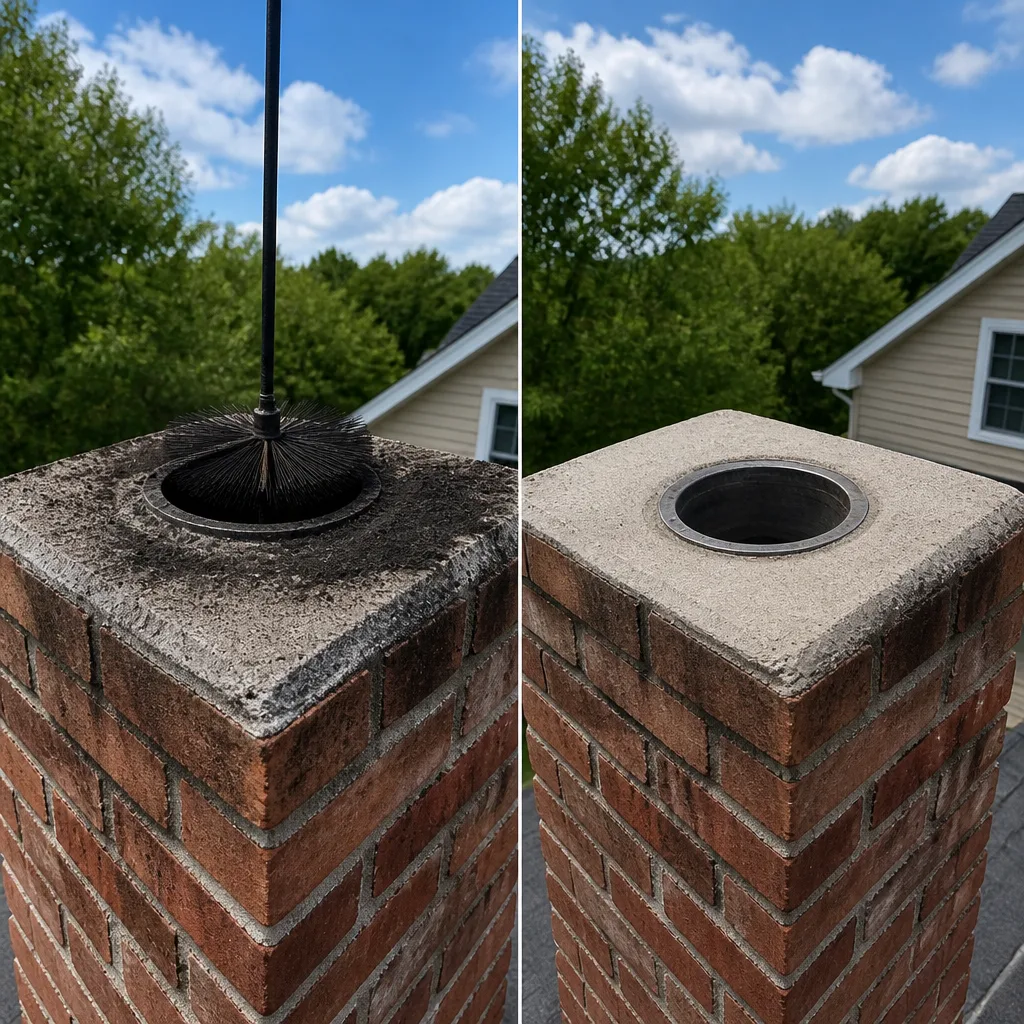
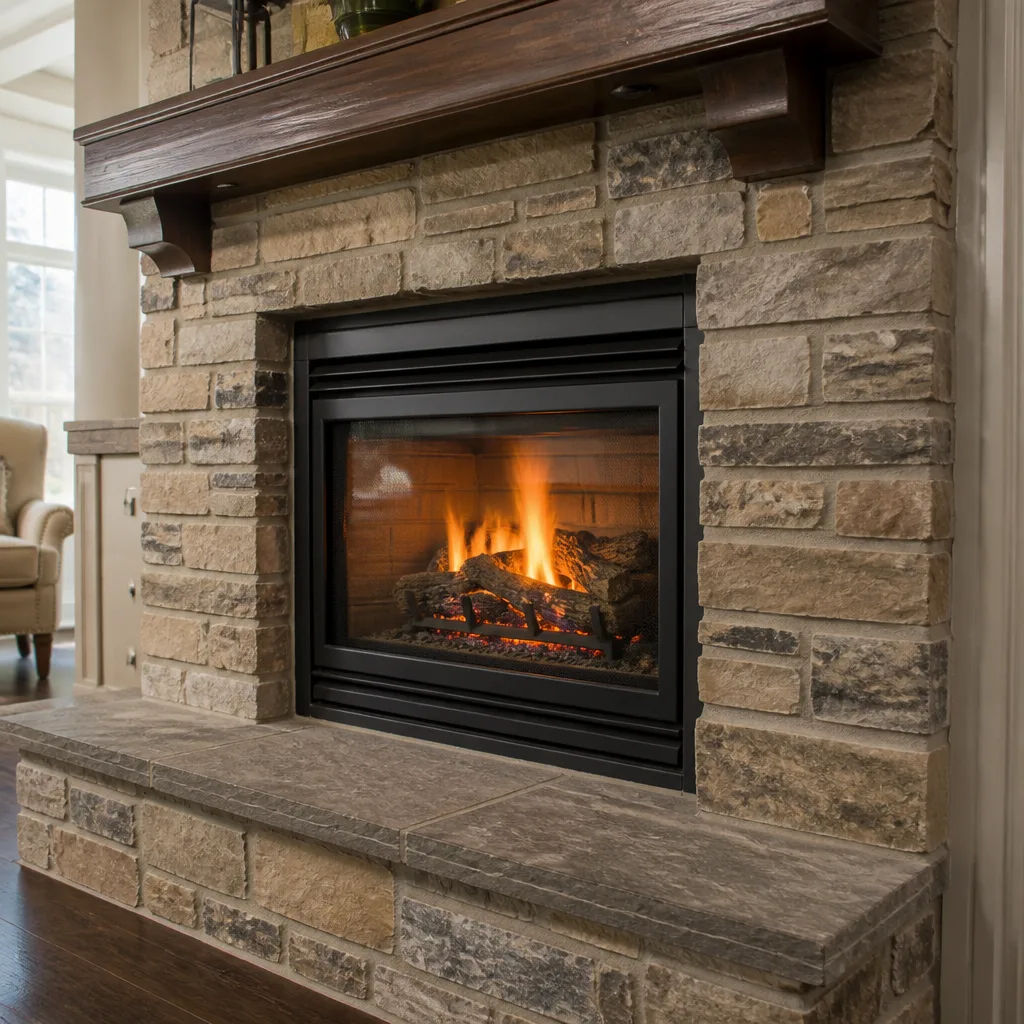
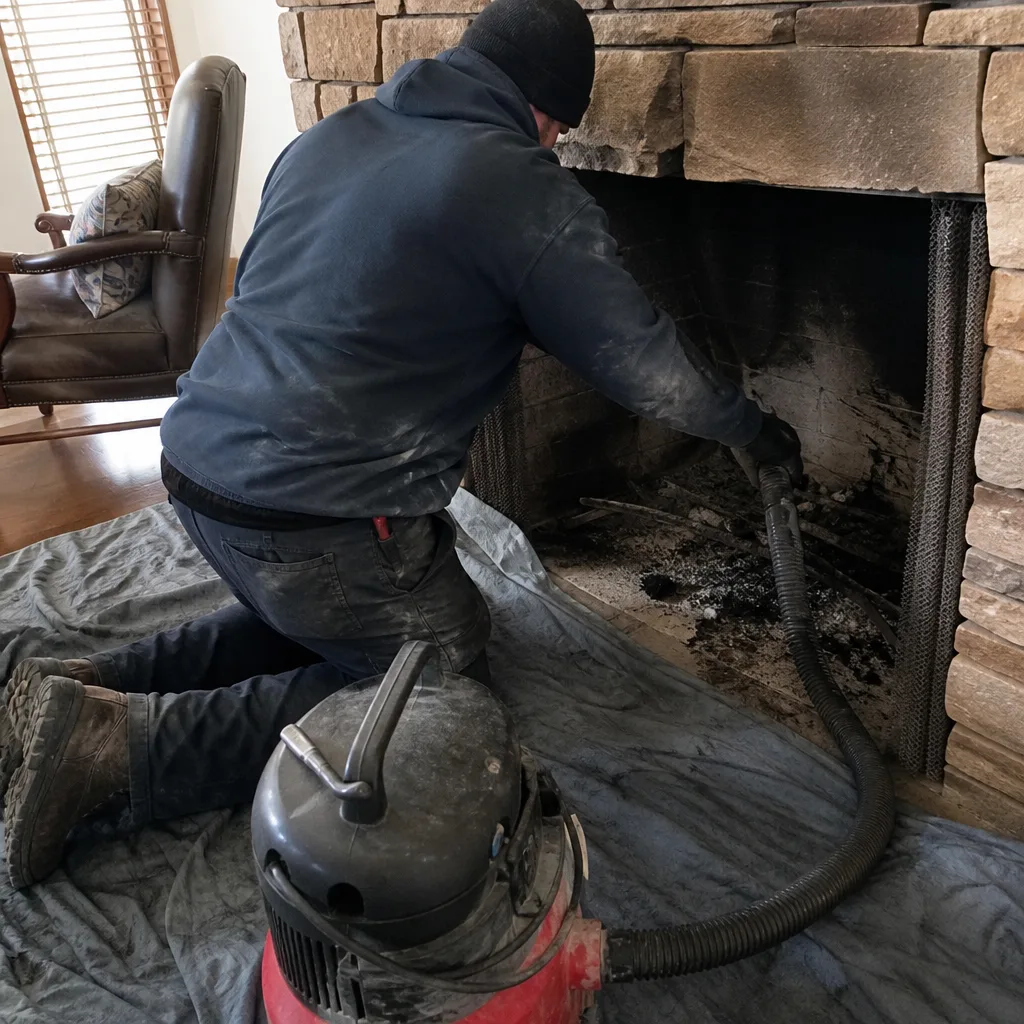 Before
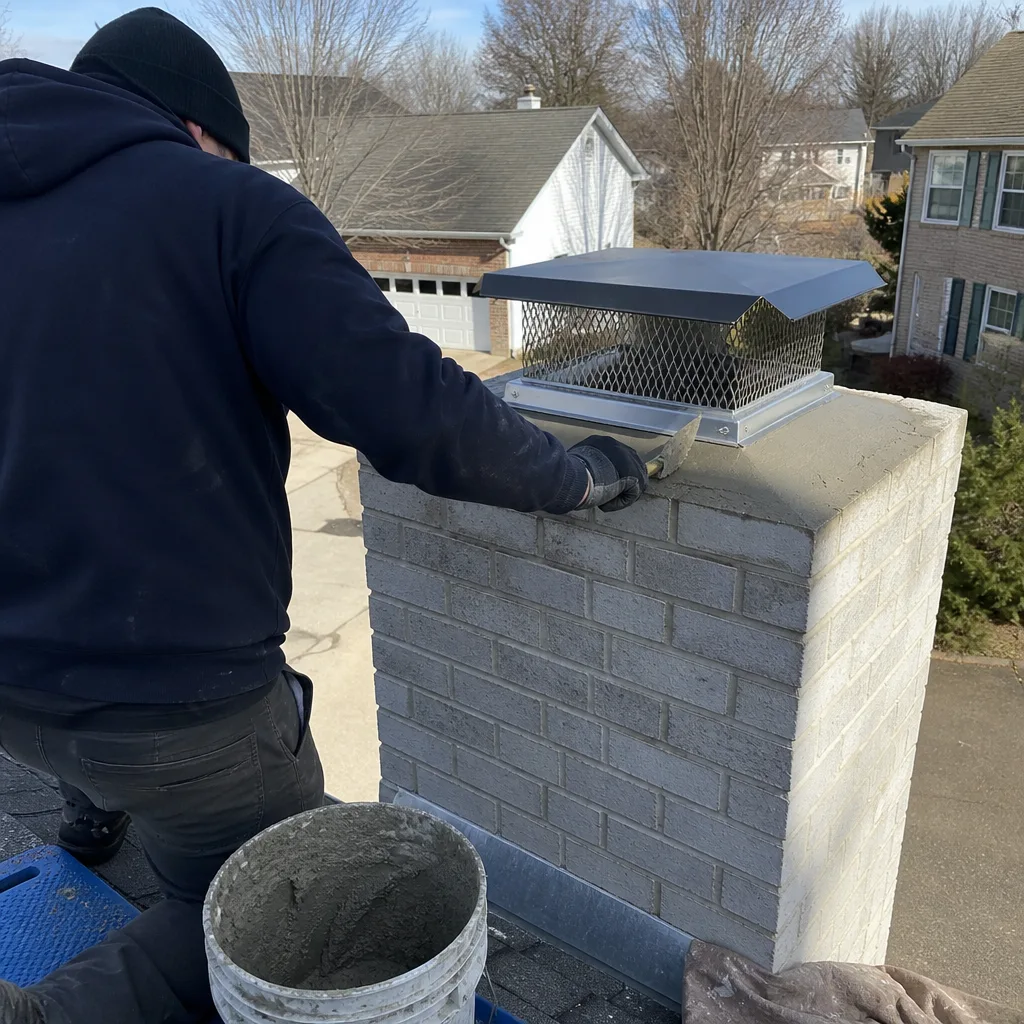 After
After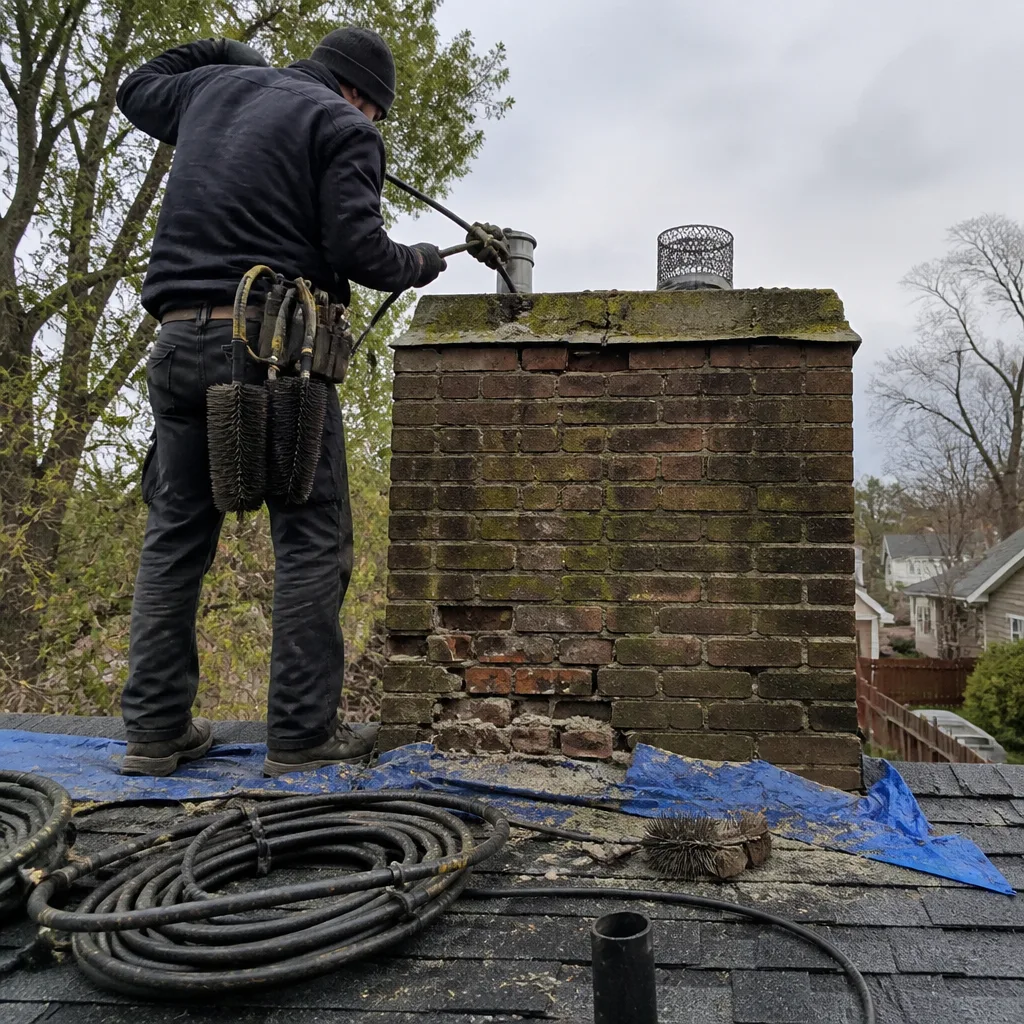 Before
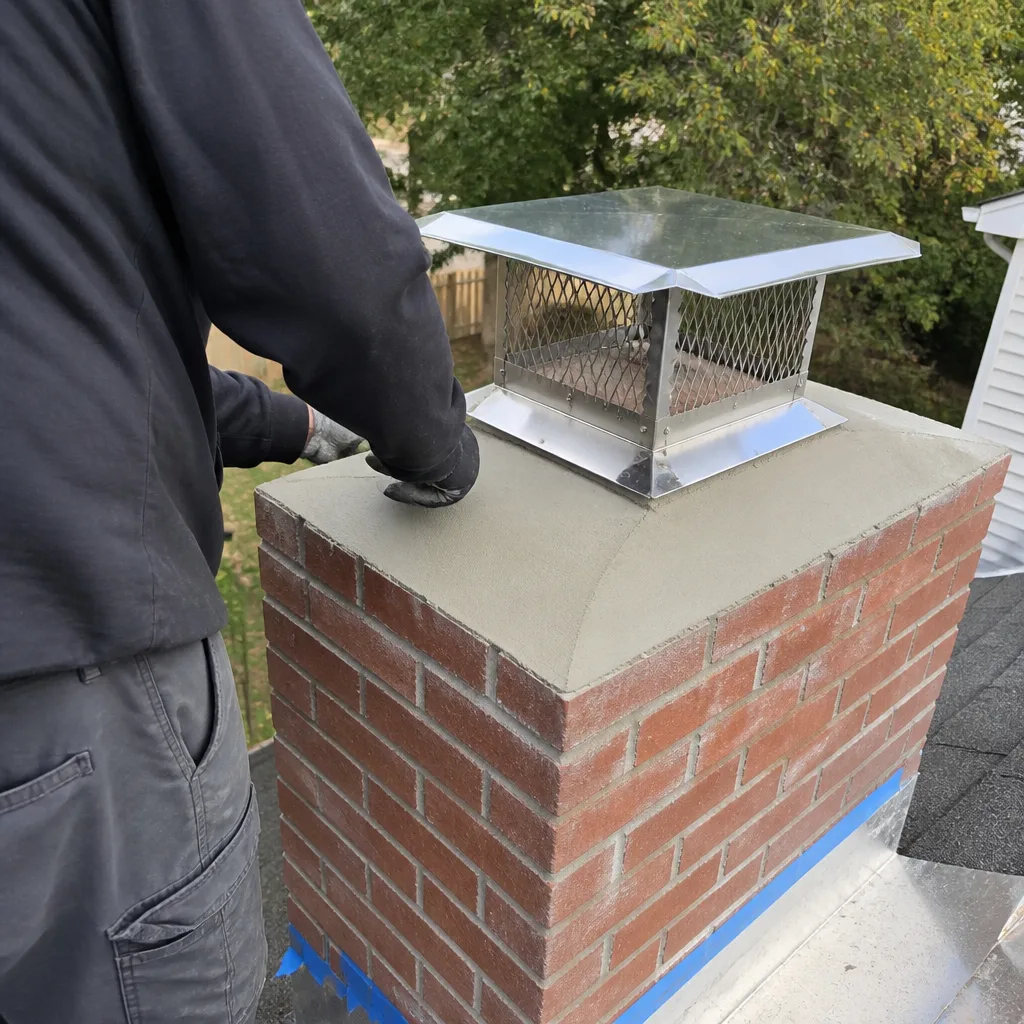 After
After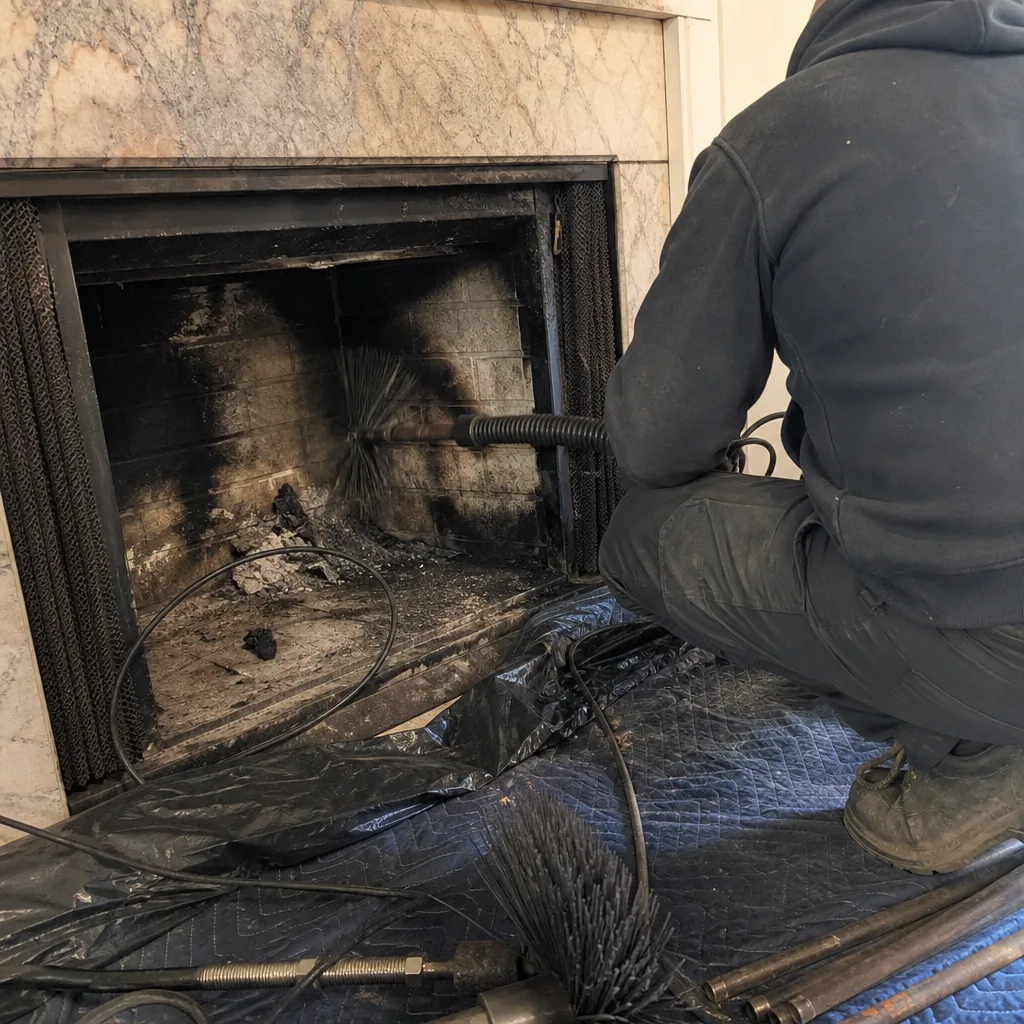 Before
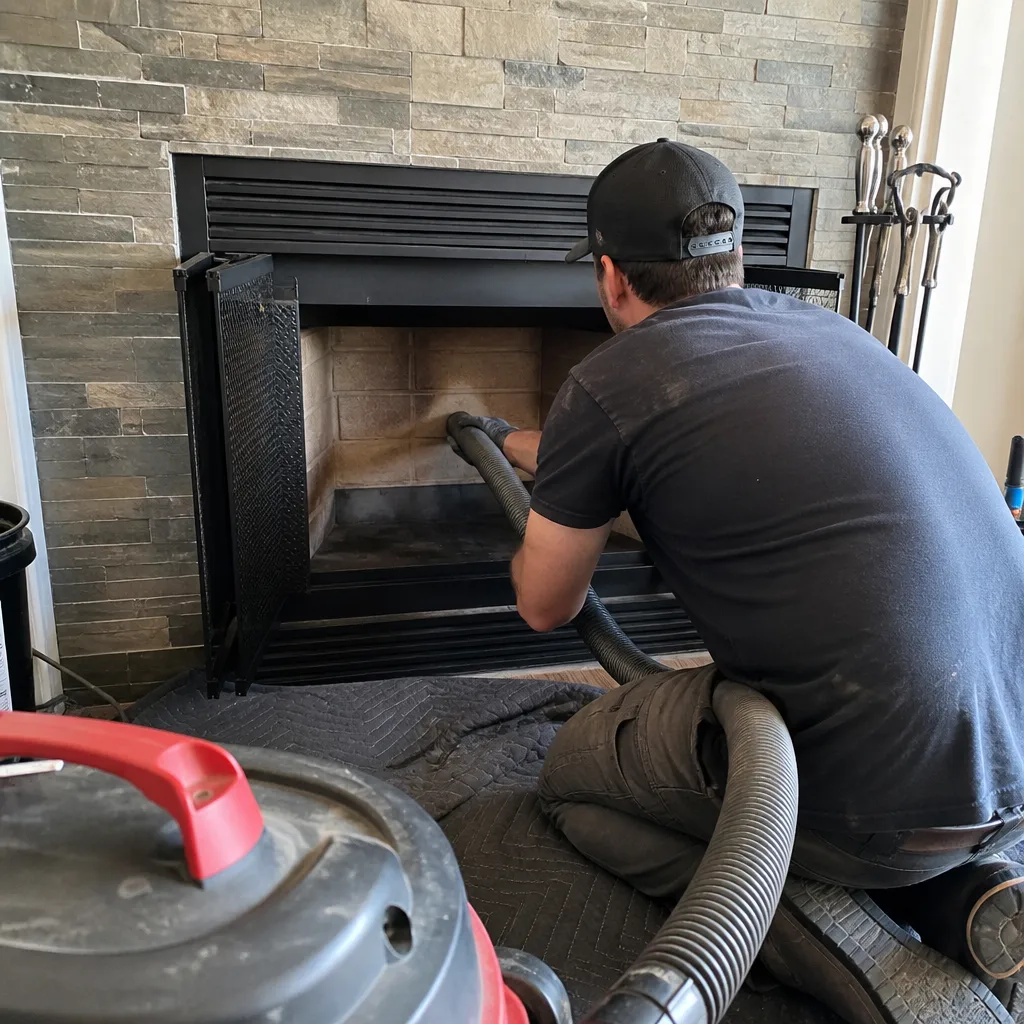 After
AfterSeasonal Chimney Cleaning Care for Ashburn: Year-Round Homeowner’s Guide
Ashburn averages fewer than 20 nights per year below 20°F, which means the classic “sweep it in fall, burn all winter” advice written for Vermont or Minnesota doesn’t map cleanly onto Loudoun County. Here, shoulder-season burning in October, November, March, and April drives creosote accumulation patterns most national guides ignore. This guide walks through what actually happens inside an Ashburn chimney month by month, why August and September matter more than most homeowners assume, and when a second mid-season sweep becomes necessary. By the end, you’ll have a working calendar for your own fireplace or stove, specific to Ashburn’s weather and burn habits.
Quick Answer
Seasonal chimney cleaning in Ashburn works best on a two-part rhythm: a primary sweep between late August and early October before the first sustained burn, and a condition-based mid-season check in January if you’ve burned more than one full cord of wood. A spring moisture inspection after the last freeze-thaw cycle is the third piece most guides leave out. Priced properly, a standard Ashburn sweep runs $189-$269 for open fireplaces and $229-$319 for wood stoves or inserts-see our Chimney Cleaning Cost Breakdown: The Ashburn Homeowner’s Reference for 2026 for full pricing context-and the inspection documentation should include camera footage, not just a receipt.
Table of Contents
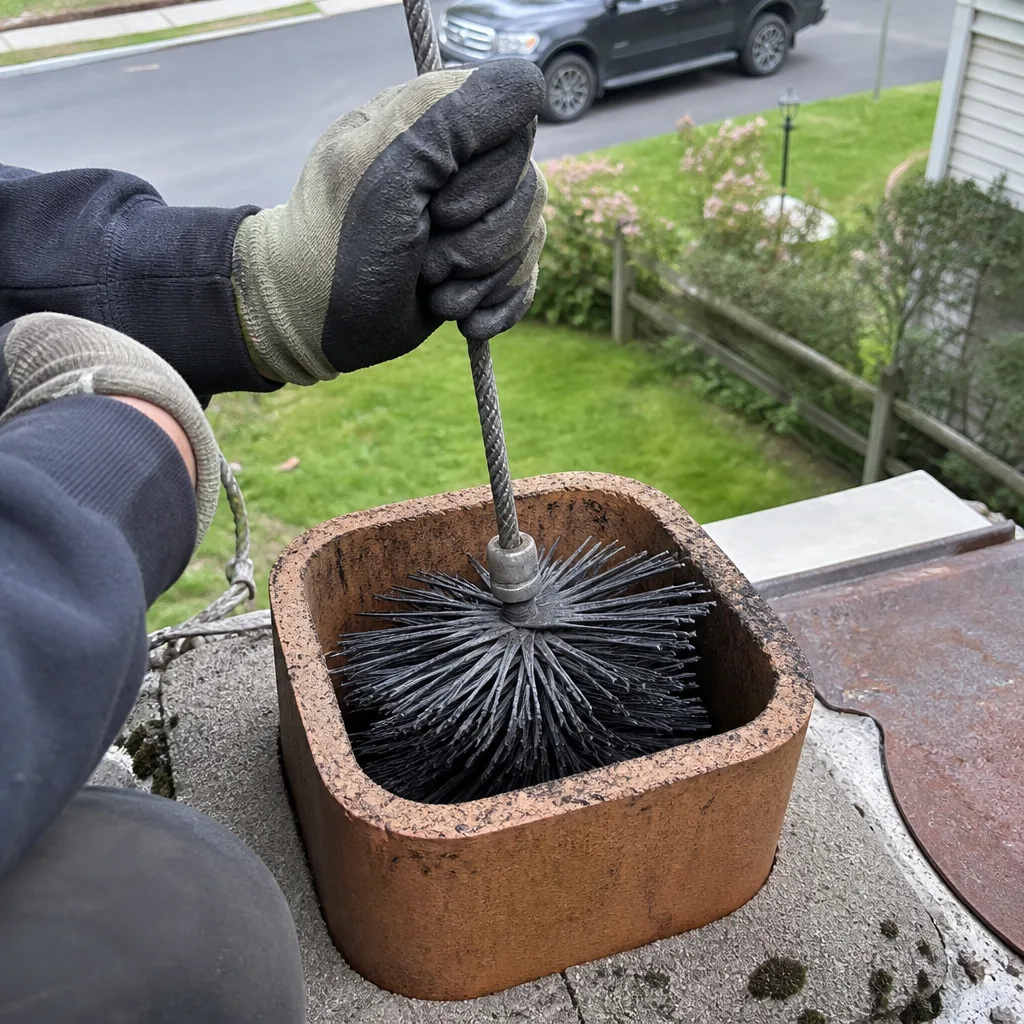
- Why Ashburn’s Burn Pattern Changes the Sweep Calendar
- August-September: The Optimal Sweep Window in Ashburn
- October-December: What Accumulates During the Shoulder Season
- January: The Mid-Season Threshold Check
- Spring Post-Season Tasks for the DMV’s Wet Shoulder
- How a Gas Fireplace Seasonal Checklist Differs
- What Seasonal Chimney Care Costs in Ashburn
- What Documentation You Should Walk Away With
BeforeAfterWhy Ashburn’s Burn Pattern Changes the Sweep Calendar
Ashburn sits in USDA Hardiness Zone 7a, which means the ground rarely freezes hard enough to drive the deep-winter combustion habits you see in New England or the Upper Midwest. The region accumulates roughly 4,100 to 4,500 heating degree days annually, compared to 6,000-plus in Boston or Minneapolis. That number matters because it shifts the burn season: Ashburn homeowners tend to light their first fire in mid-to-late October, burn steadily through the holidays, then taper off by late March. The peak creosote accumulation window lands between November and January, not January through March.
Creosote forms when wood smoke cools below 250°F before it reaches the top of the flue. In Ashburn’s mild winters, fires are often smaller and lazier than the roaring full-load burns you’d run in a colder climate. A small fire in a large masonry chimney means more smoke dwell time, more condensation on the flue walls, and faster Class I and Class II creosote buildup. We see this consistently in neighborhoods like Ashburn Farm, Broadlands, and Belmont Country Club, where the original masonry chimneys were built for full-size fires but the actual burn pattern is a couple of logs on a Friday evening.
What this means practically: the conventional “sweep once a year in fall” advice still holds, but the reason it holds in Ashburn is not the same as in Maine. You’re not clearing a season of heavy, hot burns. You’re clearing the early-season glazing that forms when a mild-weather homeowner runs small fires in an oversized flue. That distinction changes when you should sweep, what a technician should look for, and whether a January re-check is warranted.
August-September: The Optimal Sweep Window in Ashburn
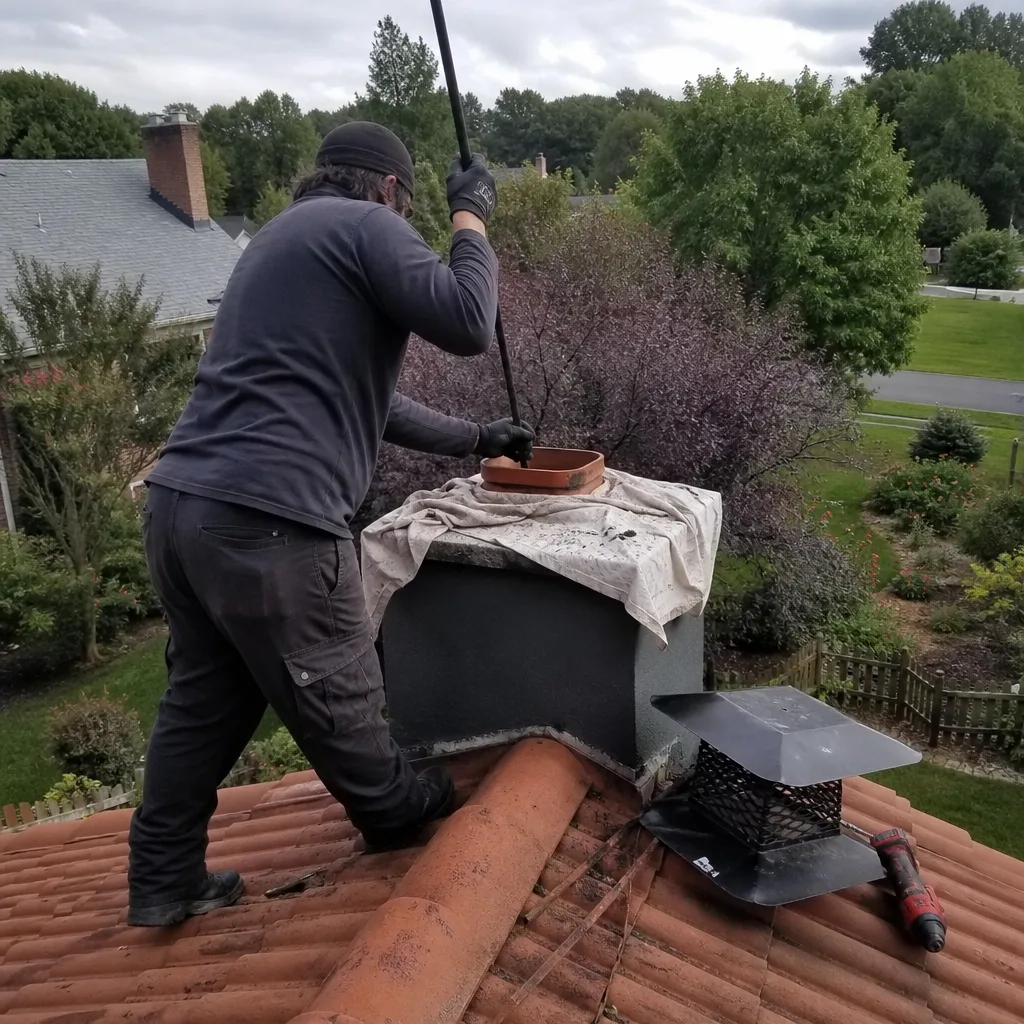
Most national guides tell you to schedule your sweep in September or October. In Ashburn, that’s about six weeks too late for the best outcome. Here’s the calendar as we’ve observed it across thousands of local inspections since 2009, and for a printable version see our Chimney Cleaning & Sweep Maintenance Checklist for Ashburn Homeowners.
- Chimney swifts and nesting animals vacate by late August. Federally protected chimney swifts finish nesting around mid-August in Northern Virginia. Sweeping before they leave is illegal and bad practice. Sweeping immediately after they leave, before October rains and windstorms, gets you a clean flue before the migration season’s debris settles into the smoke shelf.
- The October backlog is real and avoidable. Ashburn’s home services market tightens every October. Many households realize simultaneously that the holidays are coming and the fireplace hasn’t been touched since spring, which pushes repair lead times two to four weeks out. An August or early September sweep lands during a normal workload, before the crush.
- Repair lead times are still short. If the August sweep finds a cracked flue tile, spalling brick, or a failing cap, the repair can be scheduled and completed before the first burn. By mid-October, a liner replacement or crown rebuild may not fit before Thanksgiving.
- Dry weather means better camera footage. A Level 2 camera inspection reads far more clearly on a dry flue than a damp one. Ashburn’s late summer and early fall are typically the driest stretch of the year, which means the photo record you walk away with is actually legible.
The counterargument is that an August sweep leaves the flue idle for six to eight weeks before burning starts. That’s a fair point in wetter climates, but in Ashburn the fall shoulder is dry enough that a properly capped and crowned chimney won’t accumulate meaningful creosote in that window. The cap and crown inspection during the sweep covers that risk.
October-December: What Accumulates During the Shoulder Season
Once burning starts in earnest around the third week of October, Ashburn’s shoulder-season pattern produces creosote at a faster rate than many homeowners expect. That’s not because Ashburn burns more wood than colder cities; it’s because the fires are smaller and the flue temperatures lower.
Here’s what we see accumulating during the October-December window, in order of frequency:
- Class I creosote (flaky soot): Appears within 20 to 30 burns on an open-hearth fireplace. This is the dusty, brushable black film most people picture when they think of chimney soot. It’s not an emergency, but it is fuel.
- Class II creosote (tar-like flakes): Forms when flue gas temperatures stay low for extended periods. Common in Ashburn fireplaces where the owner runs a single DuraFlame log or two small splits at a time. Class II needs mechanical removal with rotary brushes or chains, not just a hand brush.
- Class III creosote (glazed or glossy tar): The serious one. It forms when creosote bakes into the flue walls into a hardened, shiny layer that standard brushing won’t remove. We see Class III most often in wood stoves and fireplace inserts, especially when the owner has been burning green or partially seasoned oak from local suppliers. Class III is a legitimate fire hazard and typically requires chemical treatment or rotary removal before a standard sweep will work.
If you burn pine, which many Ashburn homeowners do because local sellers offer it cheap, expect faster Class I and II accumulation. Pine’s resin content produces fine, sticky particulate that clings readily to uninsulated flue walls. Seasoned hardwoods like oak, hickory, and maple burn cleaner and slower, but they still produce creosote at Ashburn’s typical burn rates.
What this means for the seasonal calendar: the October-December period is not a “set it and forget it” stretch. If you’re burning two to three nights per week from November through New Year’s, you should have a specific threshold in mind for a mid-season check. We cover that threshold below.
January: The Mid-Season Threshold Check
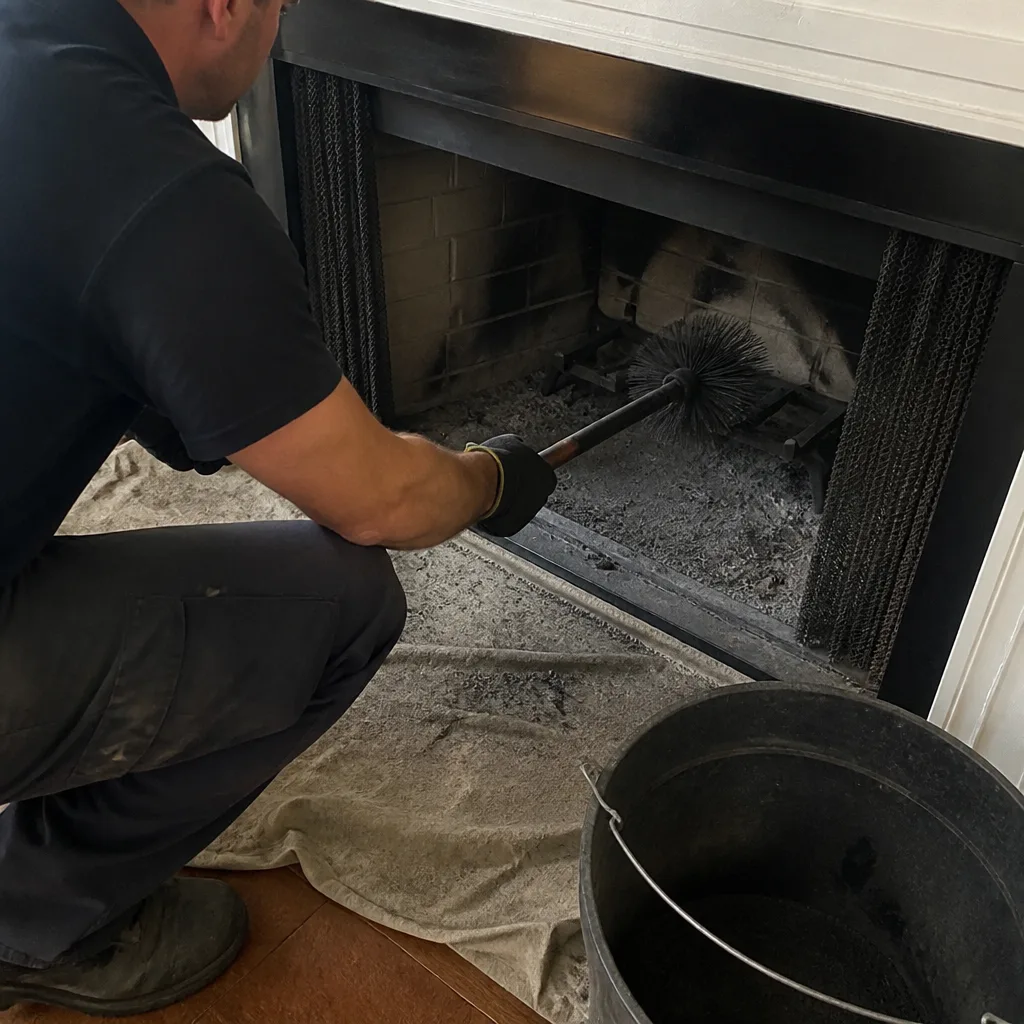
Most seasonal chimney guides talk about one sweep per year. In Ashburn, a meaningful number of homes should consider a second check in January. The threshold is concrete, not vibes-based.
If you’ve burned one full cord of wood, or 60 to 70 burn hours, schedule a mid-season inspection. That’s the point where Class I and Class II creosote can reach 1/8 inch of accumulation on flue walls, which is the National Fire Protection Association (NFPA 211) threshold for cleaning. A full cord is a stack 4 feet high, 4 feet wide, and 8 feet long. Half a cord burned over the holidays is normal for a weekend fireplace; a full cord by mid-January suggests you’re using the fireplace as a primary or supplemental heat source, and the accumulation math changes accordingly.
What a January check looks like:
- A visual inspection of the flue via camera or strong light, looking specifically at the first 6 to 10 feet above the smoke chamber, where most January creosote concentrates.
- A measurement of creosote thickness at two or three points along the flue wall. If it’s 1/8 inch or more, a cleaning is warranted, even if you just swept in September or October.
- A check of the smoke shelf and damper assembly for accumulation that isn’t visible from the firebox. Ashburn’s mild January thaws can create condensation inside the flue that loosens and relocates creosote to the shelf.
- A quick assessment of cap and crown condition after the first freeze-thaw cycles of the winter. Loudoun County winters rarely produce deep freezes, but the repeated shallow freezes are hard on masonry crowns whose flashing has already started to separate.
A January check does not always lead to a full sweep. If the flue is clean, you’ve bought yourself confidence for the rest of the season. If it’s not, you’ve caught accumulating fuel before February and March, when Ashburn homeowners typically do their heaviest burning relative to outside temperature.
Spring Post-Season Tasks for the DMV’s Wet Shoulder
Ashburn’s spring is the second shoulder season, and it is wet. March through May brings average monthly rainfall of 3.5 to 4 inches, often arriving in sustained drizzles rather than quick storms. Combined with the freeze-thaw cycles of late February and early March, that moisture creates the highest-risk conditions of the year for chimney masonry and cap assemblies.
The post-season checklist for Ashburn, in order:
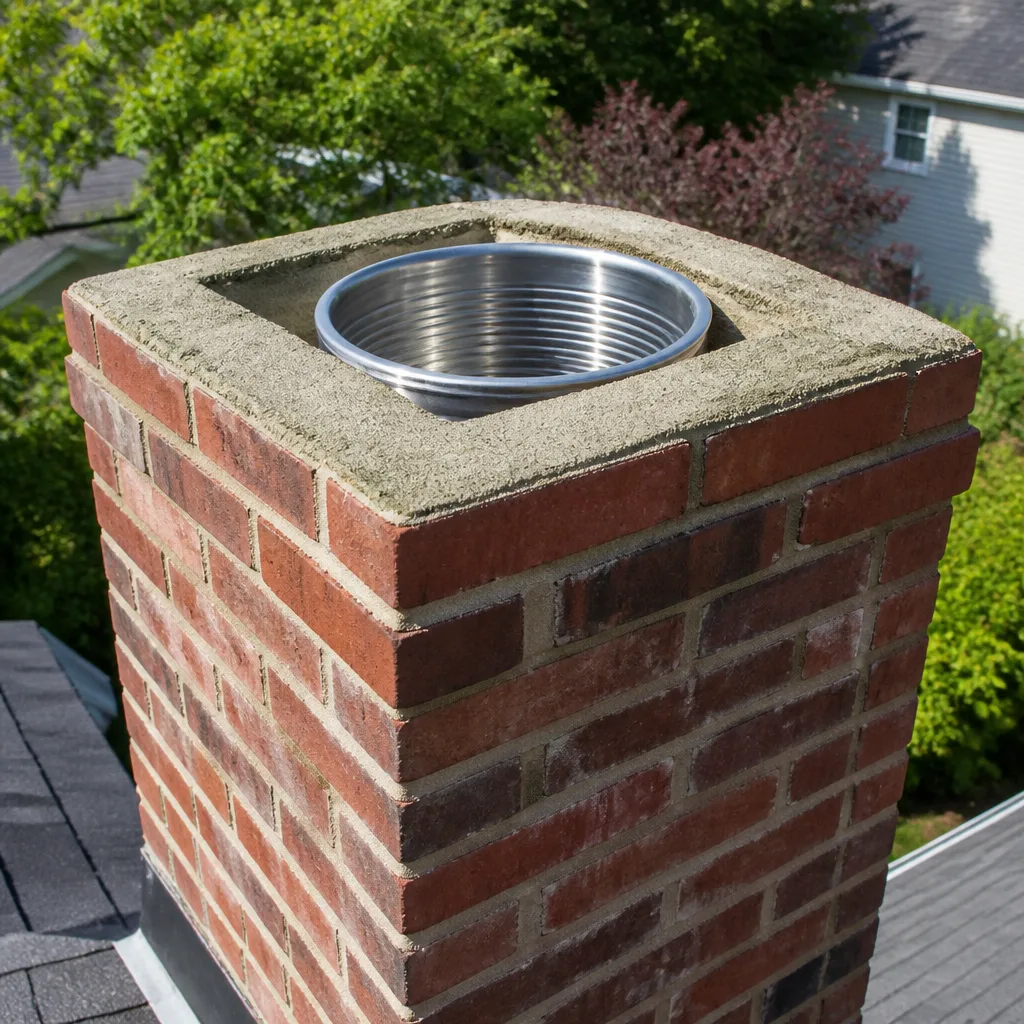
- Inspect the cap and crown for freeze-thaw damage. The chimney crown is the concrete slab that sits on top of the masonry stack. Ashburn’s shallow freezes don’t blow crowns apart the way a Minnesota winter does, but repeated thawing and refreezing in the low 30s range exploits hairline cracks and makes them worse. A cracked crown lets water into the brick, which leads to spalling by the following winter.
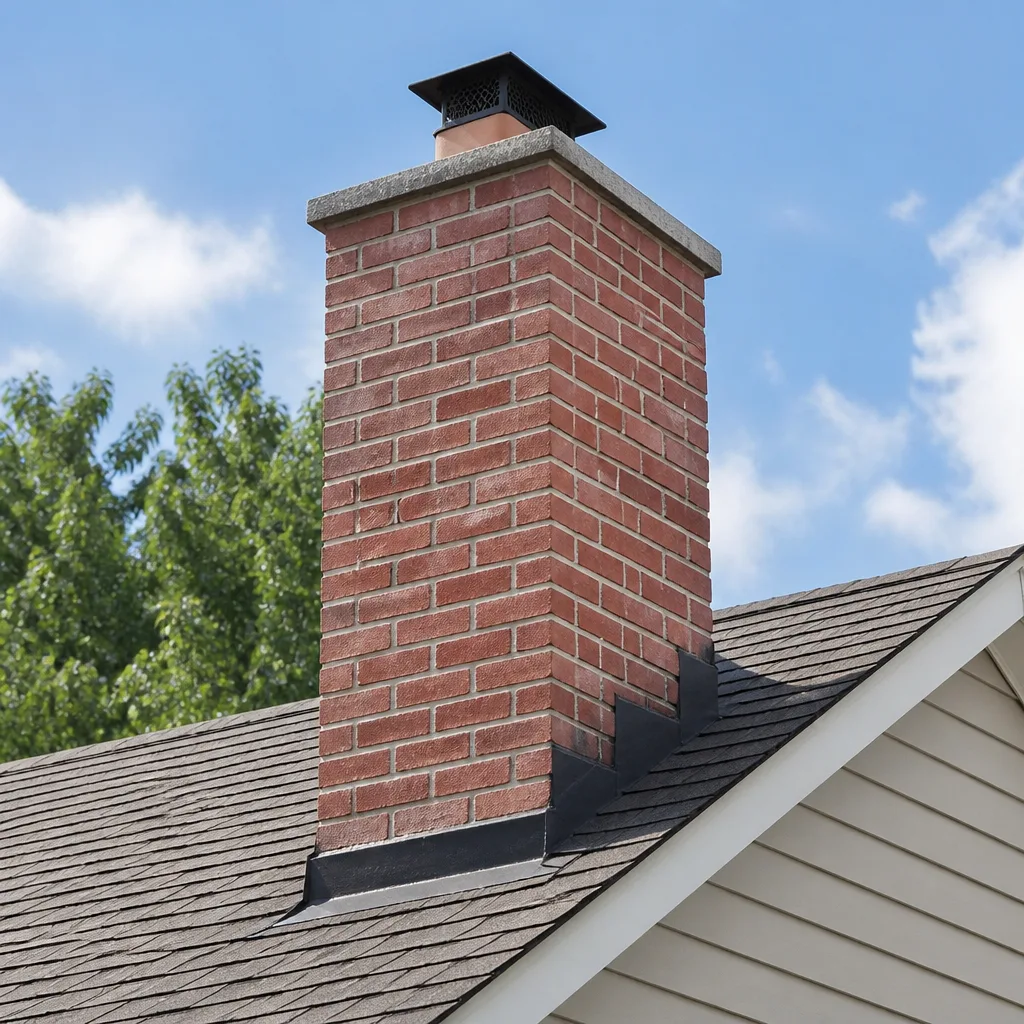
- Check the flashing at the roofline. Flashing separates where the chimney meets the roof, and the combination of spring rain and wind-driven moisture accelerates the damage. We routinely find flashing failures during spring inspections in One Loudoun and Ashburn Village that went unnoticed all winter because the water ran under the shingles instead of into the firebox.
- Run a moisture intrusion inspection on the flue interior. After a wet spring, the inside of a masonry flue can show telltale streaks where water has worked its way through the crown or cap. Those streaks are evidence, not hypotheticals. If you see them, the next step is a Level 2 inspection to find the entry point before summer sets in.
- Close the damper fully and check the seal. A damper that doesn’t close completely lets humid spring air move through the chimney year-round, accelerating creosote degradation and masonry decay. Close it, then check from below with a flashlight for any gap around the edges.
- Schedule any masonry repairs for summer. Summer is the dry season in Loudoun County and the optimal time for crown rebuilds, tuckpointing, or liner work. Materials cure better, and scaffolding isn’t fighting the weather. Booking the repair in April or May gets you on a summer schedule before the fall rush.
One note: chimney swifts start nesting in May. Do not attempt any work or off-season sweeping between spring and late summer if swifts are present; it’s illegal, and a reputable Ashburn sweep company will not do it. That’s another reason post-season inspections happen early in spring or not at all until fall. For the regulatory background, see Chimney Cleaning Permits, Codes & Inspections in VA: What You Need to Know.
How a Gas Fireplace Seasonal Checklist Differs
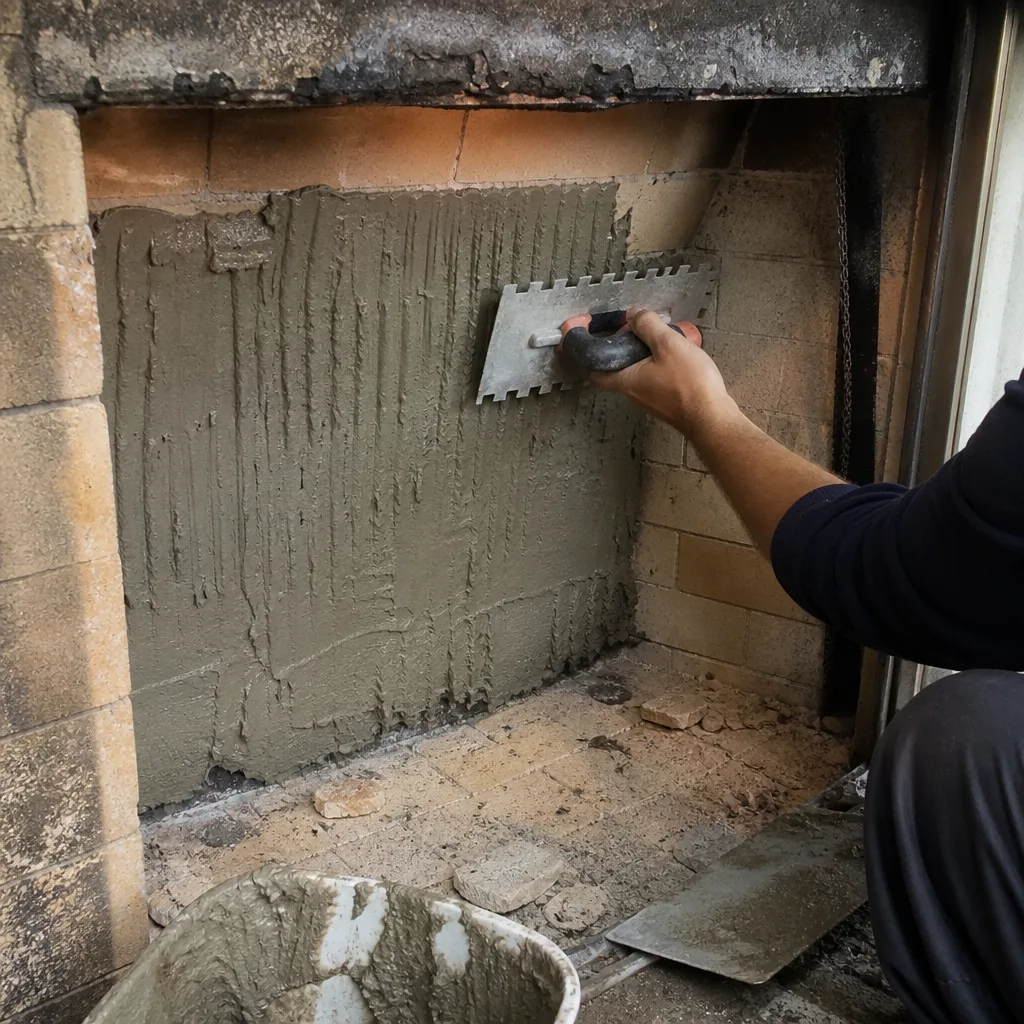
Most seasonal chimney guides collapse wood and gas into one generic list. That’s a mistake, and it’s a meaningful one for Ashburn, where a substantial share of newer construction in Brambleton, Loudoun Valley Estates, and Moorefield Station includes gas fireplaces or gas log sets in existing masonry chimneys.
Here’s the distinction, plainly stated:
A gas fireplace does not produce creosote. Natural gas and propane burn cleanly enough that the tar-like accumulation from wood fires doesn’t happen. What a gas fireplace produces is soot if the burner is out of adjustment, and mineral residue if the flue is shared with a water heater or if combustion air is poor. The seasonal routine is therefore about different things.
A gas fireplace seasonal checklist for Ashburn:
- Late summer: Visual check of the burner and logs for position, debris, or rust. Gas logs can shift over the summer, and spiders are drawn to the mercaptan odorant in natural gas. A spider web inside a burner orifice can cause a lazy flame or carbon monoxide backdraft.
- First use in fall: Run the fireplace for 10 to 15 minutes with a window cracked. Watch for blue flame with yellow tips. A mostly yellow or orange flame means incomplete combustion, which produces carbon monoxide. Shut it down and call a technician.
- Mid-season (January): If the fireplace has been run more than 30 hours, check for soot accumulation on the glass, logs, and throat. Sooting is often a sign of burner misalignment or gas pressure issues, not a reason to sweep the chimney.
- Spring: Kill the pilot light if it’s still lit. Leaving a pilot burning through Ashburn’s humid spring wastes gas and contributes to interior corrosion on burner components. Turn it off according to the manufacturer’s instructions, then close the damper.
- Every two to three years: A gas flue that doesn’t need creosote removal still needs a visual inspection for cracked flue tiles, failed mortar joints, or a deteriorated cap. If the fireplace vents into an existing masonry chimney, the structural inspections are the same as for wood, just without the creosote concern.
The safety note here is straightforward but not negotiable: a gas fireplace in a home with a malfunctioning burner or blocked flue produces carbon monoxide. That’s an odorless, lethal gas, and the only way to catch it is with a functioning CO detector placed near the fireplace and in sleeping areas. If you smell gas or the detector alerts, leave the house and call your gas utility and a qualified technician.
What Seasonal Chimney Care Costs in Ashburn
Let’s put the numbers on the page, because this is what Ashburn homeowners actually want to know before calling.
A standard chimney sweep and Level 1 inspection in Ashburn runs $189 to $269 for an open-hearth fireplace. A wood stove or fireplace insert sweep runs $229 to $319, because the unit must be partially disassembled and the connector pipe accessed separately. A gas fireplace inspection and burner check typically falls between $149 and $219.
A full Level 2 camera inspection, which is what we perform on every visit at Level Two Chimney Ashburn home, is included in the sweep price. It is not an add-on. If a repair is identified, you receive a written price before any work proceeds. More detail on what’s included is on our Chimney Cleaning & Sweep in Ashburn page.
Typical repair costs in Ashburn, based on what we’ve quoted across the area since 2009:
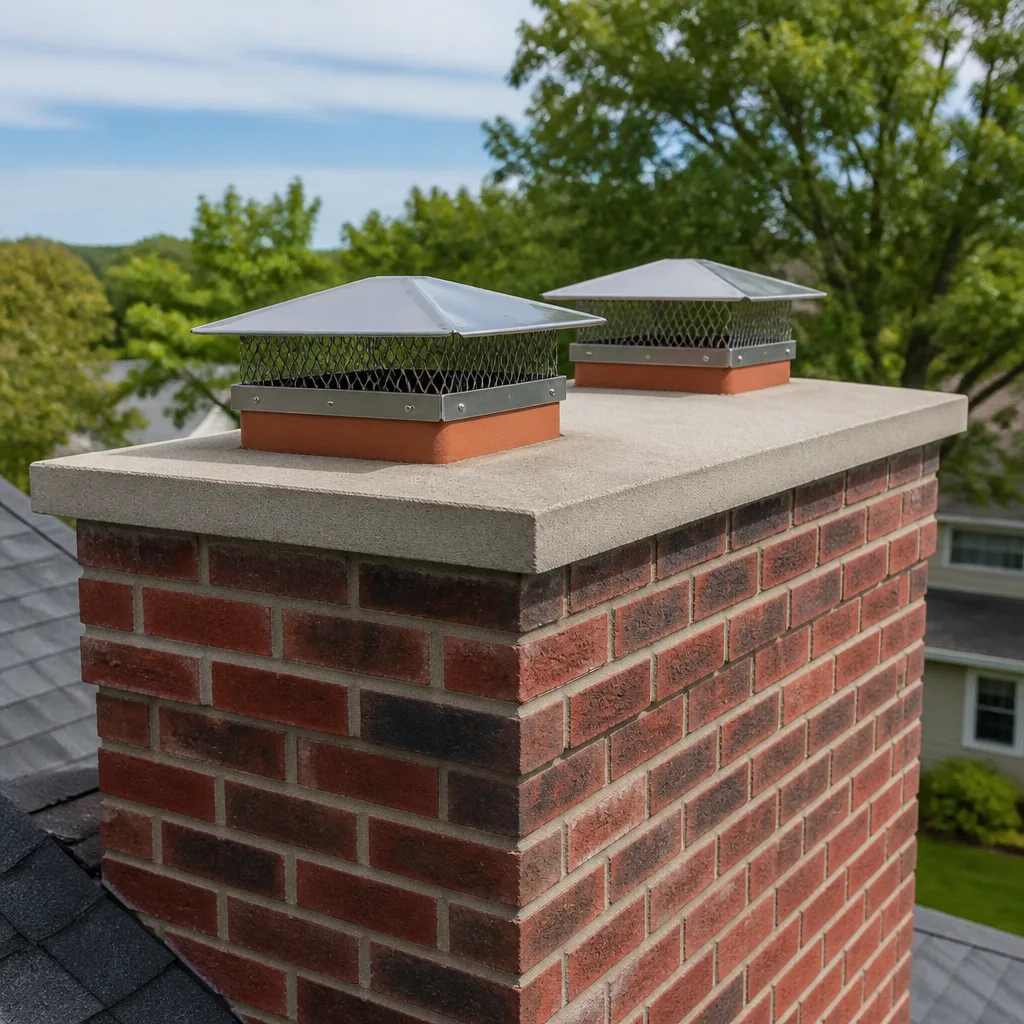
- Chimney cap replacement: $285 to $520 for standard stainless steel from Famco or Olympia Chimney, installed. Custom copper caps can exceed $1,000 depending on flue size and profile.
- Crown repair or resurfacing: $450 to $1,200 depending on damage extent. A full crown rebuild with proper expansion joint runs $1,200 to $2,400.
- Flue liner resurfacing with HeatShield: $2,400 to $4,800 for a typical single-flue masonry chimney. This is less expensive and less invasive than a full liner replacement and can restore structural integrity to a deteriorating clay liner.
- Stainless steel liner installation (DuraFlex): $3,200 to $6,500 installed, depending on chimney height, accessibility, and whether the liner is insulated.
- Masonry tuckpointing: $12 to $22 per square foot, with most Ashburn single-flue chimneys running between $1,200 and $3,000 for full repointing.
These are honest price ranges based on local labor, material, and access conditions. Your specific chimney may fall outside them. What matters is that any quote you receive in Ashburn should be written, should specify the scope in plain terms, and should tell you what the tech found before asking you to spend. If a company won’t put a price in writing before work starts, that’s a signal to look elsewhere.
What Documentation You Should Walk Away With
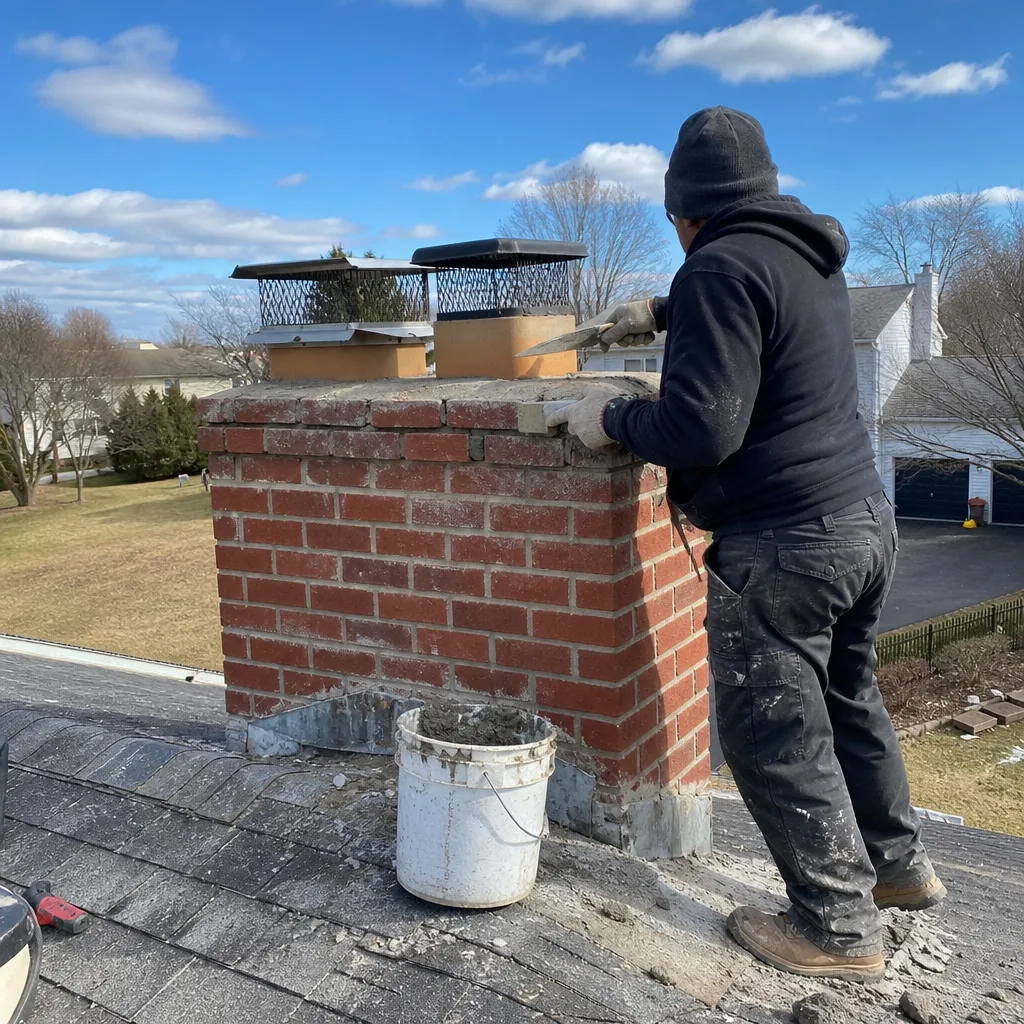
The best question an Ashburn homeowner can ask after a chimney inspection is not “does it look okay?” It’s “can you show me?”
Since 2009, we’ve made camera-scan documentation the default on every job. That practice became Clause 4 of the Haven Standard, and it’s what separates a meaningful inspection from a flashlight glance. Here’s what a documented visit should include:
- Camera footage or still photos of the flue interior, from the firebox to the crown, showing whatever the tech saw: clean liner, cracked tile, built-up creosote, or water intrusion.
- A written description of findings, in plain language. “Class II creosote accumulation at 8-12 feet above the smoke chamber, approximately 1/8 inch in spots” means something. “The chimney’s a little dirty” doesn’t.
- A written price for any recommended work, before anyone starts. This is Haven Standard Clause 1: H.A.V.E.N. “Have it in writing.” The price on the written estimate and the price on the invoice should match.
- A written warranty for any repair completed. Not a verbal promise. A document.
- A post-work photo record if a repair or liner installation was done. You should see the finished work, not just hear that it’s done.
If the company leaves without providing this documentation, you haven’t actually had an inspection; you’ve had a visit. That distinction matters more than anything else on this page. Our Chimney Repair in Ashburn service page shows what a documented repair record looks like in practice.
Common Mistakes to Avoid
- Sweeping in late October or November because “fall is chimney season.” In Ashburn, October is when the whole region schedules at once. You’ll pay the same price but wait longer, and if the inspection finds a repair, it may not be completed before your first burn. August and September are your real window.
- Assuming a gas fireplace never needs inspection. A gas fireplace won’t build creosote, but it can produce carbon monoxide, and a shared masonry flue can still deteriorate structurally. The inspection interval is longer, but it’s not zero.
- Burning green or partially seasoned wood because it was cheap. Local firewood sellers sometimes deliver oak that was split only a few months prior. Burning green wood produces more creosote per burn than seasoned wood, and it can turn a one-sweep season into a two-sweep season.
- Skipping the spring moisture check. The DMV’s wet spring shoulder is the most damaging season for chimney masonry, and the damage happens silently. A $250 spring inspection is cheaper than a $3,000 crown and flashing rebuild next fall.
- Hiring a sweep who “doesn’t need a camera.” A visual-only inspection misses what’s happening in the upper third of the flue and inside the smoke chamber, and it leaves you without any evidence of what was found. If there’s no photo record, there’s no defensible basis for the recommendations.
- Ignoring the one-cord threshold. If you burn a full cord before mid-January, the flue needs a check. Waiting until the next fall’s sweep means the late-winter and early-spring burns are happening on top of 1/8 inch or more of creosote, which is where chimney fires become possible.
- Closing the damper on wet spring days and forgetting it. A closed damper traps humid air and accelerates creosote degradation, but an open damper lets that humid air move through the home year-round. The right move is a closed damper with a functional seal and a cap that keeps rain out of the flue. Check both in spring.
When to Call a Professional
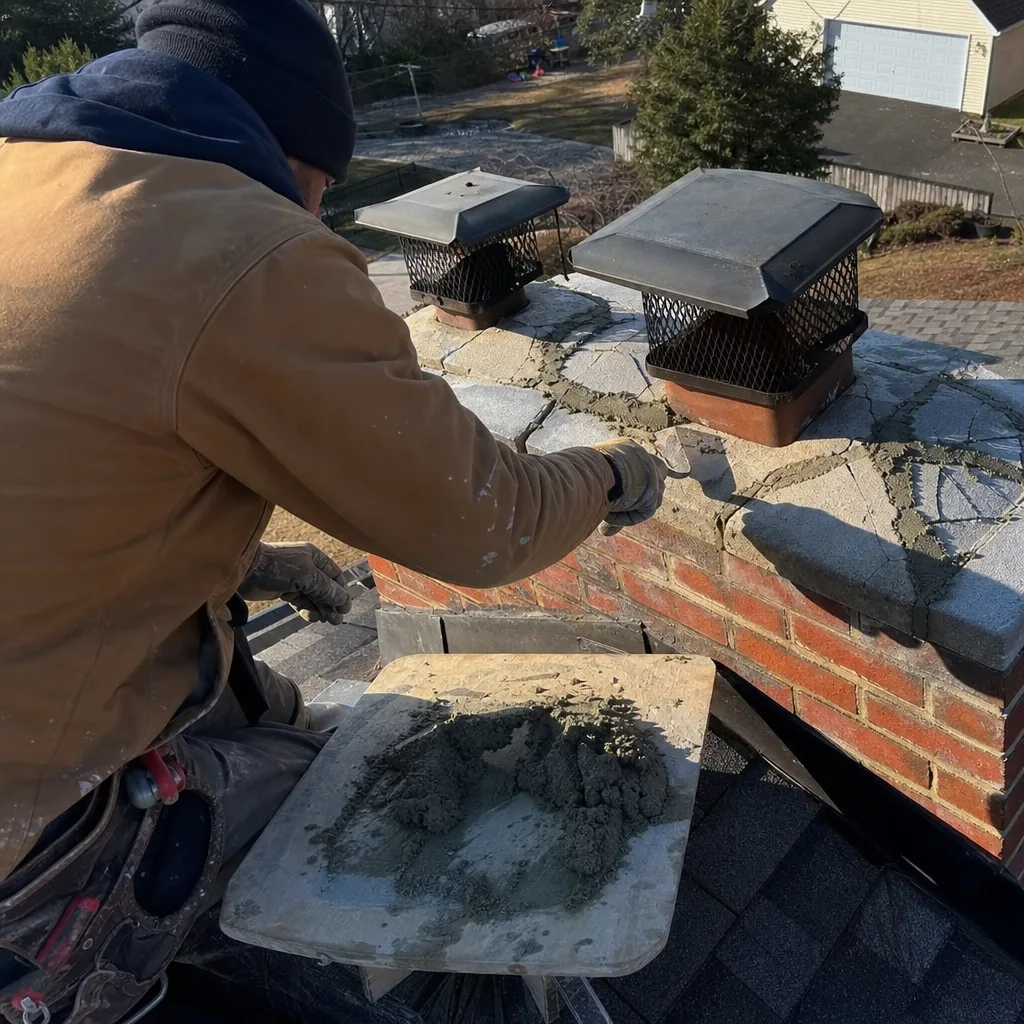
Call a professional chimney company if you see white or dark staining on the ceiling or walls around the chimney, hear dripping inside the flue during rain, smell a strong campfire odor even when the fireplace hasn’t been used in weeks, or notice flaking brick or mortar on the exterior stack. Any of those indicates a breach that won’t fix itself. If your carbon monoxide detector alerts while the fireplace is running, shut it down and get the system checked before using it again. The same applies to a gas smell, which should never be ignored or waited out. Fireplace Services in Ashburn covers gas and wood systems, and Level Two Chimney Ashburn offers free estimates in Ashburn. Call (240) 220-9412 to schedule.
Frequently Asked Questions
A standard chimney sweep in Ashburn costs $189 to $269 for an open fireplace and $229 to $319 for a wood stove or insert, including the Level 2 camera inspection and a documented photo record. Exact pricing depends on flue height, access, and the scope of what the inspection finds. Call (240) 220-9412 for a written quote before any work begins.
The optimal window in Ashburn is late August through late September, after chimney swifts finish nesting and before the October rush. Scheduling in August means any needed repair can be completed before burn season instead of waiting until after Thanksgiving.
Yes, with a caveat. Even infrequent burning produces creosote, but the bigger risk for a rarely-used fireplace is structural: water intrusion through a cracked crown, a failed cap, or an animal nest you can’t see. A single annual inspection with a camera confirms the flue is safe even when it isn’t dirty.
Plan for one sweep before the season starts and a mid-season check in January if you’ve burned more than one cord of wood or 60 to 70 burn hours. Most weekly-burning Ashburn homes accumulate enough creosote by January to benefit from either a cleaning or a confirmation that the flue is still clear. For more guides & resources on keeping your chimney safe year-round, visit our blog.
Creosote continues to accumulate on flue walls, and if enough builds up, it becomes fuel for a chimney fire that can crack the liner and spread to the house framing. Even without a fire, a skipped inspection can miss water damage at the crown or cap, which gets more expensive the longer it goes unaddressed. The math is simple: a $269 sweep once a year costs less than a liner replacement that runs $3,200 to $6,500.
No. A gas fireplace doesn’t create creosote, so it doesn’t need creosote removal. It does need periodic inspection for burner performance, soot accumulation, flue integrity, and carbon monoxide risk. Gas fireplace inspections are typically shorter and less expensive, but they’re still necessary; a gas flue with a cracked tile or blocked cap is a carbon monoxide risk whether or not it’s dirty. Contact us at (240) 220-9412 for details.
The Bottom Line
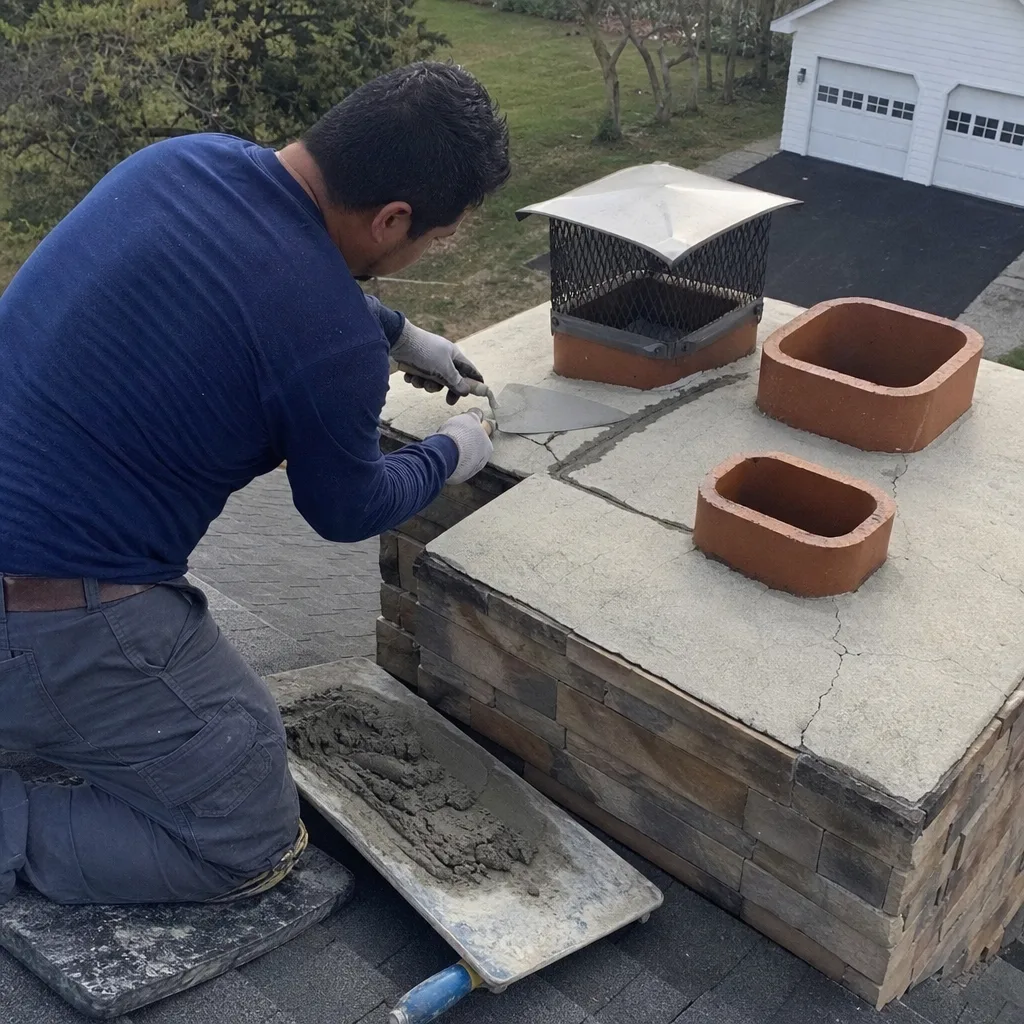
Ashburn’s burn pattern rewards a calendar that most national guides don’t publish: sweep in late August or September, before the swift migration ends and the October backlog begins; check the flue in January if you’ve burned a full cord; and use the wet spring shoulder for a moisture inspection that catches crown and flashing failures while they’re still cheap to fix. The household that follows this rhythm pays less over the life of the chimney than the household that waits for problems to show up. If you want the inspection standard, not a guess, call Level Two Chimney Ashburn at (240) 220-9412. The price is written before the work starts, and you’ll see the evidence of what was found before you’re asked to spend anything.
Written by Corrine Halstead, Owner at Level Two Chimney Ashburn, serving Ashburn since 2009.