
Last updated September 20, 2026
Level 1 sweep and inspection to the NFPA 211 annual standard - flue, crown, cap, and flashing checked and photographed
Chimney sweep logs do not sweep chimneys. They loosen some creosote - which then falls where a brush and vacuum still have to collect it.
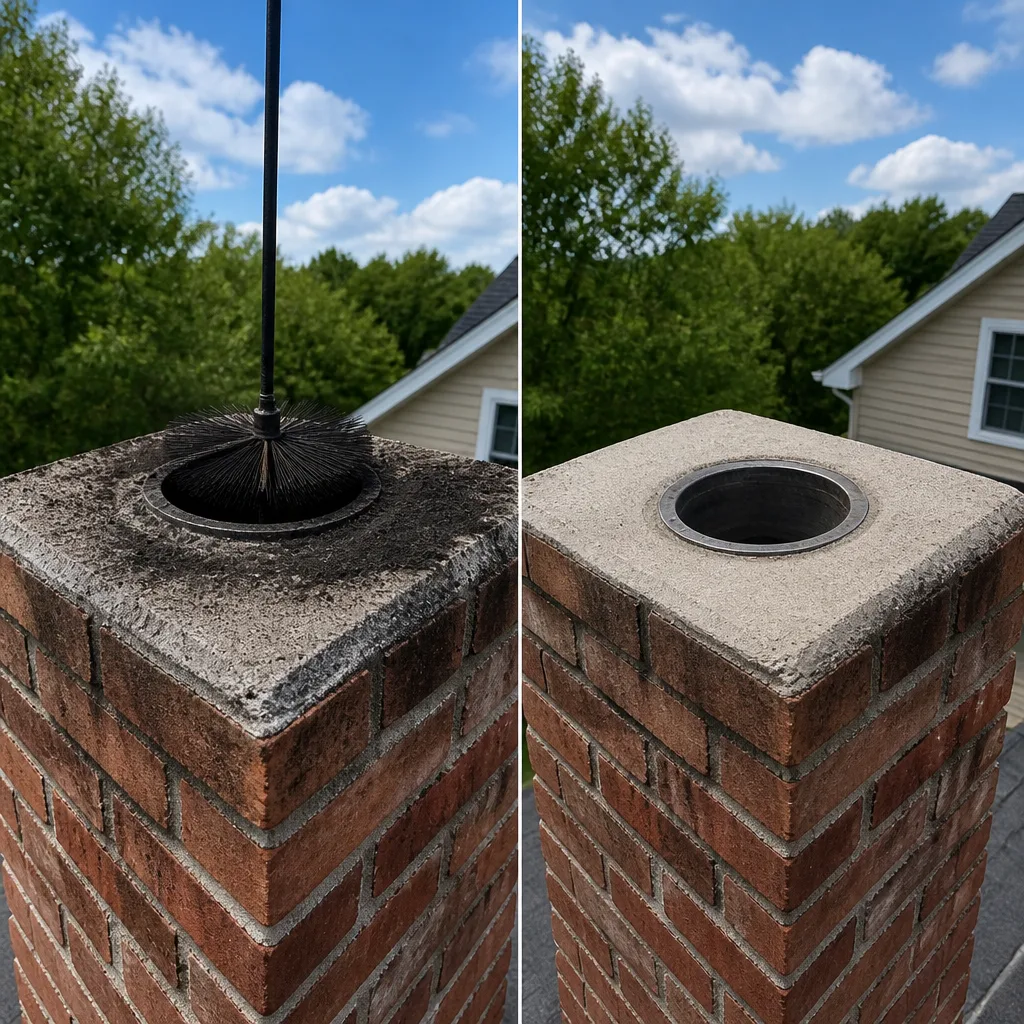
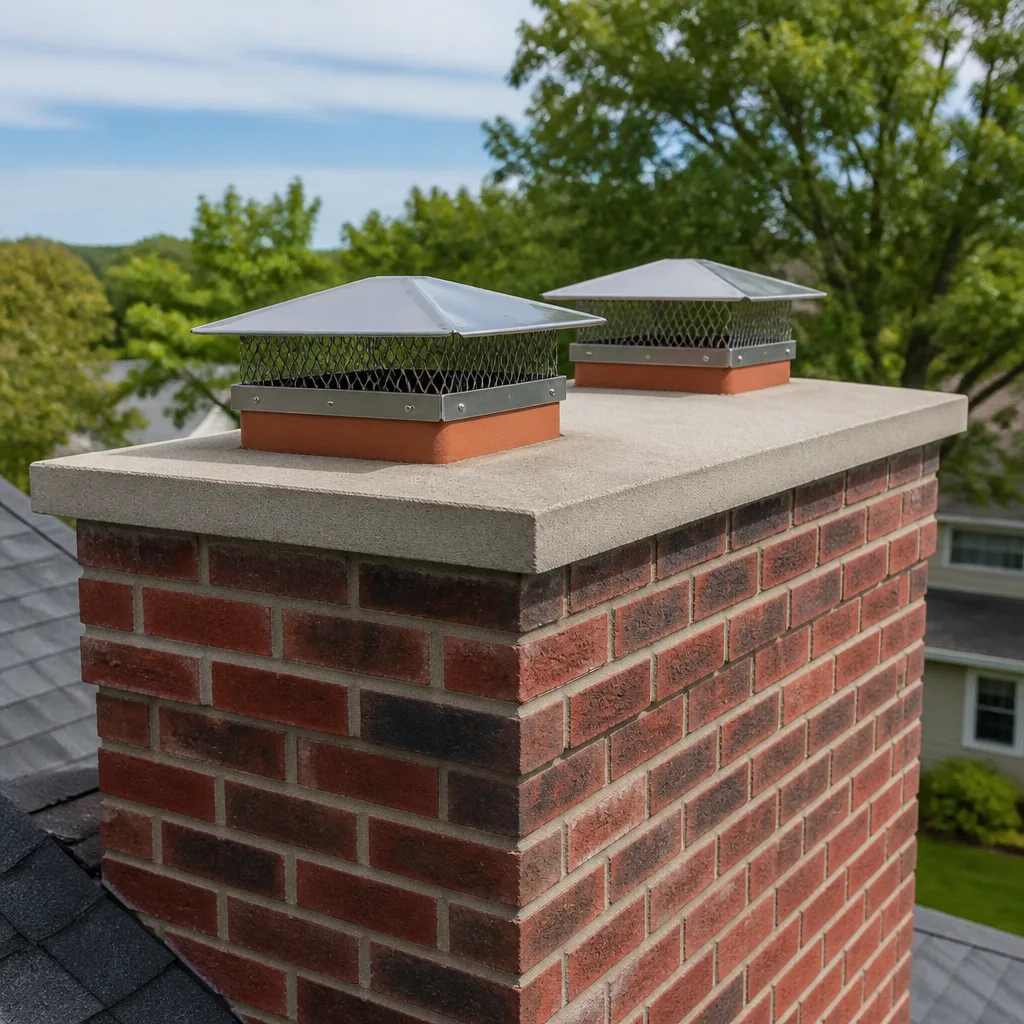
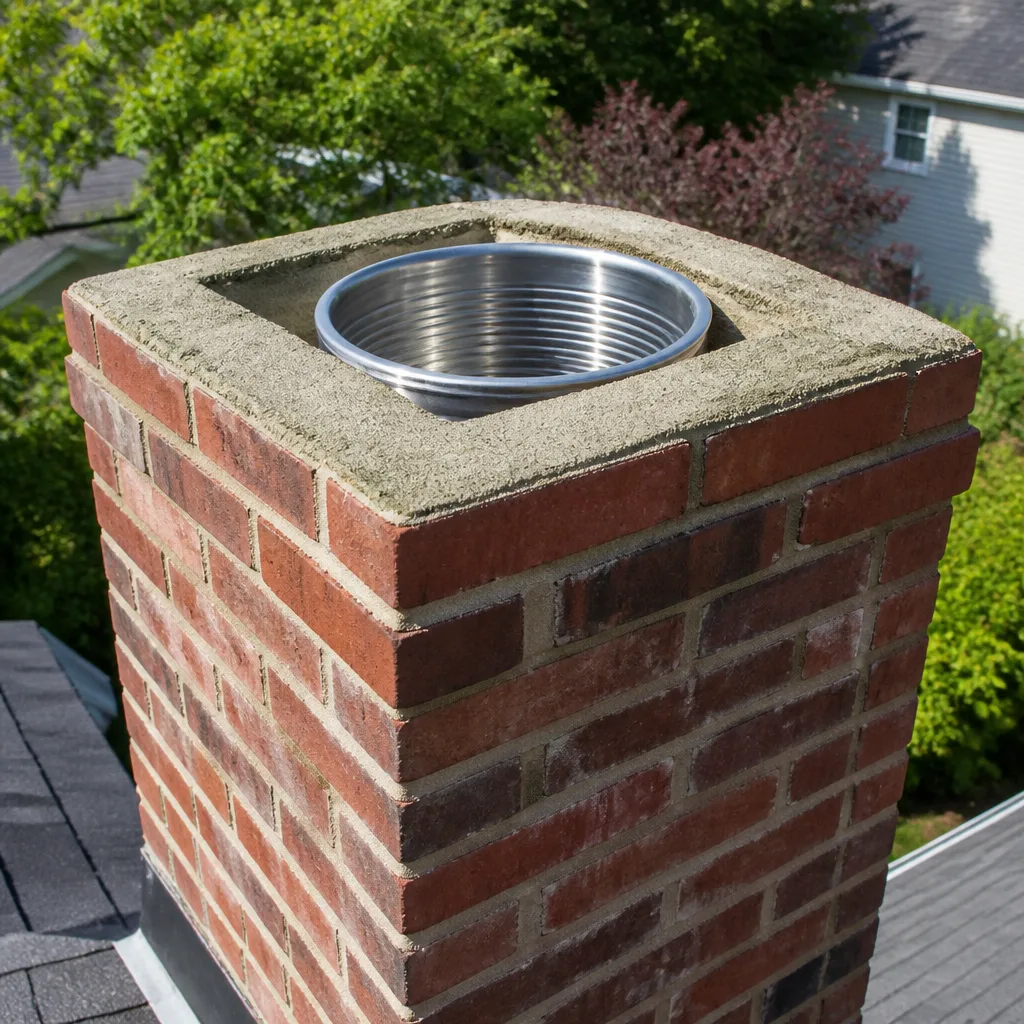
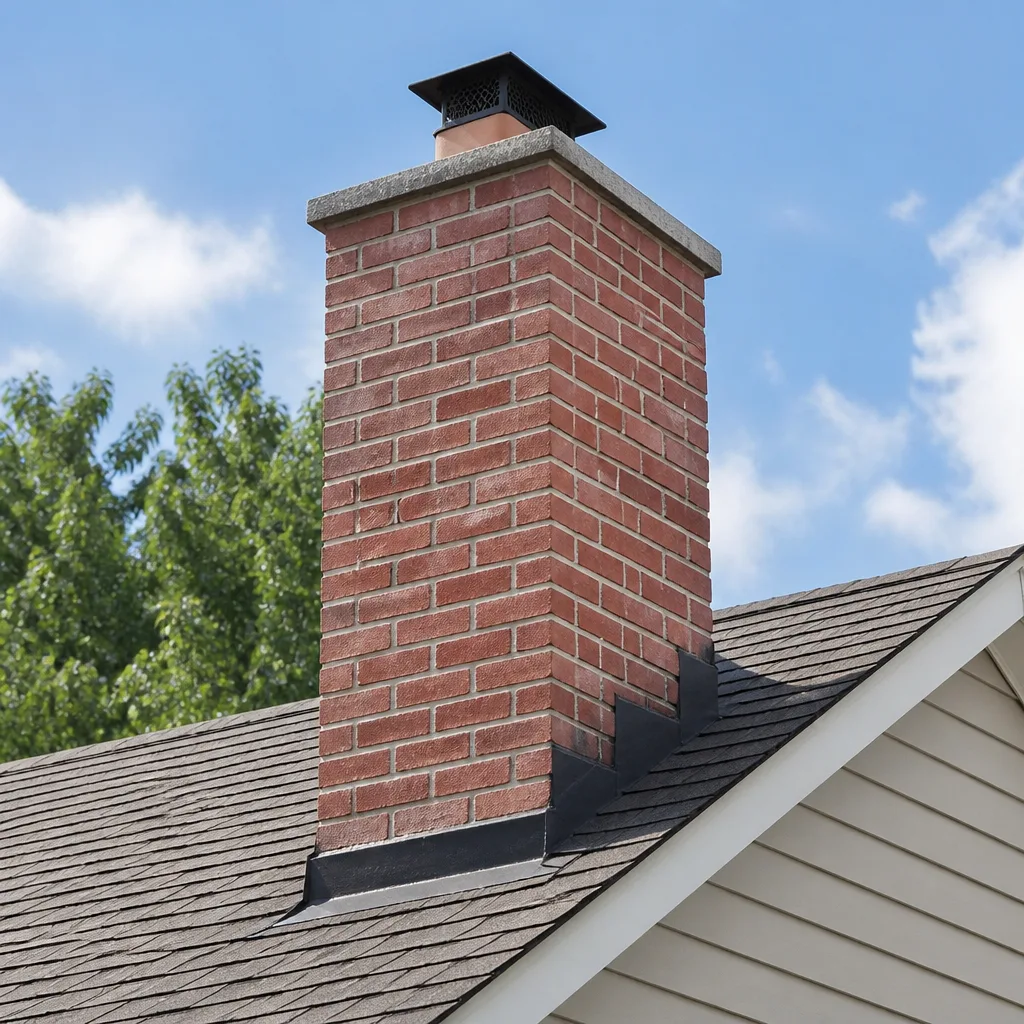
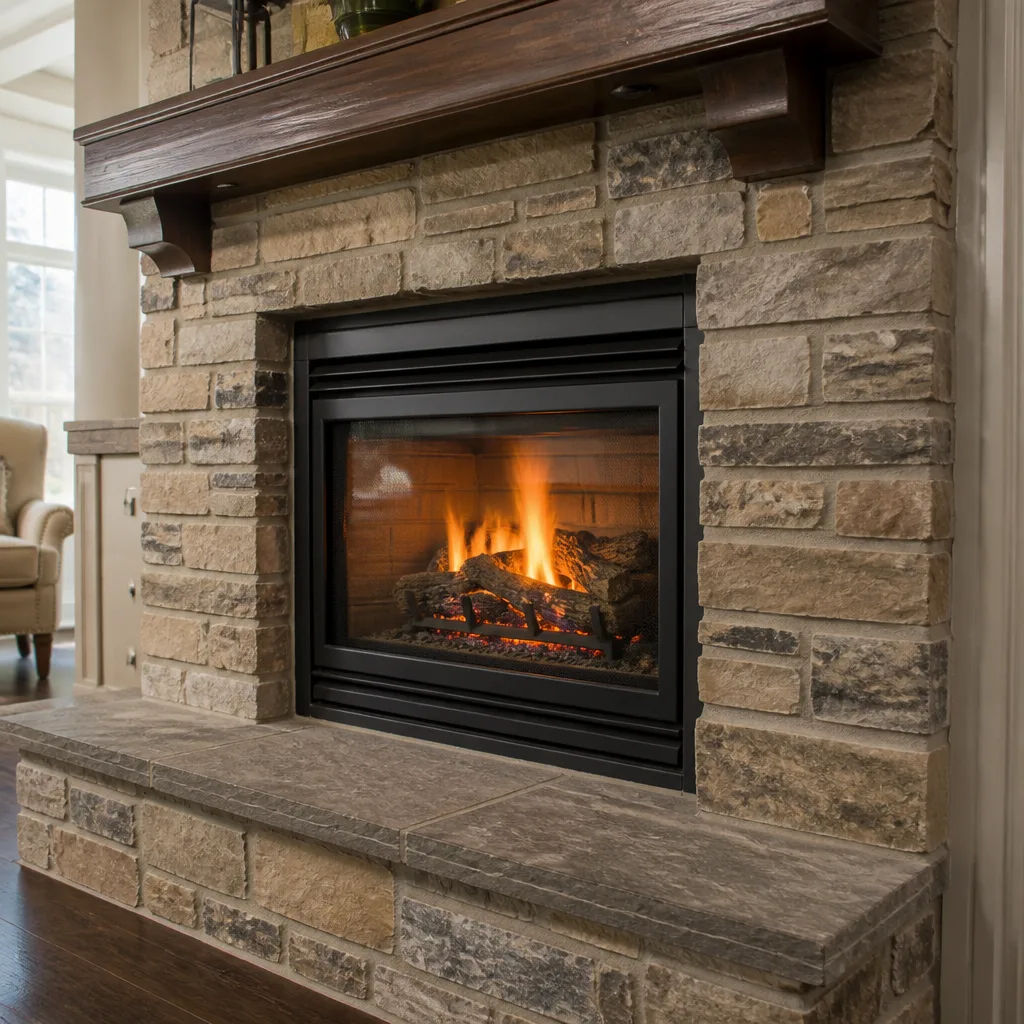
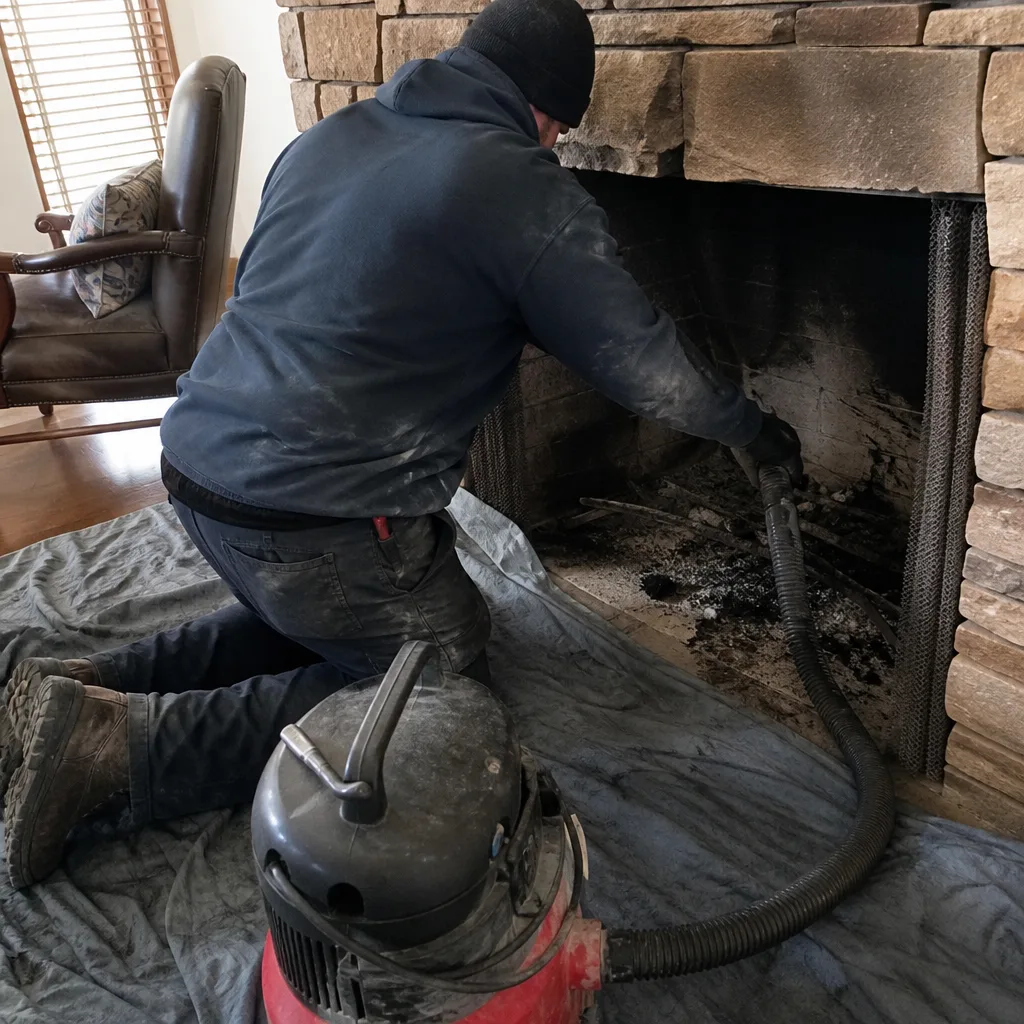 Before
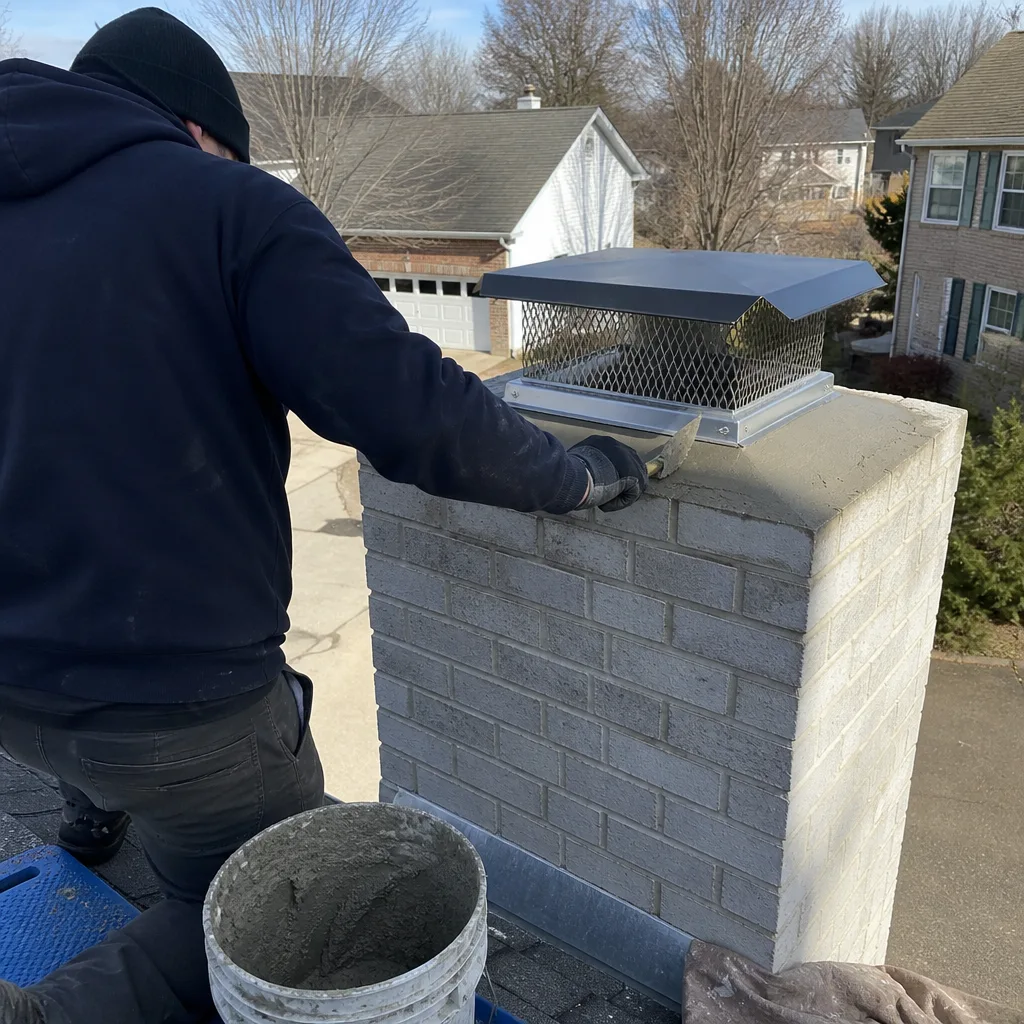 After
After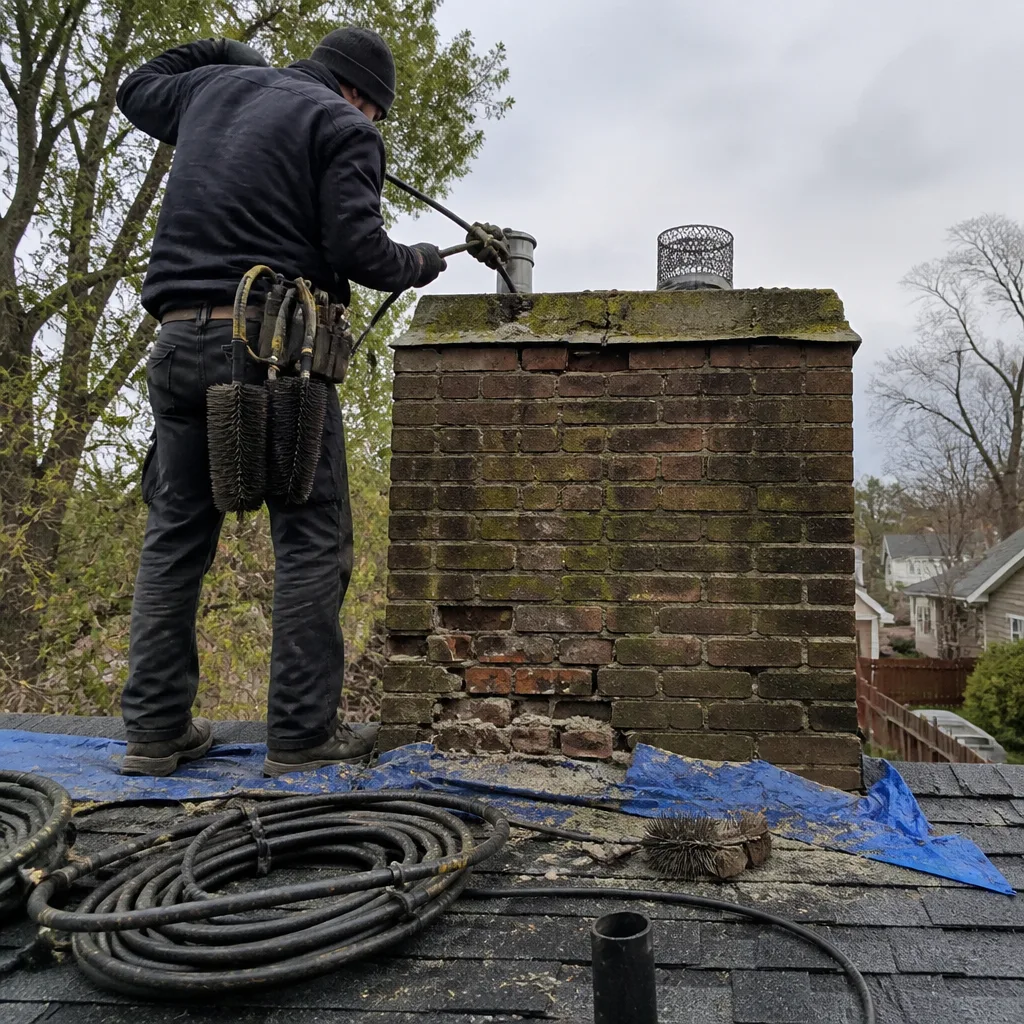 Before
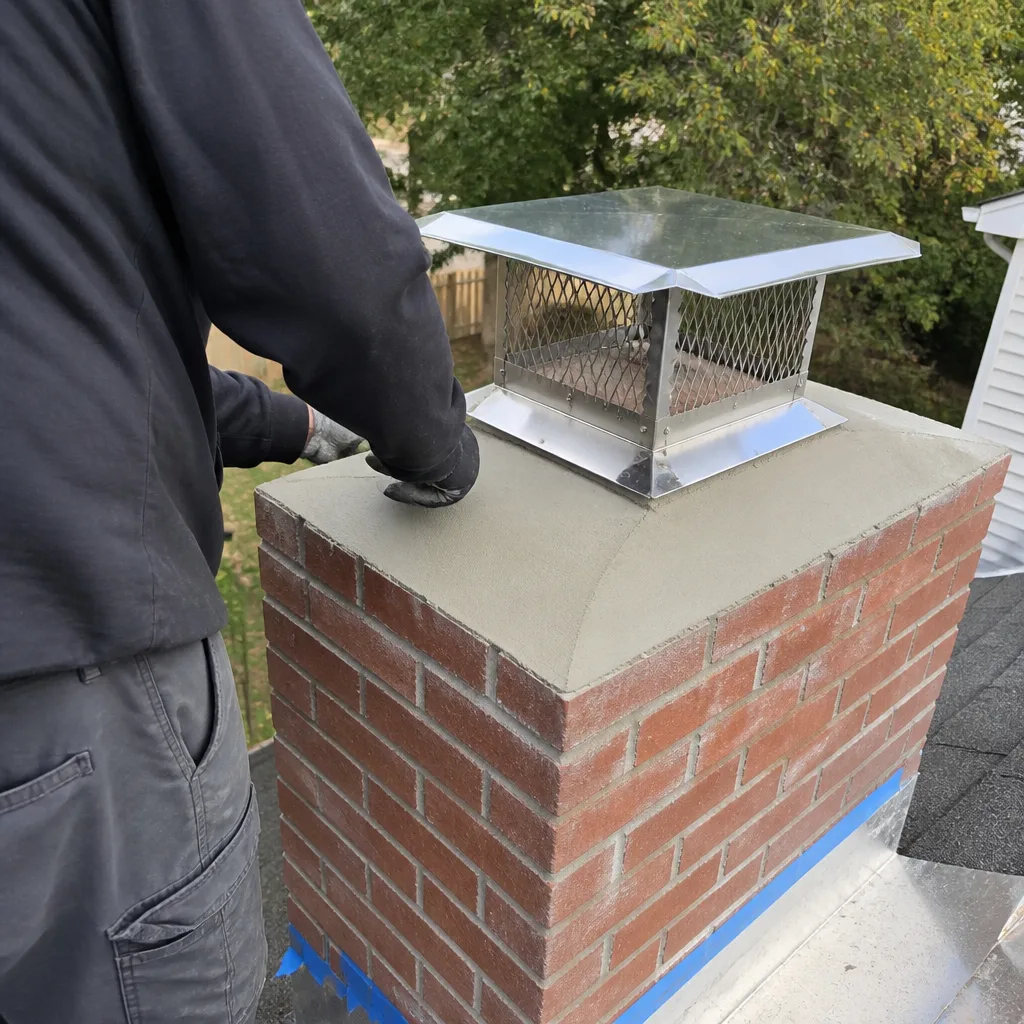 After
After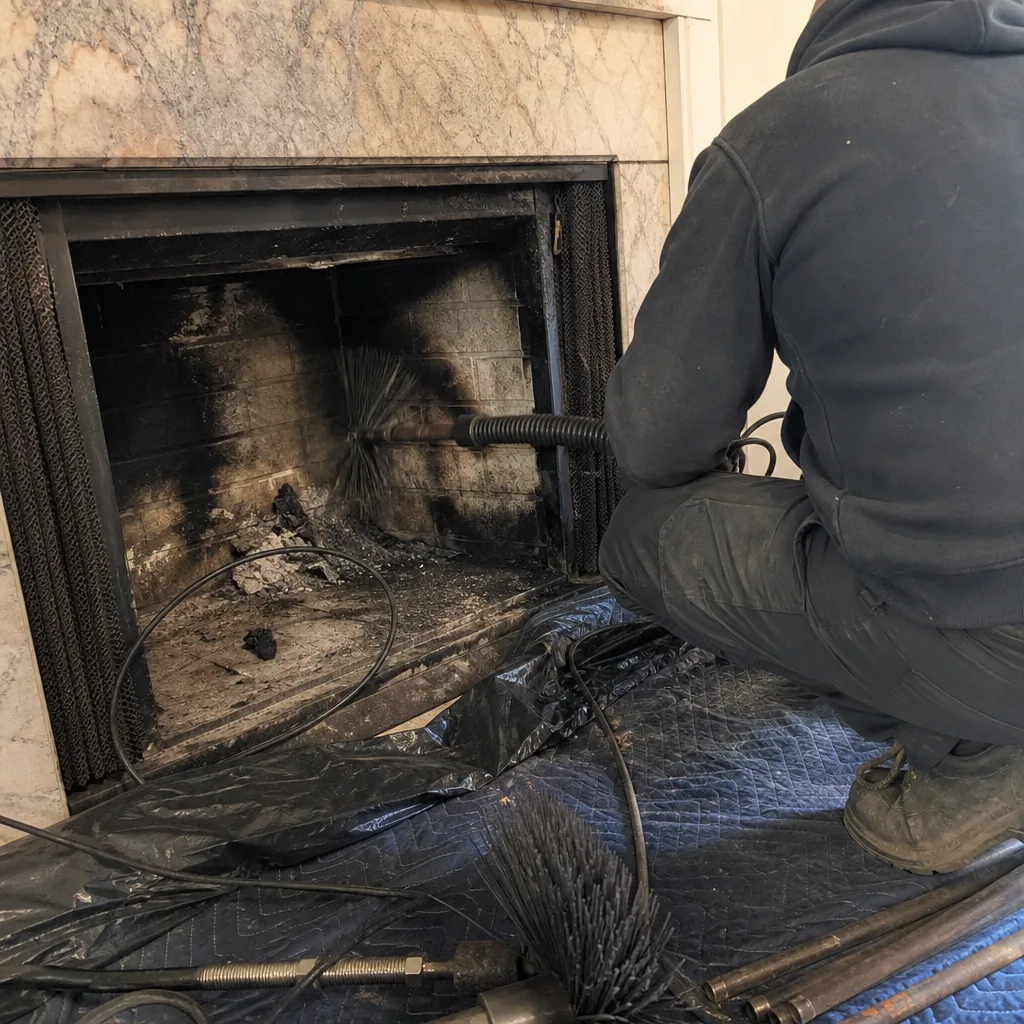 Before
 After
AfterDIY vs Professional Chimney Cleaning: The Ashburn Homeowner’s Decision Guide
You can buy a brush kit, watch four YouTube videos, and physically remove first-stage creosote from your own flue, and none of that produces the written inspection record that your homeowner’s insurance policy may expect after a chimney fire claim. Ashburn homeowners who bought between 2015 and 2025 now sit on homes where the chimney is entering its second decade of service, and the question is shifting from “can I clean it myself?” to “what does my insurance and resale paperwork actually need?” This guide walks through what a competent homeowner can safely self-perform, what a DIY job cannot produce, and where the real dividing line sits for a Loudoun County property.
Quick Answer
Most Ashburn homeowners can safely handle firebox ash removal, a visual cap check from the ground, and a basic damper test, but a full flue cleaning produces no written condition record, no camera confirmation, and no liability transfer without a professional sweep. A professional chimney cleaning in Ashburn typically runs $200 to $350-see our Chimney Cleaning Cost Breakdown: The Ashburn Homeowner’s Reference for 2026 for full pricing context-includes a documented photo record, and produces the NFPA 211 Level 2 inspection paperwork that insurance adjusters and resale disclosures ask for. If you burn more than one cord of wood per season or your flue has not been camera-inspected in over three years, the documentation gap alone justifies the professional route.
Table of Contents
- What a Homeowner Can Legitimately Do (and Do Well)
- What DIY Cleaning Cannot Produce: The Documentation Gap
- What Virginia Homeowner’s Insurance Actually Says About Chimney Maintenance
- The Resale Disclosure Dimension in Loudoun County
- Cost Comparison: DIY Supplies vs Professional Sweep in Ashburn
- Safety Risks of DIY Chimney Cleaning
- How a Professional Level 2 Chimney Cleaning Works
- Common Mistakes to Avoid
BeforeAfterWhat a Homeowner Can Legitimately Do (and Do Well)
The DIY conversation in Ashburn usually starts with someone staring at a $249 quote and thinking, “I can buy a brush for forty bucks.” And for a narrow set of tasks, that instinct is correct. The question is which tasks those are, because the list is shorter than most YouTube thumbnails suggest.
Here is what a competent homeowner can genuinely self-perform without specialized tools or meaningful risk:
- Firebox ash removal: Once the fire is completely cold (wait at least 48 hours), shovel out ash with a metal scoop into a metal container. This is basic maintenance that extends the life of your grate and keeps the firebox from filling up. Wear an N95 mask during removal; Ashburn’s dry winter air makes ash dust hang longer than you expect.
- Visual cap check from the ground: Binoculars work fine. You are looking for a missing rain cap, obvious rust, a bird nest sticking out, or a cap that has shifted off-center. From the ground, you can spot maybe 60% of cap problems, and that is worth doing twice a year.
- Basic damper check: Open and close the damper with a flashlight. Does it seat fully? Does the handle move smoothly? A damper that will not fully open is a burn-season problem you want caught before November.
- Smoke test at the start of the season: Light a rolled newspaper in the firebox, not a full fire, and watch how the smoke draws. If smoke spills into the room instead of rising, you have a draft or blockage problem that is beyond DIY scope.
- Gasket inspection on fireplace doors: If you have glass doors with a fiberglass gasket, check for fraying or gaps. A failing gasket lets uncontrolled air in and reduces burn efficiency.
None of these tasks require you to get on a roof, none require disassembling anything structural, and none produce a false sense of safety, because they are all visible checks, not hidden-condition assessments. The moment the task moves from “what I can see” to “what is inside the flue,” the DIY range ends and the professional range begins.
One note specific to Ashburn: our winter freeze-thaw cycles are mild compared to New England, but they are real. Brick chimneys in Ashburn neighborhoods like Ashburn Farm and Broadlands take on moisture during winter rain, and when temperatures dip below freezing at night, that moisture expands. A homeowner walking the perimeter of their home in February can spot early spalling (brick face flaking off) before it becomes a structural problem. That is a legitimate self-inspection task, and we would rather have you do it than not.
What DIY Cleaning Cannot Produce: The Documentation Gap
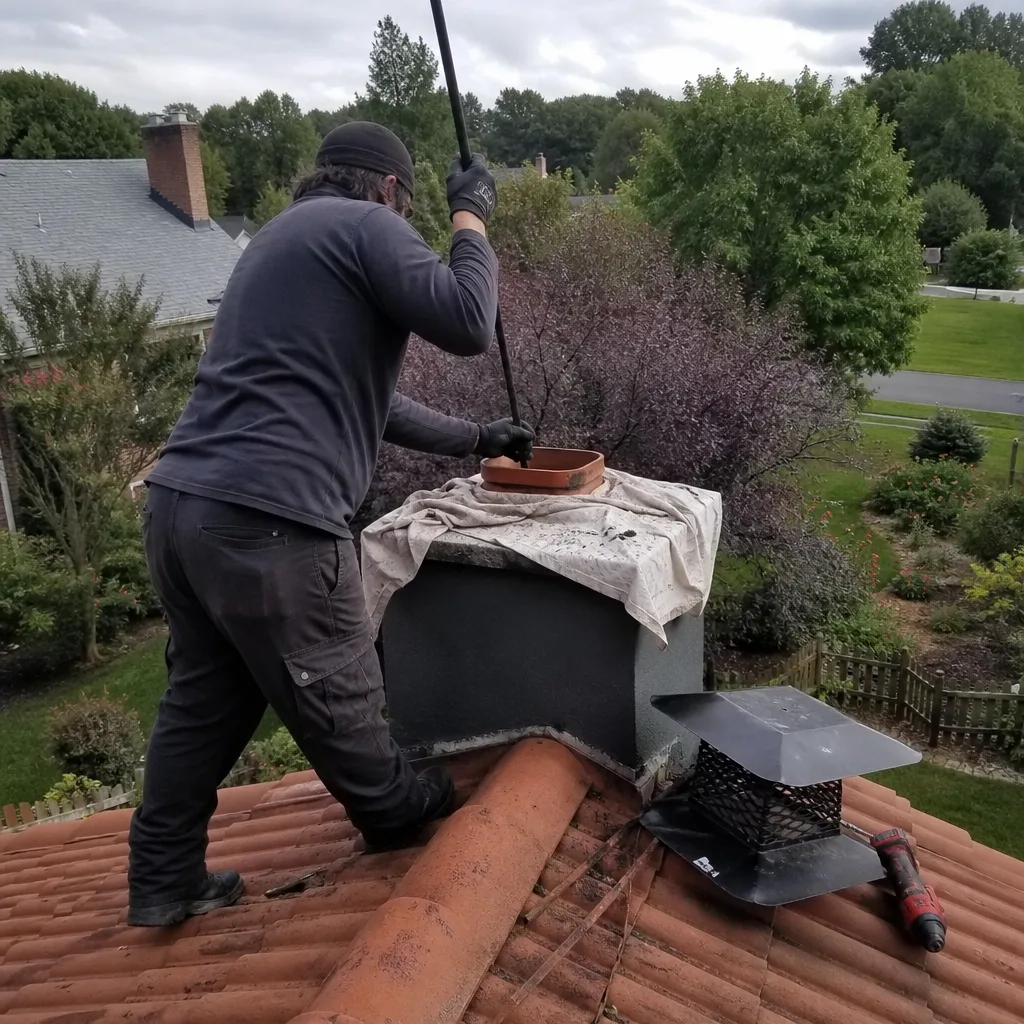
This is the section most DIY guides skip entirely, and it is the actual decision point for most Ashburn homeowners. A brush kit removes creosote. Full stop. It removes the loose, first-stage creosote that sits on the flue wall. What it does not produce is any of the following:
- A camera-confirmed flue condition grade. After a DIY sweep, you have no visual evidence of the flue’s condition above the smoke chamber. Cracks in terra cotta liners, gaps at the mortar joints, heat damage to stainless liners, or a partial collapse partway up the flue are invisible from the firebox. The only way to see them is a camera scan, which requires the same access professional sweeps use.
- A written liability record. If you sell your home, the buyer’s inspector will flag the chimney. If you file a fire claim, the adjuster will ask what maintenance was done and when. A receipt from Amazon for a brush kit does not answer either question. A written condition report does.
- An NFPA 211 Level 2 inspection. This is the standard inspection for chimney condition, required during real estate transfers in many cases and strongly recommended after any fire event, chimney fire, or appliance change. It requires specific access points and specific camera documentation. It cannot be self-performed.
- Creosote classification. Creosote has classes: Class I is powdery soot, Class II is flaky or granular, Class III is the glossy, hardened glaze that resembles tar. Class III is a genuine fire hazard and does not brush off, period. A homeowner cannot reliably distinguish Class II from Class III without training, and the methods for removal are completely different. This is not a minor distinction, it determines whether the chimney is safe to burn.
Here is the scenario we see repeatedly in Ashburn: a homeowner self-cleans for five years, sells the home in a hot Loudoun County market, and the buyer’s chimney inspection reveals a cracked flue liner that has been quietly worsening the entire time. The seller now negotiates from a weak position because they have no documentation showing gradual wear; they only have a problem discovered late. A written record from a professional sweep, showing liner condition year over year, changes that negotiation completely.
The documentation gap is not a scare tactic. It is the difference between knowing and assuming. And if there is one theme that runs through this entire guide, it is that honest chimney maintenance is about replacing assumptions with evidence.
How a Professional Level 2 Chimney Cleaning Works
Understanding what a professional sweep actually does in Ashburn makes the cost comparison honest. Here is the sequence we run on every job, and what you walk away with.
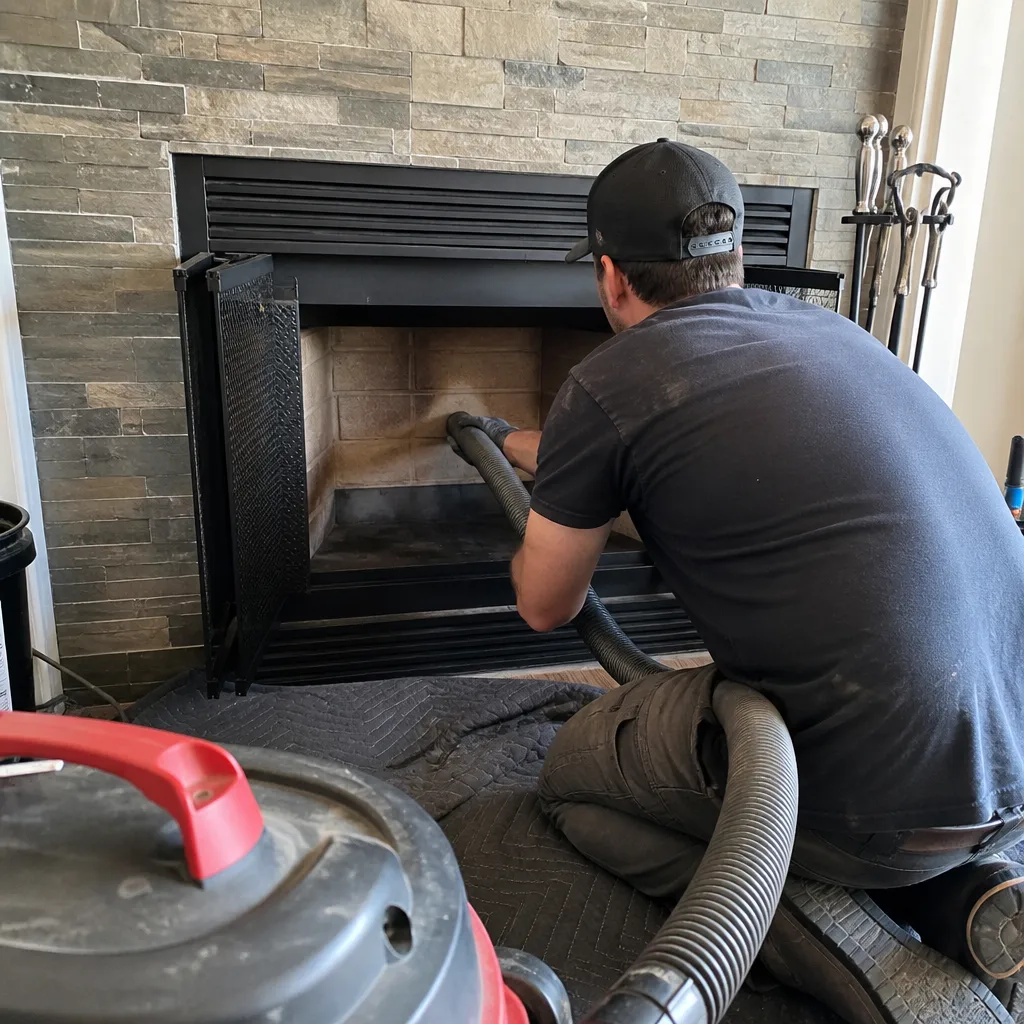
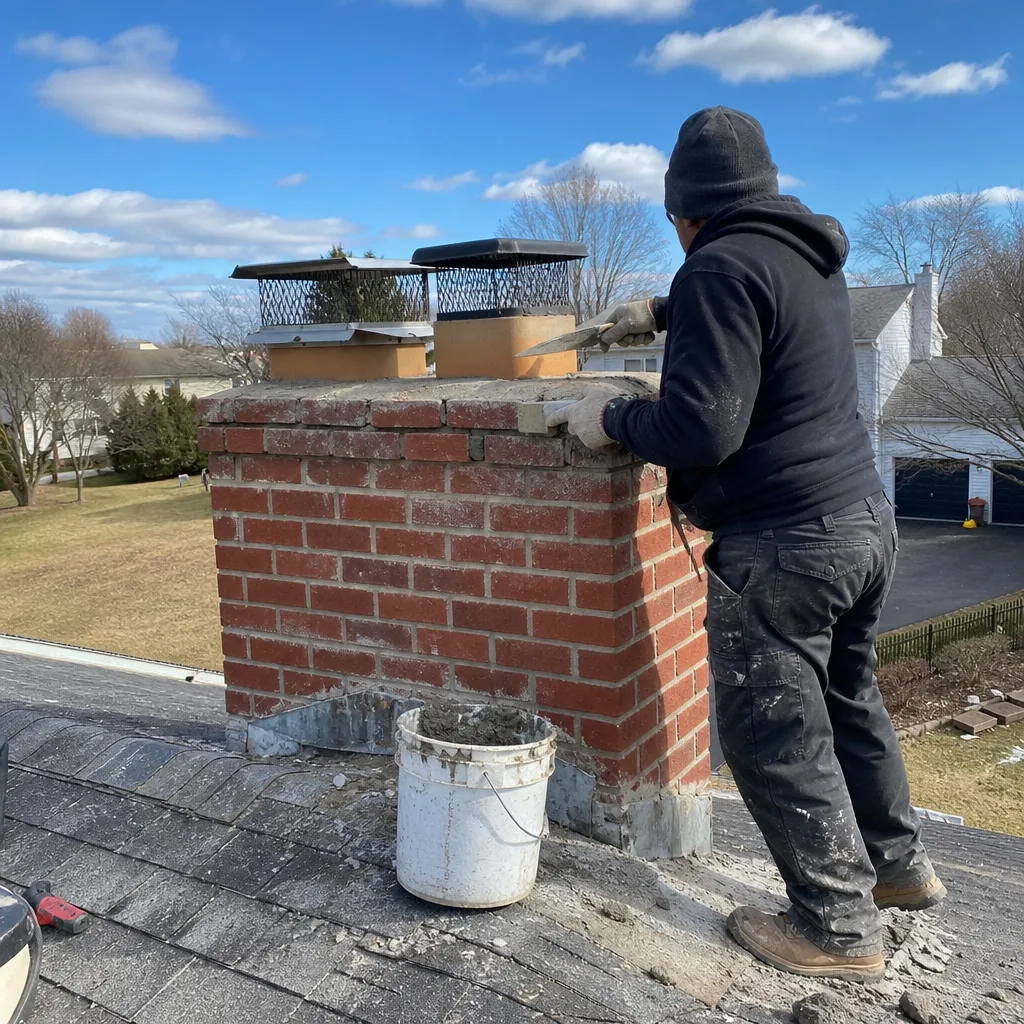
Step one: the sweep protects the home interior before any cleaning begins. Drop cloths around the hearth, a HEPA vacuum running during the entire cleaning, and plastic sheeting over the firebox opening when rods are in use. If the company skips this step, the house will smell like soot for weeks.
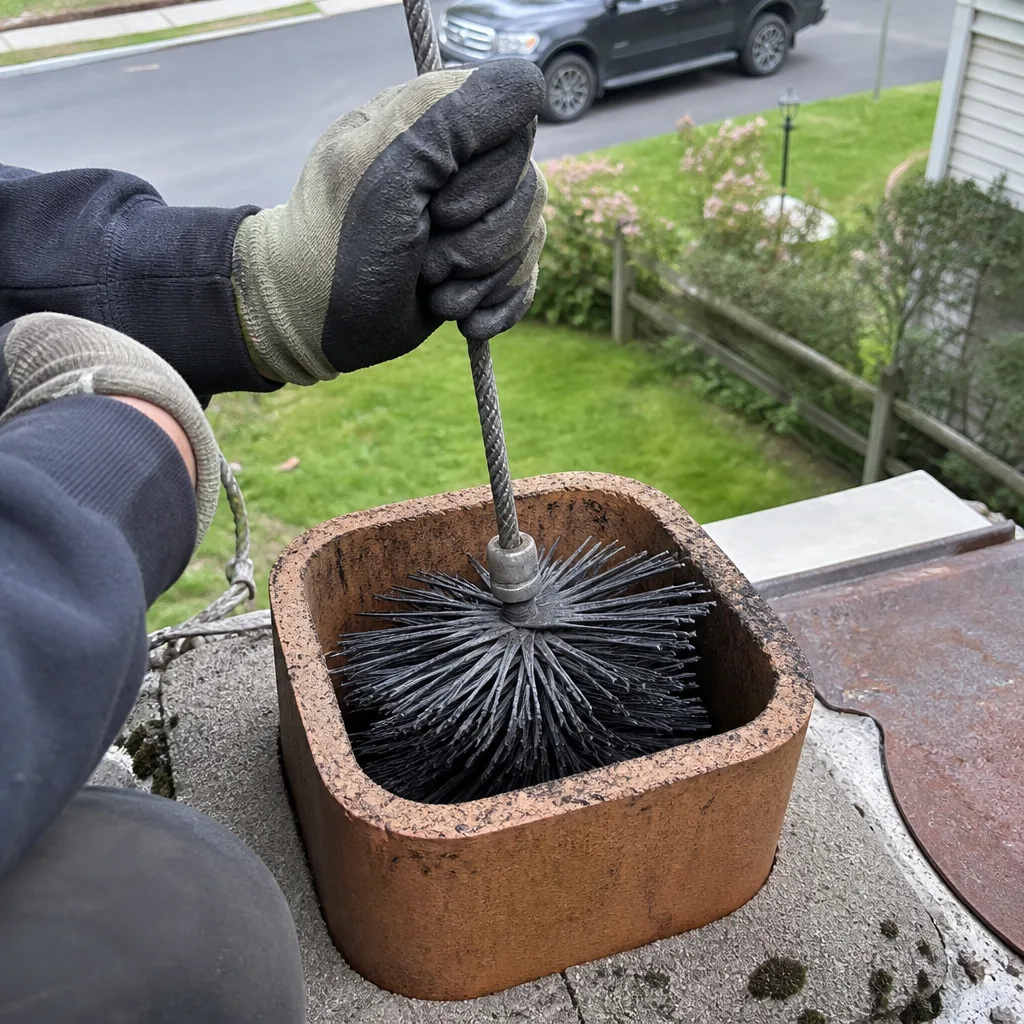
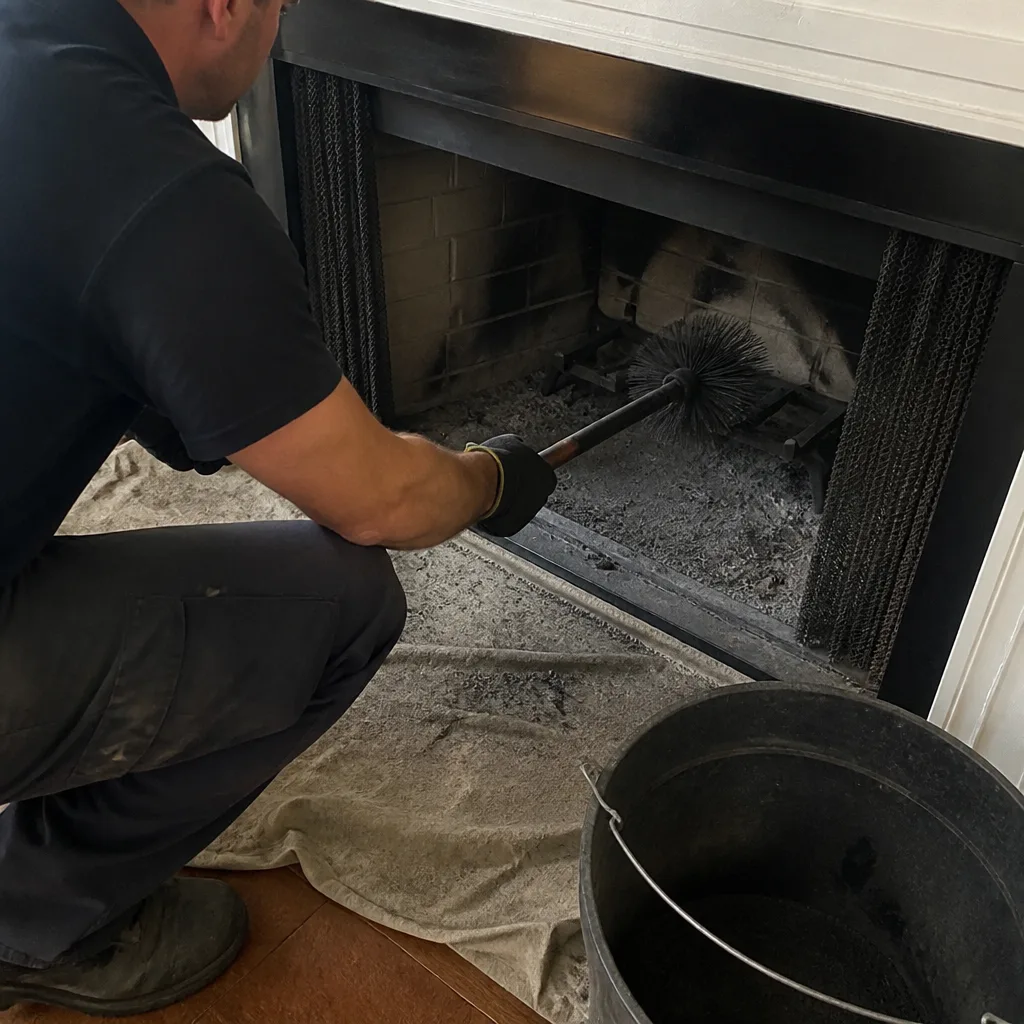
Step two: the flue is cleaned with rotating poly or steel rods, depending on liner type and creosote classification. This removes Class I and Class II creosote from the full height of the flue. For Class III glaze, chemical treatments or rotary chain heads are used, which is not something a homeowner can reasonably self-perform.
Step three: the camera scan happens after cleaning, not before. This is important because creosote on the flue walls obscures the liner surface. A camera scan of a dirty flue shows you nothing useful. After the sweep, the camera reveals the actual liner condition: cracks, gaps, spalling, rust, or clean and serviceable.
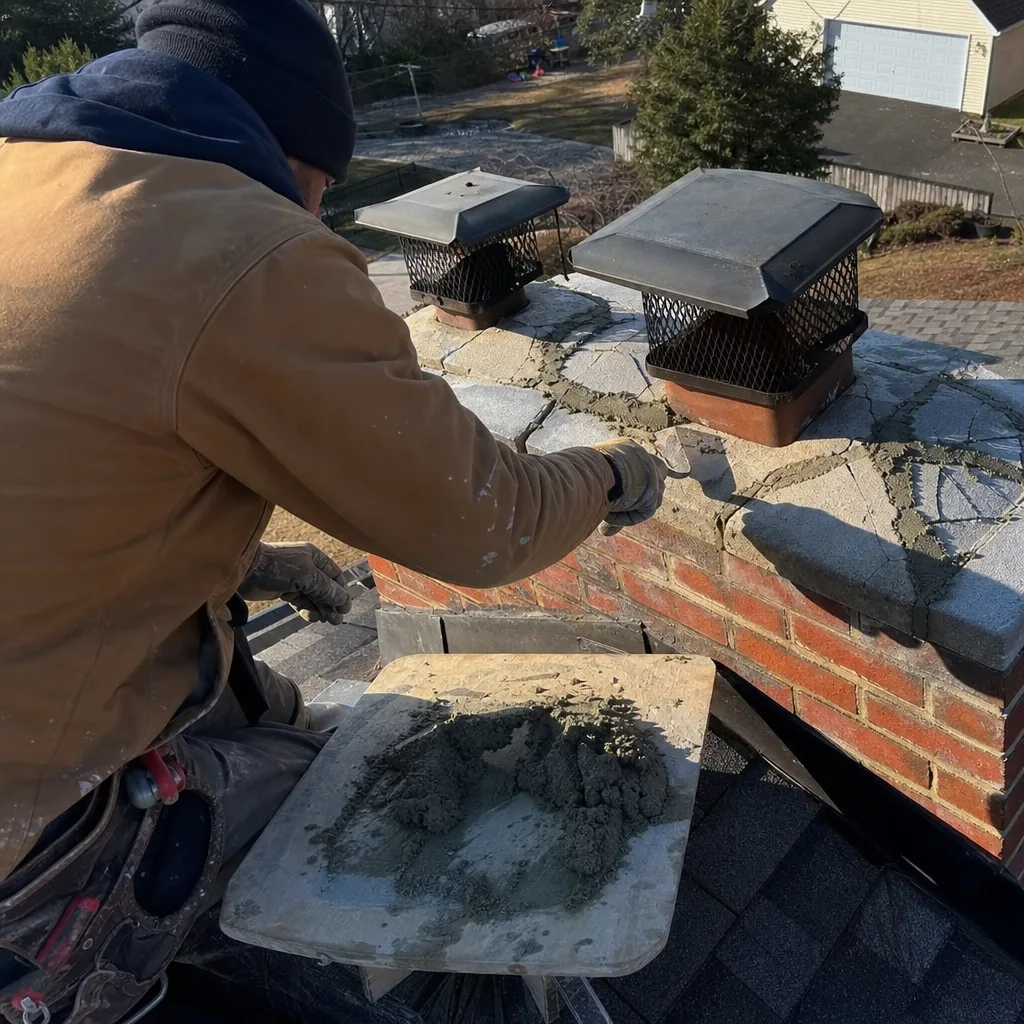
Step four: the smoke chamber is checked, and the damper is inspected for full range of motion. The cap and crown are examined, usually from the roof, for rust, gaps, or shifting. If your home is in an Ashburn neighborhood with mature trees, like Ashburn Village or Belmont Greene, the cap check frequently finds leaf litter or squirrel activity that visual-from-ground inspection missed.
Step five: you receive the written documentation. This is the part DIY cannot replicate. You get a written condition report, written price for any recommended work, written warranty on the work performed, and a documented photo record of the flue interior. Under Clause 4 of the Haven Standard, that photo record is not an optional add-on, it is included on every visit and has been since Level Two Chimney Co. made camera-scan documentation the default in 2009.
If you are comparing professional sweep companies in Ashburn, the question to ask is not “how much?” but “what do I walk away with?” The answer should be photos, camera footage, a written scope, and a written price before work begins. If the answer is “a clean chimney,” you are not getting a Level 2 inspection.
What Virginia Homeowner’s Insurance Actually Says About Chimney Maintenance
Standard Virginia homeowner’s insurance policies do not usually name chimney cleaning by name, but they reference maintenance obligations in language that matters when a claim is filed. Here is what that looks like in practice.
Most HO-3 policies (the standard Virginia form) contain a clause requiring the homeowner to maintain the property in a condition that does not increase the covered peril risk. That is vague language, but it becomes very specific when a chimney fire occurs. The adjuster’s job after a chimney fire is to determine whether the loss resulted from a covered peril (sudden, accidental) or from neglect (gradual, foreseeable).
In a chimney fire, the adjuster will ask for documentation of maintenance. If you have five years of written inspection reports showing a clean flue and a functioning liner, your claim proceeds normally. If you have no documentation, or a DIY job with no written record, the adjuster has grounds to argue neglect, which can reduce or deny the claim.
This is not about insurance companies being unreasonable. It is about evidence. The insurer’s position is that a chimney fire caused by years of unmaintained creosote accumulation is a preventable condition, and Virginia courts have generally upheld that reasoning when the homeowner cannot produce maintenance records. The standard for what counts as evidence is a written report from a professional sweep.
What insurance documentation looks like after a fire event:
- The claim is filed, and the adjuster requests a cause-and-origin inspection.
- The inspector identifies creosote ignition as the cause, then asks when the chimney was last cleaned and inspected.
- If you produce a written professional report dated within the last 12 to 24 months, the claim proceeds as any other fire claim.
- If you produce nothing, or a receipt for a DIY brush kit and a vague memory of “cleaning it a few years ago,” the claim enters the neglect review process, which can take months and end in partial denial.
We are not scare-selling here. We are describing the process accurately because Ashburn homeowners should understand what they are buying with a professional sweep. A written record is a risk transfer document. It moves the question of “was this maintained?” from open debate to documented fact, and that transfers cleanly to the insurer, the buyer’s inspector, or anyone else asking questions later.
The Resale Disclosure Dimension in Loudoun County
Virginia’s real estate disclosure requirements are unusual compared to other states. Virginia is a caveat emptor state. Sellers are not required by state law to fill out a general property condition disclosure. However, the Loudoun County Association of Realtors and most local agents use a voluntary disclosure form, and most buyers in a market like Ashburn make their offers contingent on an inspection, and the chimney is a standard line item on that inspection.
Here is what actually happens in an Ashburn real estate transaction involving a chimney:
The buyer’s home inspector does a general chimney check, which is usually visual from the firebox and the roof. If that check raises any question (cracked crown, spalling brick, suspected liner damage), the inspector recommends a Level 2 camera inspection. That is not the seller’s choice; it is the buyer’s requirement as a contingency condition.
At that point, the seller is on the clock. If the camera inspection finds damage, the buyer requests a price reduction or repair credit. The seller’s negotiating position depends entirely on what documentation they can produce. A seller with seven years of written Level 2 records showing stable liner condition and regular maintenance is in a strong position, and can say: the condition is documented and unchanged. A seller with no records is now negotiating blind, and in a Loudoun County market where buyers are well-informed and attorneys are thorough, that blind position typically costs more than seven years of professional sweeps would have.
This is not hypothetical. We have inspected chimneys in Ashburn for sellers who were caught exactly this way, and the cost of the repair credit they negotiated away was two or three times what a decade of documented maintenance would have cost. For year-round planning, see our Seasonal Chimney Cleaning Care for Ashburn: Year-Round Homeowner’s Guide. The math is not close, and it gets worse when the chimney has been DIY-cleaned with no records, because the buyer’s inspector cannot reference any historical condition data.
Cost Comparison: DIY Supplies vs Professional Sweep in Ashburn
Let us put real numbers on the table. This is the honest cost comparison for an Ashburn homeowner making the DIY vs professional decision in 2026.
DIY chimney cleaning supply costs (first-year outlay, for a home with a single flue that has not been cleaned in over two years):
- Chimney brush kit with rods: $60 to $140, depending on flue size and rod quality. A rectangular flue for a masonry fireplace needs a rectangular brush, which costs more than the round brushes most big-box stores stock.
- HEPA vacuum rental: $40 to $65 per day from a Home Depot or Lowe’s in Ashburn or Sterling. A standard shop vac without a HEPA filter will blow fine soot throughout the house, which you will then clean for weeks. This is not optional if you do the job properly.
- Drop cloths, plastic sheeting, N95 masks, eye protection: $35 to $60 total, and these are consumables you may need new each season.
- Ladder (if you do not already own one adequate for roof access): $150 to $300 for a safe extension ladder. Most Ashburn homes have two-story roof lines.
- Optional but recommended: creosote removal chemicals: $25 to $45 per treatment, and they are only effective on Class I and light Class II creosote.
Total first-year DIY outlay: $310 to $610, depending on what you already own.
Professional chimney sweep in Ashburn, all-inclusive:
- Full sweep plus NFPA 211 Level 2 camera inspection: $200 to $350, depending on chimney height, liner condition, and whether the cap or crown needs repair attention during the same visit.
- Written condition report, photo record, and written price for any recommended work: included in the sweep price at Level Two Chimney Ashburn, as part of the no-hassle upfront pricing under Clause 1 of the Haven Standard.
- Documented photo record of the flue interior: included, not optional, under Haven Standard Clause 4.
The DIY route saves money in year one only if you already own the ladder, the vacuum, and the rods. By year three, when you factor in your time, the consumables, and the fact that you still have no written documentation for insurance or resale purposes, the economics have already shifted. The professional sweep is cheaper than the documentation gap.
If you want an exact quote for your specific chimney, call (240) 220-9412 and we will give you a written price before any work begins. That is not a “call for a quote” hedge, it is the entire point of the business model. Your price is on the page, in writing, before you commit to anything.
Safety Risks of DIY Chimney Cleaning
Most DIY chimney cleaning guides treat safety as a footnote. We are going to treat it as a section, because the risks are specific and they are real, and Ashburn homeowners deserve to know exactly what they are signing up for when they climb onto a roof in November.
The most obvious risk is the roof itself. Ashburn homes are mostly two-story colonials and large single-family builds with pitches between 6/12 and 10/12. A 10/12 pitch means the roof rises ten inches for every twelve inches of horizontal run, which is steep enough that a fall is a serious injury or worse. Add a frosty November morning, and the surface risk compounds. Professional sweeps carry full insurance, and we say this plainly: a fall from a two-story roof costs more than every chimney sweep you will ever pay for.
The second risk is creosote exposure. Creosote is a known carcinogen in its Class III form, and exposure through skin contact or inhalation is not something to take lightly. A proper HEPA vacuum and full PPE are non-negotiable, and most homeowners underestimage how much fine particulate escapes during a DIY cleaning even with precautions.
The third risk is the false sense of security. This is the one that concerns us most. A DIY cleaning removes visible creosote from the firebox area and the first few feet of flue. It does not reveal what is above the smoke chamber. You finish the job feeling like the chimney is clean and safe, when what you have actually done is remove surface evidence of a condition that is still there. That is how chimney fires happen in homes that are cleaned every year by the homeowner.
The fourth risk is specific to older Ashburn homes. Level Two Chimney Ashburn home service records show that many homes built in the 1990s and early 2000s, especially in Ashburn Farm and Ashburn Village, still have original terra cotta clay liners. Clay liners crack over time from thermal cycling, and the cracks are invisible without a camera. A DIY cleaning does not reveal them, and it can even worsen them if the brush hits a deteriorated section with too much force.
If you do attempt a DIY cleaning, never work alone on the roof. Never use a metal brush on a stainless liner (you will score it and create creosote collection points). And never burn a cleaning log as a substitute for a sweep, those logs loosen some creosote but do not remove it, and they produce no documentation.
When DIY Makes Sense for an Ashburn Homeowner
We want to be fair about this. There are legitimate situations where DIY maintenance is the right call, and we would rather tell you about them honestly than pretend every chimney needs a professional visit every year.
DIY makes sense when all of these are true:
- Your fireplace is decorative or rarely used (fewer than five burns per season).
- You have a written professional inspection report from within the last 24 months showing a clean, intact flue.
- You are only performing the firebox and cap tasks we listed in the first section.
- You are not preparing for a sale, an insurance claim, or a burn season with heavy use.
DIY does not make sense when: the chimney has not been camera-inspected in over three years; you are buying or selling the home; you burn more than one cord of wood per season; you smell smoke in the house after fires; or you see spalling brick, a cracked crown, or a rusted cap during a ground-level visual check.
For the unsure middle ground, which is where most Ashburn homeowners actually live, the professional sweep is not a loyalty play, it is a data play. You are paying for the camera scan and the written record as much as the cleaning itself. And once you have that documented baseline, the DIY conversation for future years becomes much simpler, because you know what you are working with.
Common Mistakes to Avoid
- Using a creosote cleaning log and calling it a sweep. These products loosen some Class I creosote at the firebox level, but they do not remove it, do not address Class II or III, and produce zero documentation. They create a false sense of safety that is worse than no cleaning at all.
- Cleaning from the firebox only. Without roof access or a rod system from the top, you cannot clean the full flue height. Half-cleanings leave creosote in the upper third, which is exactly where chimney fires start.
- Skipping the HEPA vacuum. A standard shop vac exhausts fine soot through its filter into the living space. Within an hour, every surface in the room has a gray film. The HEPA unit is not a luxury expense, it is the difference between cleaning the chimney and cleaning the entire house.
- Brushing a stainless liner with a metal brush. Steel bristles scratch the liner surface, creating micro-grooves where creosote collects. Once scratched, a stainless liner becomes harder to clean and requires replacement sooner. Use poly brushes for stainless, and know your liner type before you start.
- Ignoring the smoke chamber. The smoke chamber, the area above the firebox below the flue, collects creosote and soot that a flue brush never touches. Most DIY jobs never address it because it requires angled scraping tools and camera confirmation. A professional Chimney Cleaning & Sweep in Ashburn includes it as standard.
- Assuming the cap is fine because it looks fine from the ground. Ground-level visuals miss about 40% of cap problems, including hairline rust, shifted mounting, and small animal entry points along the edges. If you are not comfortable with roof access, let a professional check it during the sweep.
- Waiting until October to think about the chimney. Ashburn’s burn season typically starts in late October. If you book a sweep in October or November, you are competing with every other homeowner who waited. Book in August or early September, and you will have your documented record in hand before the first fire.
When to Call a Professional
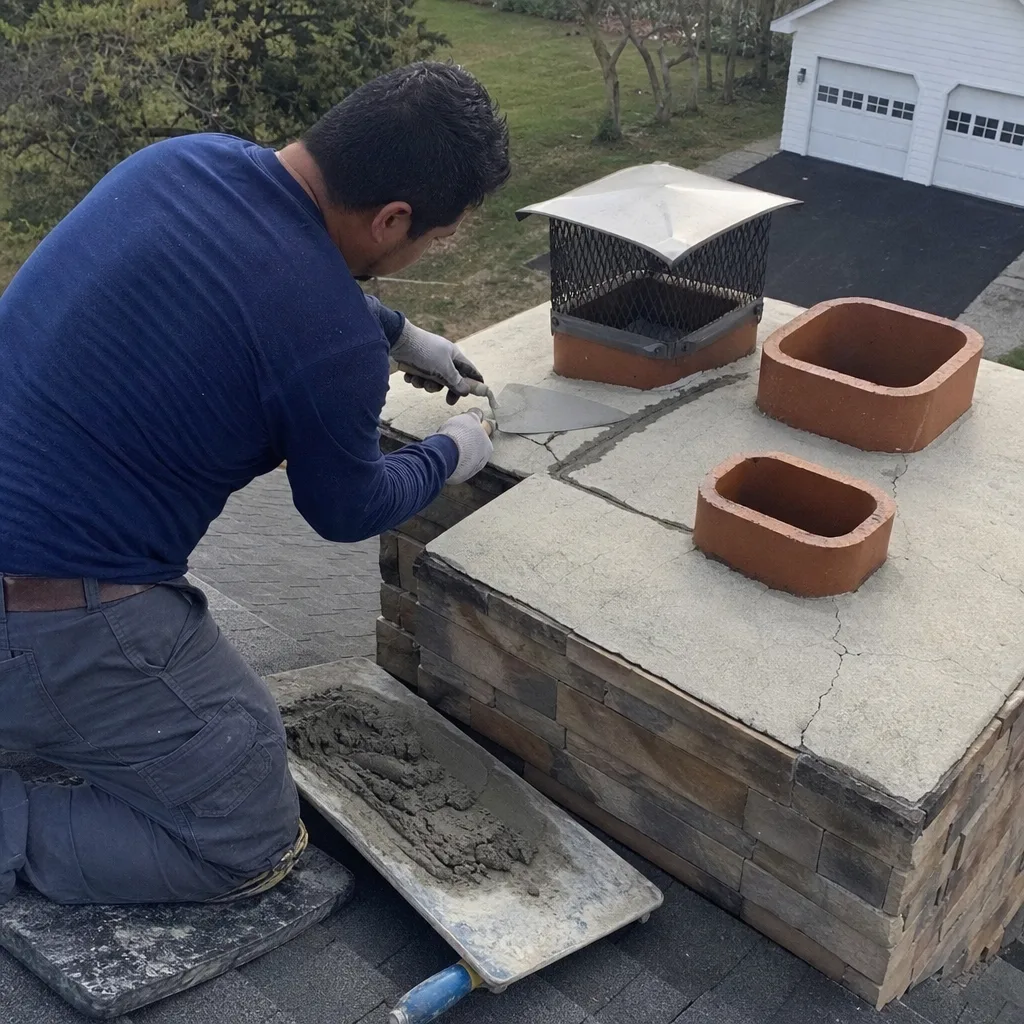
Call a professional if your chimney has not been camera-inspected in more than three years, if you are preparing your Ashburn home for sale, if you have filed or are preparing to file an insurance claim, if you smell smoke inside the house after a fire, if your carbon monoxide detector has activated near the fireplace, if you see spalling brick or a cracked crown from the ground, or if you have a stainless liner that needs cleaning and you do not know how to avoid damaging it. These are not DIY situations; they are evidence-gathering situations. Chimney Repair in Ashburn is available through our repair team. Level Two Chimney Ashburn offers free estimates in Ashburn, call (240) 220-9412.
Frequently Asked Questions
A full chimney sweep with an NFPA 211 Level 2 camera inspection in Ashburn typically costs between $200 and $350, depending on chimney height, liner type, and creosote classification. That price includes the written condition report and documented photo record. Call (240) 220-9412 for a written price before any work begins, it is a fixed quote, not an estimate.
You can safely perform firebox ash removal, ground-level cap checks, and basic damper checks with no specialized training. You cannot safely perform a full flue cleaning without roof access, a proper rod set, a HEPA vacuum, and PPE, and even with all of that, you cannot produce a camera-confirmed condition record. For most Ashburn homeowners, DIY is reasonable for visible maintenance only.
The NFPA standard is to sweep when creosote accumulation reaches 1/8 inch, which for a home burning one cord of wood per season usually means once per year. For more guides & resources on keeping your chimney safe, explore our blog. Homes that burn more, or that burn unseasoned wood, may need two cleanings per season. An annual sweep plus camera inspection is the standard we recommend for any Ashburn home that uses its fireplace regularly from October through March.
Creosote accumulates in stages. Class I soot becomes Class II granular creosote within a season or two, and Class II becomes Class III glaze within three to five years of regular use. Class III is a documented fire hazard and requires chemical or rotary removal. More importantly, every year skipped is a year without camera-confirmed liner condition, which means small cracks become larger ones without anyone knowing. Call us for a professional inspection before you burn again.
It should, and at Level Two Chimney Ashburn, it does, because Clause 4 of the Haven Standard requires a documented photo record on every visit. A sweep without a camera scan is a cleaning without a diagnosis. You want both, because the clean flue is only valuable if someone has confirmed the liner above it is intact. This has been our standard practice since 2009, and it is included in the written price.
The honest answer is: you should never accept a liner recommendation without seeing the camera footage yourself. A legitimate sweep will show you the scan, point to the specific cracks or gaps, and explain in plain terms why the liner is no longer safe. This is why our written prices and photo records exist, under Fireplace Services in Ashburn you can see our full service range. If a company recommends a liner without camera evidence, get a second opinion.
The Bottom Line
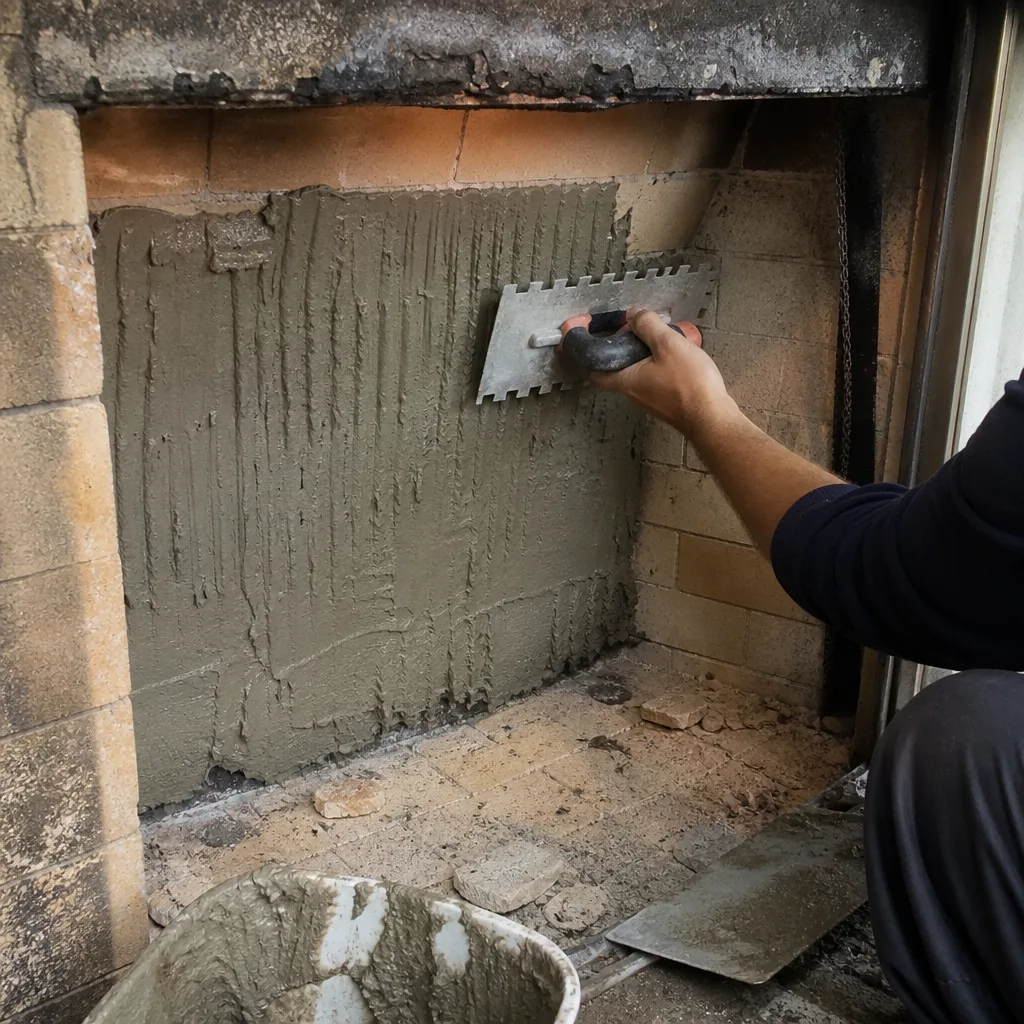
The DIY vs professional chimney cleaning decision for an Ashburn homeowner is not really about the cleaning. It is about the evidence. A brush kit removes some creosote, and a professional produces a written record, a camera scan, and a liability transfer that matters at resale and insurance claim time. For homes burning regularly, the professional route is the cheaper option once documentation has any value, and in Loudoun County real estate, it always does. For homes with recent professional inspections and minimal use, DIY maintenance of the firebox and cap is perfectly reasonable. The dividing line is knowing which side of it you are on, and the only way to know is with a camera scan. If you are unsure, call (240) 220-9412 and get a written price. The estimate is free, and the documentation you walk away with is worth more than the sweep itself.
Written by Corrine Halstead, Owner at Level Two Chimney Ashburn, serving Ashburn since 2009.